





Where Does 6x7 FC Wire Rope Perform Best in Industrial Lifting Applications?
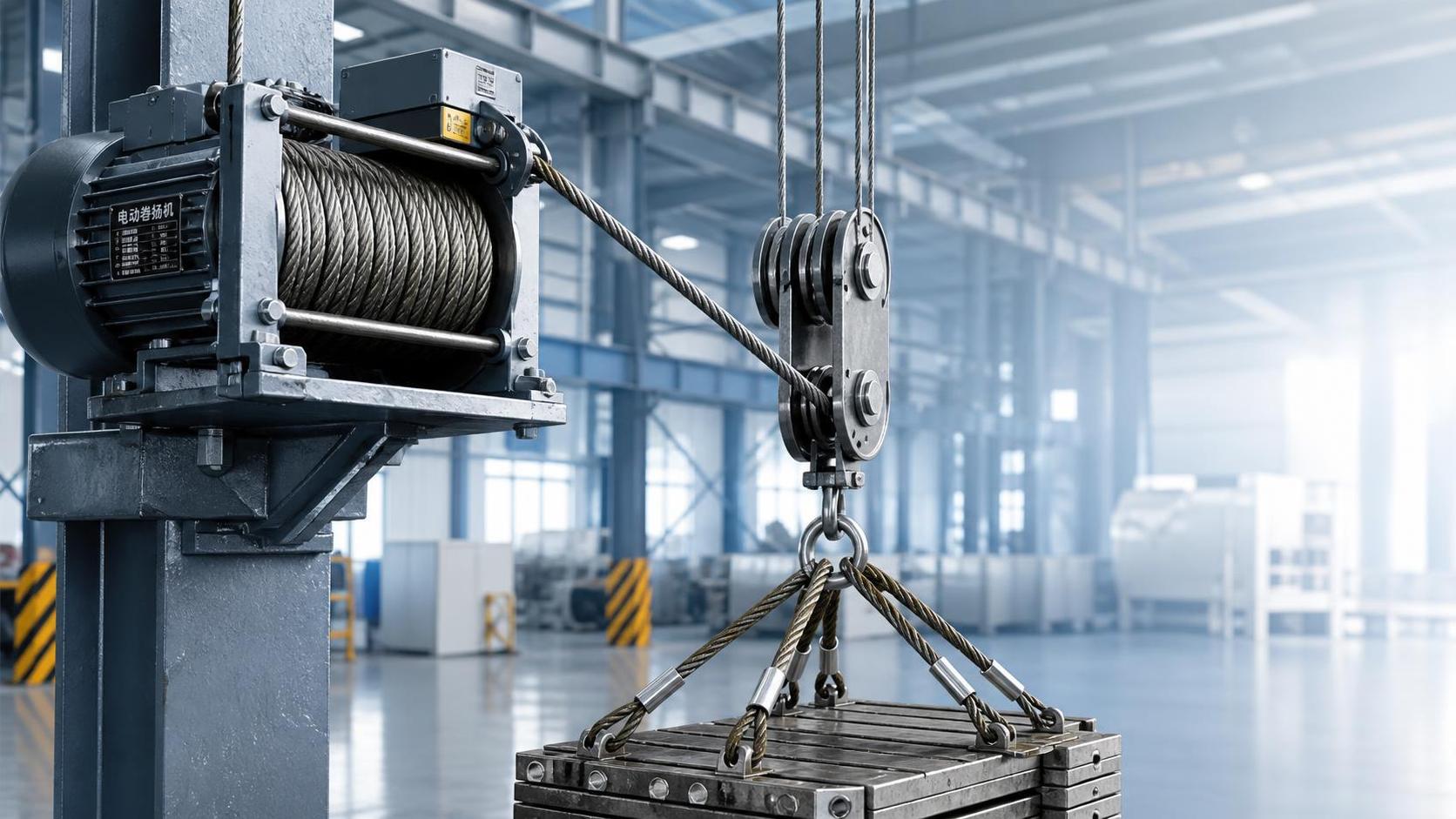
For project managers balancing lifting safety, service life, and budget control, rope construction is not a minor purchasing detail. It affects reeving behavior, inspection frequency, equipment downtime, and the margin available when site conditions become less predictable than the lift plan. A 6x7 FC wire rope performs best where a project needs a relatively firm, durable general-purpose rope with practical flexibility, rather than the highest possible fatigue life in severe multi-layer drum service.
That distinction matters. “Suitable for lifting” is too broad to support a procurement decision. The right question is whether the rope's construction fits the actual combination of load pattern, sheave arrangement, drum geometry, environment, and inspection capability on the project.
Why this construction remains relevant
A 6x7 construction generally consists of six outer strands, each containing seven wires, around a fiber core (FC). Compared with ropes built from more numerous, finer wires, it has relatively larger individual outer wires. In practical terms, this often gives the rope good resistance to abrasion and crushing in applications where it is handled regularly, may contact drums or guides, and is not subjected to exceptionally demanding reverse-bend cycles.
The fiber core supports the strands and can retain lubricant, helping reduce internal wire-to-wire friction when lubrication is properly maintained. It also contributes to a more flexible feel than some steel-core alternatives. That makes the construction useful in many conventional lifting and handling tasks, especially when crews need predictable handling during installation, rigging, or routine repositioning.
Its value is therefore not that it is universally superior. Its value is that it can be an efficient fit for moderate-duty lifting systems that prioritize a balance of handling, abrasion tolerance, and accessible cost control.
Where 6x7 FC wire rope tends to perform best
The strongest fit is usually found in general industrial lifting arrangements with moderate duty cycles and clearly controlled operating conditions. Typical examples include construction-site hoists, temporary lifting devices, small winches, general material handling, maintenance lifting, and certain port or shipyard support operations where the rope is not continuously cycling at high speed over small sheaves.
On construction projects, the rope can be a practical choice for equipment moving formwork, tools, packaged materials, and fabricated components, provided the lifting system has been designed for the relevant rated capacity and the rope is selected to match the drum and sheave dimensions. It is particularly useful where the operational priority is reliable daily service rather than extremely high-frequency repetitive lifting.
In shipyards and ports, it may suit controlled auxiliary lifting and positioning duties. However, salt exposure changes the decision. A rope construction that works well mechanically can still have a short service life if lubrication, surface protection, storage, and inspection do not match the corrosive environment. For exposed marine work, managers should evaluate corrosion protection as part of the rope system, not as an afterthought.
For plant maintenance teams, this type of rope can also make sense on manually operated or lower-speed powered equipment. Its handling characteristics are useful where a crew installs, removes, or routes the rope through equipment more often than a dedicated crane team would. In these cases, ease of use matters, but it never replaces verification of working load limit, termination efficiency, and compatible hardware.
Conditions that determine whether it is the right choice
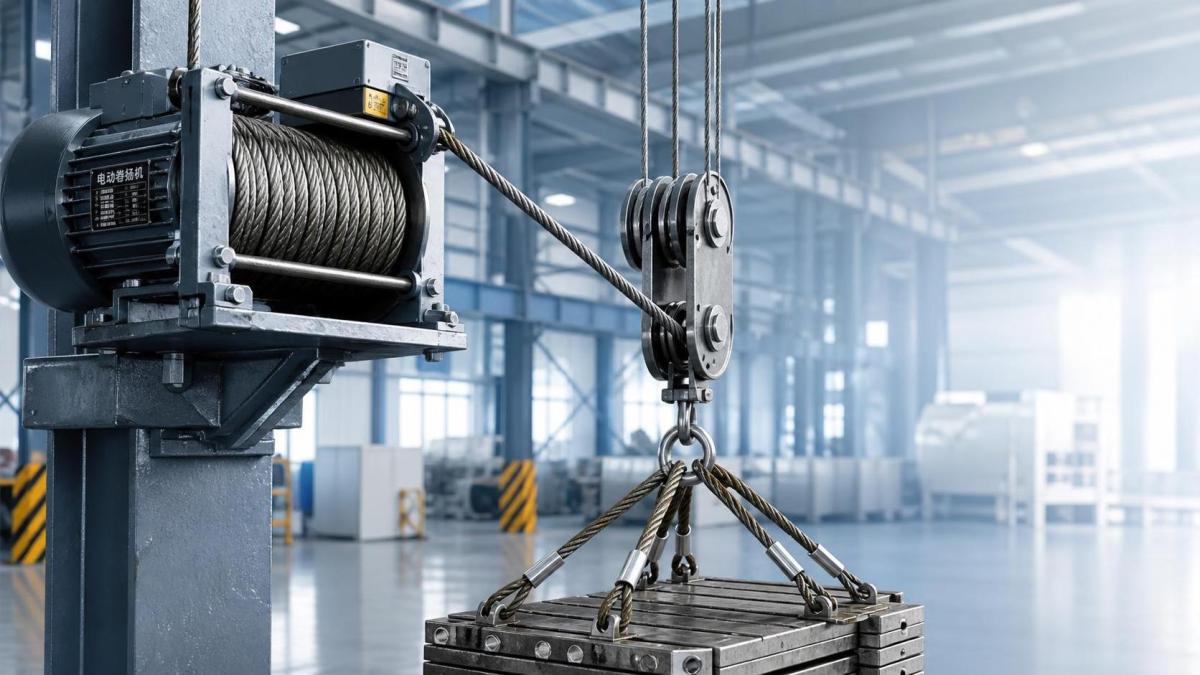
A rope specification should start with the lift, not with a catalog construction. Project teams should document the load, the number of parts of line, expected duty cycle, lifting speed, sheave and drum dimensions, fleet angle, exposure conditions, and expected maintenance intervals. Without this information, comparing nominal diameter and breaking force alone can lead to a poor selection.
The fiber core deserves special attention. It is not simply a cheaper substitute for an independent wire rope core. For some applications, the fiber core's flexibility and lubricant retention are useful. But where high crushing resistance, elevated temperatures, severe multi-layer spooling, or unusually demanding drum pressures are present, a steel-core construction may be more appropriate. The decision should follow the equipment maker's requirements and the lift risk assessment.
Common assumptions that cause premature rope replacement
One common mistake is assuming that a thicker rope automatically solves a lifting problem. Increasing diameter without confirming sheave grooves, drum geometry, wedges, sockets, clamps, and reeving can create a new set of problems. An incorrectly matched rope may flatten, wear unevenly, or spool poorly even though its nominal strength appears adequate.
Another mistake is treating breaking force as the working capacity. The usable capacity of a lifting arrangement depends on the applicable design factor, termination type, parts of line, reeving efficiency, equipment rating, and local rules. Project documentation should clearly separate the rope's minimum breaking force from the system's approved working load limit. Values should be confirmed against current manufacturer data and governing requirements【待核实】.
Teams also underestimate the role of installation. Twist introduced during unreeling, poor spooling on the drum, an excessive fleet angle, or a damaged sheave groove can shorten service life faster than normal operating load. A rope that appears to be a quality problem may actually be showing evidence of system misalignment or poor handling.
- Inspect for broken wires, localized wear, corrosion, flattening, kinks, birdcaging, diameter reduction, and heat damage.
- Check that sheaves rotate freely and that groove profiles support the rope correctly.
- Maintain lubrication using a product compatible with the rope supplier's guidance and site conditions.
- Record inspection findings by rope location, not merely by equipment name, so deterioration trends can be identified.
- Remove the rope from service according to the applicable discard criteria, equipment instructions, and site safety procedure.
Procurement should focus on the rope system
For project procurement, the purchase order should identify more than “6x7 FC wire rope” and a diameter. It should state the grade or strength class where applicable, finish or coating, lay direction, preforming requirement if specified, lubrication expectations, nominal length, packaging method, inspection documentation, and any required test or compliance records. The project should also define the intended application, since the same basic construction may be supplied for materially different operating demands.
Supply continuity is equally relevant on time-sensitive sites. A rope replacement delayed by unclear specifications can keep lifting equipment idle, while a rushed substitution may introduce a configuration that does not match the existing terminations or drum. Working with a manufacturer capable of controlling wire drawing, stranding, closing, and final inspection can improve consistency, but project teams should still review the rope certificate, traceability information, and actual delivered construction before installation.
There is also a useful boundary to keep clear: lifting rope and architectural safety cable are not interchangeable categories. For example, a 7x7 Nylon coated stainless steel 304 316 wire rope use for Invisible Grille is designed around protective grille applications such as balconies, corridors, and window systems, where corrosion resistance, slim appearance, and compatibility with related fittings can be important. Those characteristics do not make it a substitute for a specified industrial lifting rope. The intended load case, termination, safety factor, and applicable standards remain decisive.
Make the selection at the planning stage
The best time to evaluate a 6x7 FC wire rope is before equipment arrives on site or before a replacement becomes urgent. During lift planning, ask whether the rope will spend most of its life supporting controlled, moderate-duty work, or repeatedly bending under high-cycle conditions. Ask whether abrasion, corrosion, crushing, or fatigue is the primary threat. Then confirm that the selected rope, drum, sheaves, terminations, and inspection regime answer that specific threat.
For straightforward industrial lifting where durability and manageable handling are required, this construction can be a sensible and economical choice. Where duty becomes more severe, the correct response is not to force the same rope into the job, but to revisit the construction and the whole lifting system before wear becomes an operational incident.
Navigation
Send Us A Message



Shandong Faster Technology Co., Ltd. is a professional manufacturer of steel wire ropes.
Get in Touch
*We respect your confidentiality and all information are protected.