





Flexible Stainless Steel Wire: Why Construction Matters for Repeated Bending
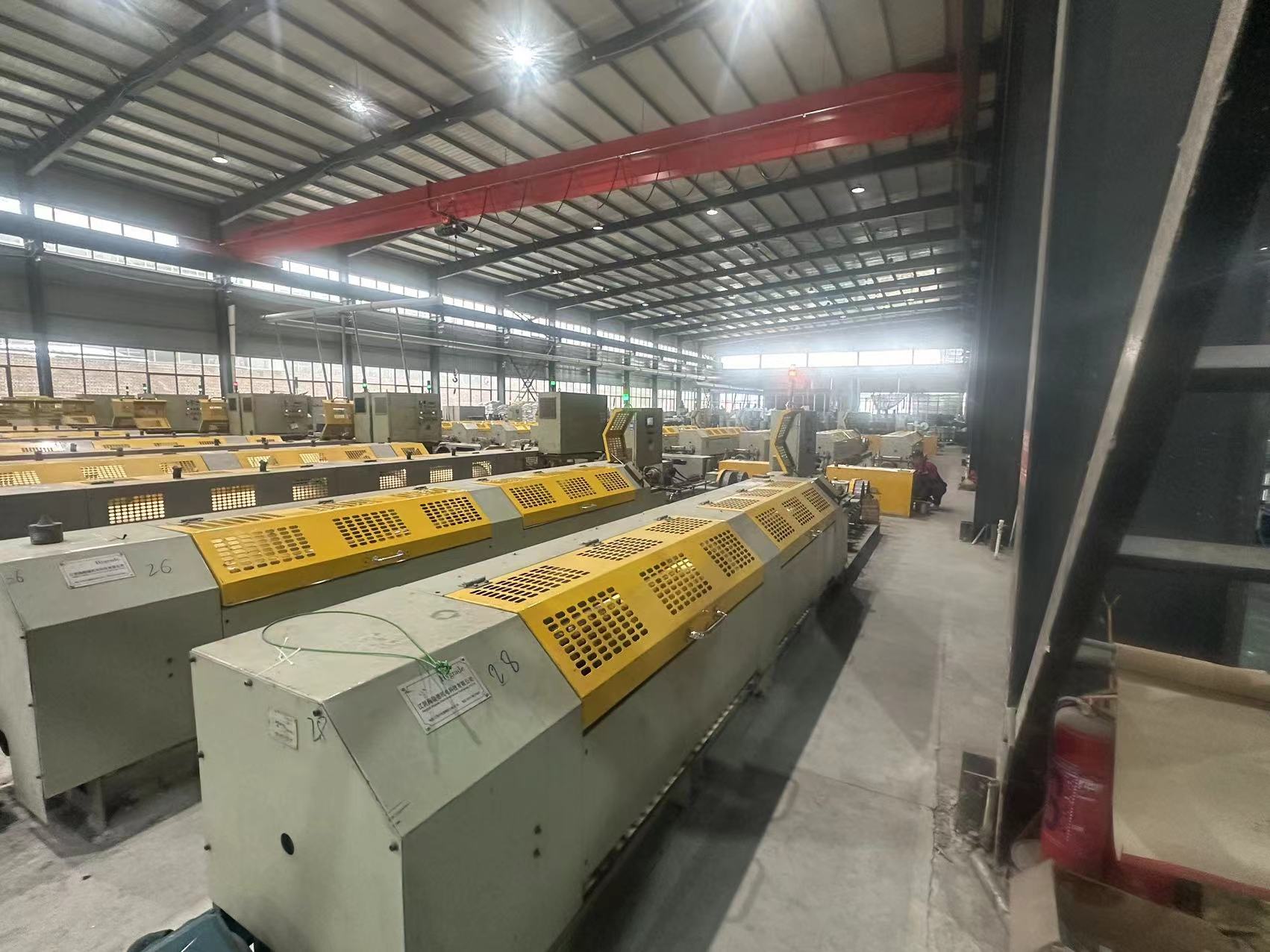
Flexible stainless steel wire intended for repeated bending must be specified by construction, bend geometry, and working tension together. A rope that meets a minimum breaking force requirement can still develop broken wires during cyclic motion if its individual wires are too large for the bend, its strands cannot move freely, or its supporting grooves create excessive contact pressure. Static strength establishes load capacity; it does not establish bending fatigue life.
The term “wire” also needs clarification. A solid stainless steel wire, a single strand, and a multistrand wire rope behave differently at the same overall diameter. For movement over sheaves or through curved guides, the construction designation and cross-sectional drawing are more informative than a description such as “flexible cable.”
Individual wire diameter changes the bending response
When a wire bends, its outer surface stretches while its inner surface compresses. For a simple wire bent to a given centerline radius, surface bending strain increases with wire diameter. Dividing a rope’s metallic cross-section among finer wires therefore reduces the bending strain experienced by each wire, provided the construction allows those wires to move relative to one another.
This explains why ropes with the same nominal diameter can feel markedly different during handling. A construction containing fewer, thicker wires resists curvature more strongly. A construction containing more, finer wires generally bends more readily, although lay geometry, core support, and friction also affect the result.
Fine wires introduce a tradeoff. Each exposed wire has less material available to withstand abrasive wear, and surface damage can become significant relative to its diameter. A rope running over a smooth, correctly sized sheave presents a different problem from one dragging across a rough guide. Greater flexibility alone does not resolve abrasive contact.
These comparisons assume broadly comparable material, diameter, and manufacturing quality. A construction designation describes an arrangement; it does not provide a universal fatigue rating.
Strand movement and core support affect fatigue
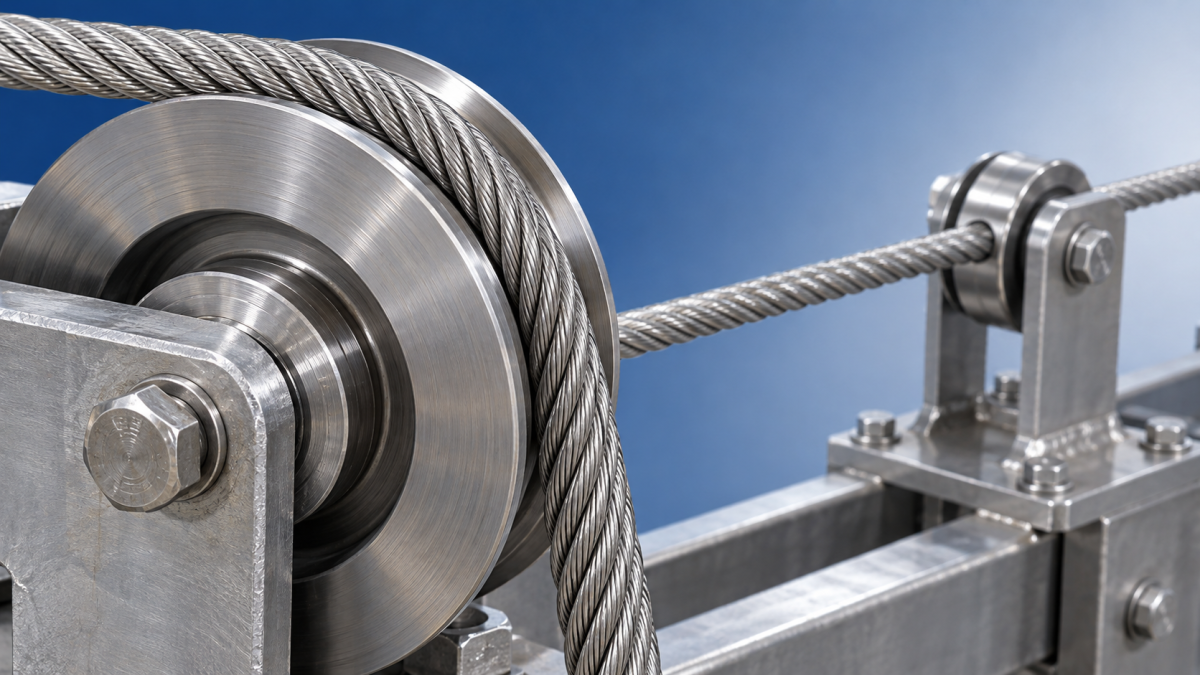
As a rope passes around a sheave, its wires and strands must accommodate different path lengths across the bend. Controlled internal movement allows this adjustment. Friction at wire contacts resists movement and produces local stresses, while repeated small movements can cause fretting damage. Lubrication, contact geometry, and closing quality influence this interaction.
A fiber core offers compliant support and can retain lubricant when designed for that purpose. Under substantial radial pressure, however, core compression changes strand support and rope shape. A steel core provides firmer support and contributes metallic area, but also changes stiffness and internal contact conditions. Neither core type guarantees superior bending life across all loads and sheave arrangements.
Lay length and lay direction matter because they influence wire orientation, strand interaction, and torque response. A rope restrained against rotation behaves differently from one allowed to rotate under tension. Swivels, terminations, and the equipment’s guidance arrangement therefore belong in the construction assessment rather than being treated as unrelated accessories.
A material distinction is equally necessary when comparing flexible constructions. The 6x12+7FC Galvanized Steel Wire Rope 3-12mm Use for Tying Towing Light Load Agriculture is described as a carbon steel rope with a fiber-core construction. Its construction and diameter range provide comparison points, but its galvanized material does not establish stainless steel corrosion behavior or repeated-bending performance. Confirm the cross-sectional arrangement and duty-specific data before drawing conclusions from the model designation.
Bend diameter must be evaluated under working tension
The ratio D/d compares sheave pitch diameter, D, with nominal rope diameter, d. Increasing this ratio reduces the severity of rope curvature. For a fixed sheave diameter, increasing rope diameter lowers D/d; replacing a rope with a thicker one to obtain higher breaking force can therefore make the bending conditions less favorable.
No single D/d value is suitable for every stainless steel rope. The required value must come from the applicable equipment requirements and construction-specific guidance. A minimum intended for occasional bending should not automatically be applied to continuous cycling. The diameter definition also matters: sheave outside diameter and pitch diameter are not interchangeable.
Working tension changes the fatigue problem. It raises tensile stress in the wires and increases pressure between the rope and sheave. Consequently, a hand-flexibility comparison made without tension cannot predict performance in a loaded mechanism. Breaking force, operating tension, and bending geometry must remain linked in the evaluation.
Reverse bending deserves separate attention. A rope passing through an S-shaped route bends in opposite directions at successive sheaves, creating a different strain history from a rope following bends in one direction. Short reciprocating strokes introduce another distinction: the same limited rope length repeatedly crosses the bend, concentrating damage in a small region even when total travel is modest.
Contact damage can resemble a construction problem
A narrow sheave groove can pinch the rope; an oversized or worn groove can provide inadequate support. Both alter contact pressure and encourage deformation. Groove profile, surface condition, sheave alignment, and bearing freedom should therefore be examined alongside rope construction. A seized sheave introduces sliding abrasion into a system intended for rolling contact.
The location of broken wires provides useful evidence, though it rarely proves a cause by itself. Damage concentrated on the rope’s exposed crown suggests examination of external contact and wear. Breaks near strand valleys warrant investigation of internal contacts and fretting. Flattening, polishing, corrosion pits, and the distribution of breaks help distinguish mechanisms that otherwise look similar.
Stainless steel remains susceptible to localized corrosion in unsuitable environments. Chloride deposits, retained moisture, and crevices between wires can damage surfaces where fatigue cracks initiate. Alloy grade and exposure conditions therefore affect the construction assessment. Corrosion resistance does not eliminate the need for a compatible lubricant where the rope design and equipment require lubrication.
Installation damage also persists into service. Kinks, forced bends during unreeling, and crushing at clamps create local distortions that normal movement will not reliably remove. Near a termination, repeated flexing can concentrate at the transition between the restrained rope and its free length. That transition needs assessment even when the main sheaves provide generous bend diameters.
Specify evidence that represents the bending duty
A useful specification identifies the stainless steel grade, nominal diameter and tolerance, exact construction, core type, lay, lubrication condition, and minimum breaking force. It also defines working tension, smallest bend diameter, motion direction, stroke, cycling rate, environment, and termination arrangement. Together, these details describe the conditions a proposed rope must withstand.
Standard compliance should be tied to its scope. A wire rope product standard can establish requirements for dimensions, materials, or breaking force without establishing service life in a particular mechanism. The applicable edition and coverage must be verified; standards listed for a galvanized product cannot automatically substantiate a stainless steel alternative.
Fatigue results become useful when test conditions accompany them. Relevant details include sheave geometry, applied tension, lubrication, bend sequence, and the endpoint used to define failure. “Cycles to failure” has limited comparative value if one test ends at the first broken wire and another continues to complete rupture.
Where representative evidence is unavailable, an application trial should reproduce the actual rope path and loading, including reverse bends and termination transitions. Inspection intervals and removal criteria should be established from applicable equipment requirements and rope guidance before the trial begins. Recording where damage first appears makes the result useful for deciding whether to change the construction, increase bend diameter, improve contact surfaces, or revise the rope route.
Navigation
Send Us A Message



Shandong Faster Technology Co., Ltd. is a professional manufacturer of steel wire ropes.
Get in Touch
*We respect your confidentiality and all information are protected.