





6x36 IWRC Wire Rope for Cranes: Balancing Bending Fatigue and Abrasion
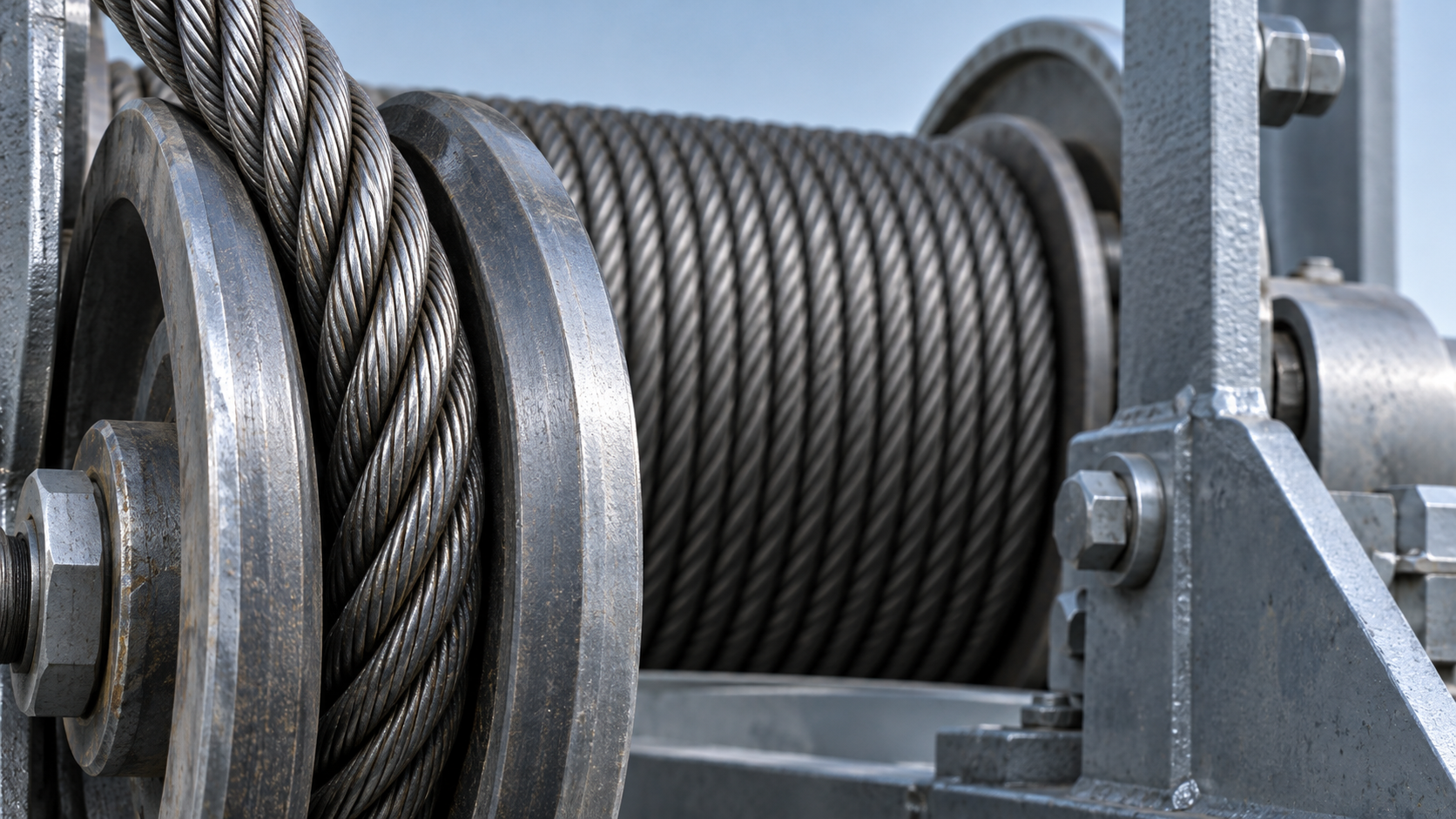
A crane rope can meet the specified diameter and minimum breaking force yet still wear out sooner than expected. The reason often lies in how it works: repeated bending over sheaves, rubbing against adjacent drum wraps, or running through grooves that no longer support it correctly. Selecting 6x36 IWRC wire rope means evaluating those conditions together, rather than treating flexibility and strength as sufficient evidence of suitability.
For technical evaluators, the central question is practical: will the rope’s bending-fatigue performance outweigh its potential vulnerability to surface wear in this particular crane? The answer depends on the exact construction, reeving arrangement, operating duty, and maintenance conditions.
What the 6x36 IWRC designation tells you—and what it leaves open
A nominal 6x36 construction has six outer strands, each containing 36 wires. In commercial specifications, however, “6x36 class” can cover related constructions with different wire counts and arrangements. Confirm the actual strand construction rather than assuming all ropes sold under the class designation behave identically.
IWRC means independent wire rope core: a separate wire rope supporting the outer strands. Compared with a comparable fiber-core rope, an IWRC rope generally provides greater resistance to crushing and higher minimum breaking force, although the actual values depend on construction and grade. That support can be valuable where drum pressure and loading challenge the rope’s cross-sectional stability.
The designation does not establish rope grade, finish, lay direction, minimum breaking force, or rotation characteristics. A conventional six-strand IWRC rope is not inherently rotation-resistant. Long unsupported lifts, certain reeving arrangements, or loads sensitive to rotation may require a different construction approved by the crane manufacturer.
The real trade-off: smaller wires bend more easily, but wear margin matters
Compared with a typical 6x19-class construction of similar diameter and grade, a 6x36-class rope generally uses more, smaller wires. Those wires accommodate bending more readily, making the construction a useful candidate for crane systems with repeated sheave passages.
That flexibility has a cost. Smaller exposed wires generally offer less individual wear allowance than larger outer wires. Where abrasive contamination, rough grooves, or persistent rubbing dominate, an abrasion-oriented construction may perform better—even if it is less flexible.
This comparison is directional, not a service-life prediction. Compacted strands, different strand patterns, lubrication, and manufacturing quality can change the balance. Ask suppliers to compare the proposed constructions, not merely their class names.
Read the crane geometry before choosing the rope
Sheave size and groove support
The D/d ratio compares sheave diameter with nominal rope diameter; confirm the diameter measurement convention used in the applicable specification. A larger ratio generally reduces bending severity. A flexible rope does not make an undersized sheave acceptable, and no single minimum ratio applies to every crane.
Measure groove condition as well. A tight groove can pinch the rope, while an oversized or worn groove may provide inadequate support. Rough surfaces, seized bearings, and misalignment can undermine the expected benefit of a fatigue-resistant construction. Follow the crane and rope manufacturers’ requirements for groove profile and tolerances.
Drum layers and crossover points
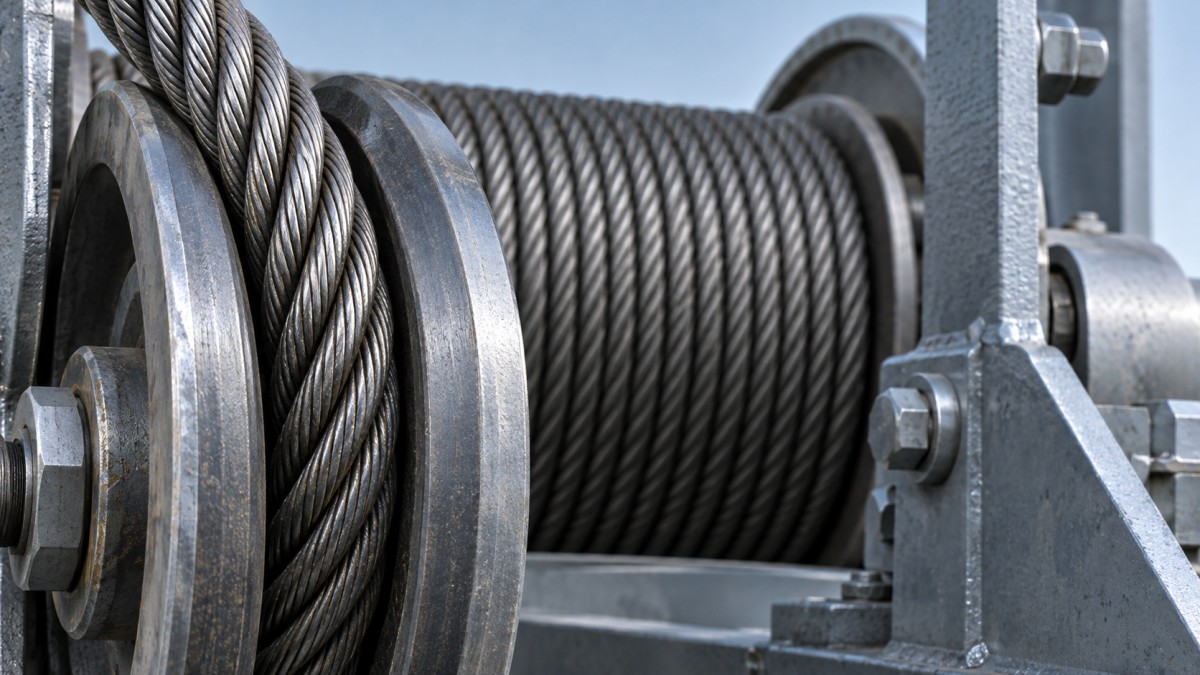
On a multilayer drum, the rope experiences local contact pressure where wraps cross and where upper layers bear on lower ones. IWRC support helps resist deformation, but it does not eliminate crushing or interference between wraps. Controlled installation tension, correct anchorage, and orderly spooling remain essential.
Review fleet angle across the drum’s working width. Poor alignment can promote flange contact and unstable winding. If previous ropes consistently deteriorated at crossover locations, changing to 6x36 alone is unlikely to solve the underlying problem.
Load cycles, not just maximum load
Two cranes lifting the same maximum load can impose very different fatigue demands. Short, frequent lifts may accumulate many bending cycles; a crane performing fewer long lifts may face different rotation and spooling challenges. Include acceleration, braking, shock loading, and any reverse bending in the evaluation. Rated capacity alone is an incomplete description of rope duty.
Specify the rope as a system component
A purchasing specification should let engineering, procurement, and the supplier identify the same product without interpretation. For 6x36 IWRC wire rope, include:
- Construction: exact strand arrangement, IWRC details, and any compaction requirement.
- Dimensions: nominal diameter, permitted tolerances, length, and measurement conditions.
- Mechanical requirements: rope grade and certified minimum breaking force, checked against the applicable crane design requirements.
- Lay and rotation requirements: direction, ordinary or Lang’s lay where approved, and compatibility with the reeving system.
- Surface and lubrication: bright or galvanized finish, lubricant compatibility, and environmental exposure.
- Documentation: applicable manufacturing standard, test certificate, batch traceability, and installation instructions.
Higher tensile grade is not automatically the better selection. It does not compensate for unsuitable geometry, abrasion, or poor lubrication. Likewise, galvanizing addresses corrosion exposure but does not remove the need for suitable lubrication and inspection.
Keep crane running rope and lifting slings separate
Procurement teams may source crane rope and lifting accessories together, but their ratings are not interchangeable. A running rope is assessed within the crane mechanism; a sling assembly requires its own verified working load limit, termination design, hitch conditions, and connection compatibility.
Shandong Faster Technology Co., Ltd. supplies steel wire rope, customized slings, and chains. Its listed sling offering includes 8mm galvanized steel wire rope Sling soft eye 3tons Eye to Eye for Rigging & Hoisting. Treat the “3tons” wording as a rating requiring documentary verification, not as a capacity established by an 8 mm diameter. Confirm the assembly certificate, applicable standard, hitch, sling angle, and eye support before use.
For crane rope sourcing, the company’s stated wire drawing, stranding, closing, and inspection capabilities provide a useful basis for technical discussions. Its listed 1–20 mm diameter range should still be checked against availability of the exact 6x36 IWRC construction, grade, finish, and required documentation. General production capability is not proof of a particular rope’s suitability.
Let inspection evidence shape the final decision
Before replacing an existing rope, examine where and how it deteriorated. Broken wires around sheave travel zones suggest a different problem from flattened wires at drum crossovers or corrosion in poorly lubricated sections. These patterns are clues, not definitive diagnoses; several damage mechanisms can act together.
Establish baseline diameter measurements and inspection records after installation. Subsequent checks should address broken wires, diameter reduction, corrosion, deformation, crushing, and termination condition. Internal deterioration may not be obvious from surface appearance; specialist examination or magnetic rope testing may be appropriate where specified.
Apply the crane manufacturer’s instructions and the relevant inspection and discard criteria, such as ISO 4309 where applicable. Avoid a universal broken-wire threshold: allowable limits depend on rope construction, damage distribution, and the governing requirements.
Choose 6x36 IWRC when its flexibility and core support fit the actual duty—not simply because it is a familiar crane rope. Where bending fatigue dominates, it can be a strong candidate. Where abrasion, rotation, or severe multilayer crushing controls service life, investigate approved alternatives and correct the equipment conditions. The best decision connects a verified rope specification with the crane geometry and a realistic inspection plan.
Navigation
Send Us A Message



Shandong Faster Technology Co., Ltd. is a professional manufacturer of steel wire ropes.
Get in Touch
*We respect your confidentiality and all information are protected.