





FC Wire Rope Explained: How a Fiber Core Affects Flexibility and Heat Limits
FC Wire Rope Explained: How a Fiber Core Affects Flexibility and Heat Limits
Choosing steel wire rope involves more than matching diameter and breaking strength. The core also influences flexibility, strand support, and temperature limits. FC wire rope uses a natural or synthetic fiber core, typically offering easier handling than comparable steel-core constructions while providing less resistance to crushing and elevated temperatures. Those trade-offs matter when a rope must bend around a load, run over sheaves, or work near a heat source.
The useful question is not whether fiber core is “better.” It is whether its characteristics match the equipment, loading pattern, and environment. A rope that feels convenient during rigging can still be unsuitable for the pressure it experiences on a drum.
What the fiber core actually does
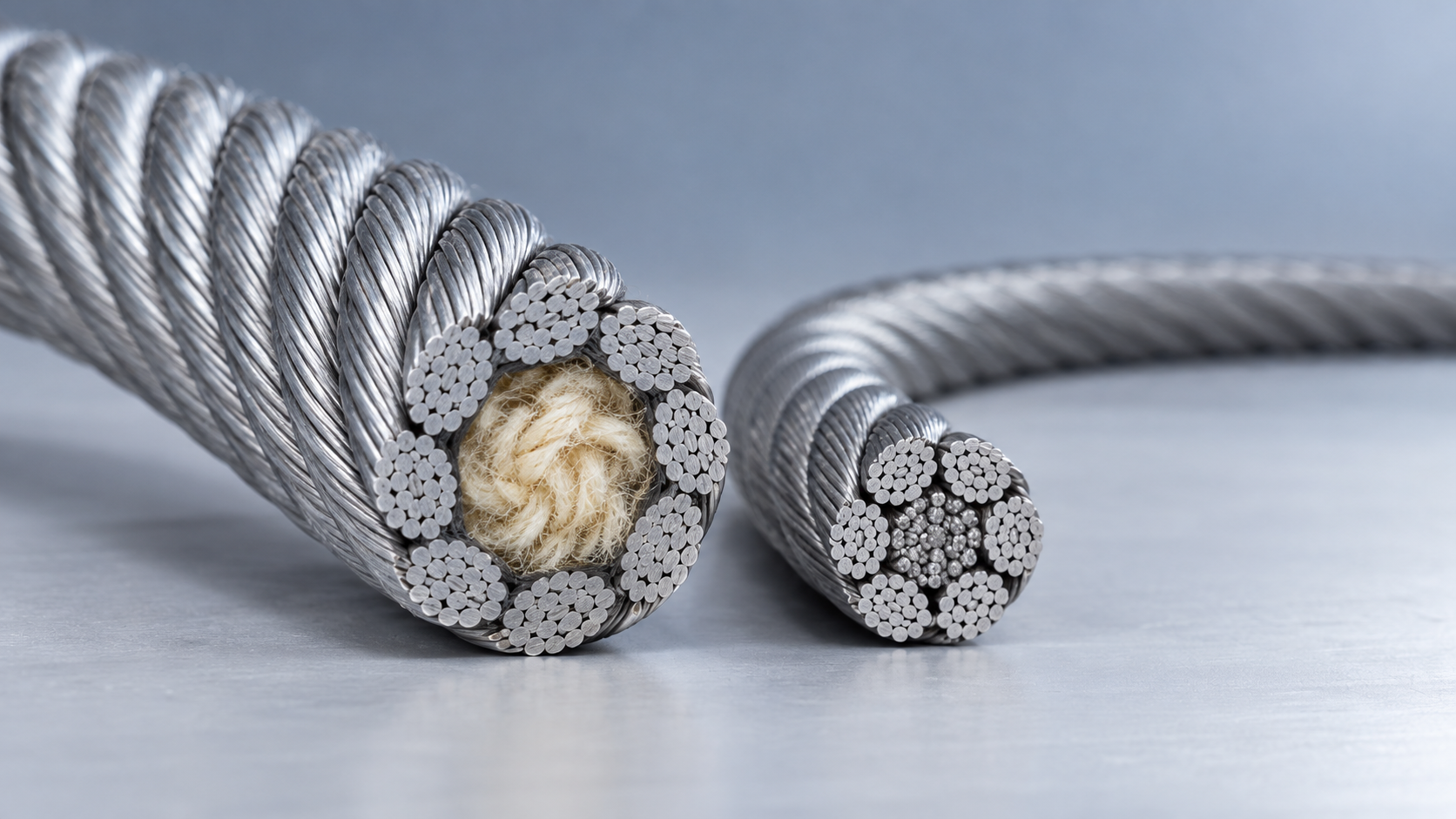
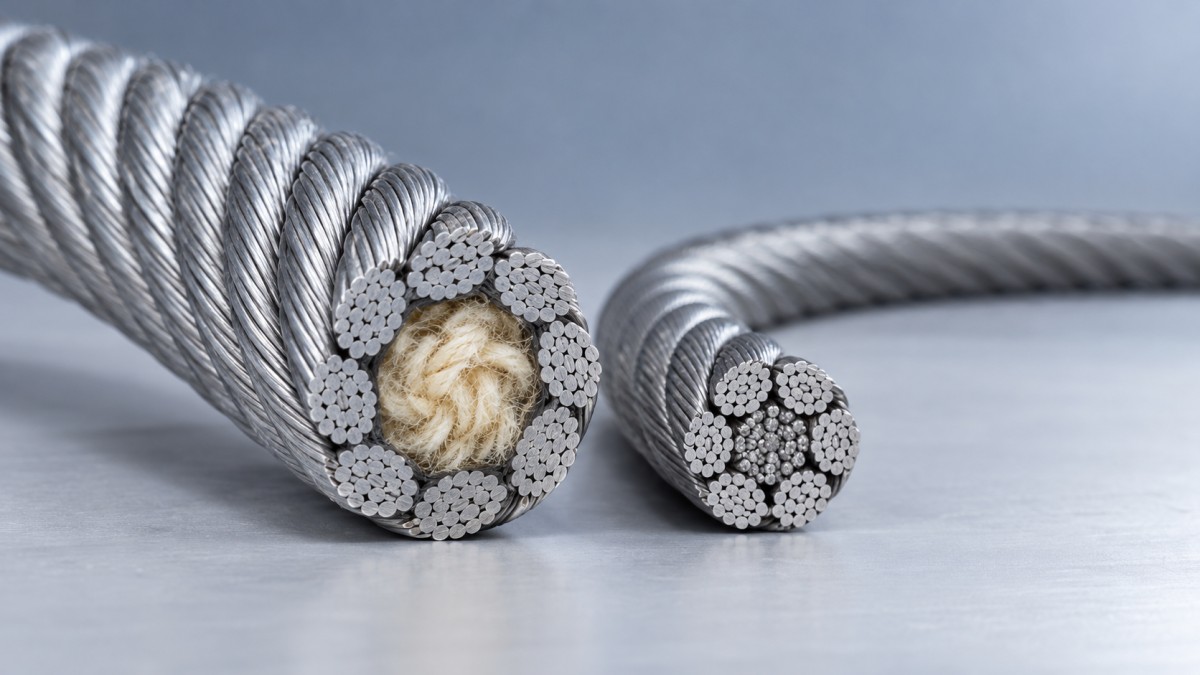
FC means fiber core: the center around which the outer steel strands are closed. Natural fibers such as sisal and synthetic fibers such as polypropylene may be used, depending on the rope specification. The core helps maintain strand spacing and supports the rope’s shape. Depending on its material and preparation, it can also hold lubricant that helps reduce internal friction.
The steel wires carry the principal tensile load; the fiber core does not provide the same metallic load-bearing contribution as a steel core. An independent wire rope core, or IWRC, is itself a small wire rope inside the outer strands. It generally provides firmer support and greater resistance to compression.
A cross-section makes the distinction clear: an FC rope has a fiber center surrounded by steel strands, while an IWRC rope has steel strands surrounding another steel rope. Similar outside diameters therefore do not mean identical breaking forces, stiffness, or operating limits.
Flexibility helps handling—but does not remove bending limits
For otherwise comparable constructions, a fiber core generally allows more compliance as the rope bends. This can make a sling easier to position around a load or help a rope conform during handling. The difference is useful where manual positioning happens repeatedly and excessive stiffness makes the task awkward.
However, core type is only one part of flexibility. Wire size, strand construction, lay, diameter, and lubrication also matter. Comparing two different constructions and attributing every handling difference to the core can lead to the wrong conclusion.
Nor does a flexible rope automatically tolerate small sheaves or sharp load edges. The ratio of sheave diameter to rope diameter, commonly called D/d, remains an important equipment parameter. Repeated bending over an undersized sheave can accelerate fatigue even when the rope feels easy to bend by hand. Follow the equipment and rope manufacturer’s specified requirements rather than using flexibility as a substitute for them.
Heat limits belong to the complete rope specification
There is no universal temperature rating for every FC wire rope. Natural and synthetic fibers respond differently to heat, and synthetic materials differ from one another. Depending on the material, exposure can cause softening, shrinkage, embrittlement, or loss of strength. Lubricant and any external coating may impose additional restrictions.
Core deterioration matters even if the outer wires still look serviceable. Once internal support changes, strands may settle or move differently under load. A sound-looking exterior is therefore not proof that a heat-exposed rope remains suitable for lifting.
Assess the temperature at the rope, not just the air temperature nearby. Contact with hot workpieces, radiant heat from furnaces, welding spatter, and frictional heating can create exposures that an ambient reading misses. A brief local heat event and prolonged operation at an elevated temperature also require different assessments.
- Identify the actual fiber material rather than accepting “FC” as a complete specification.
- Obtain the manufacturer’s operating temperature limit and any exposure restrictions.
- Check whether the lubricant, coating, ferrules, sockets, or other fittings introduce a lower limit.
- After suspected overheating, remove the rope from service pending assessment under the applicable inspection procedure.
A steel-core alternative may suit elevated-temperature service better, but it is not automatically approved for hot work. The finished rope or sling still needs a documented temperature rating and any required capacity adjustment.
Where crushing resistance changes the choice
Multi-layer drum winding illustrates the limitation of a softer core. Upper rope layers press against lower ones, particularly at crossover points. Under demanding loading, insufficient internal support can contribute to flattening and distortion. IWRC is often preferred where this pressure is significant, although winding geometry, fleet angle, rope tension, and drum condition also need attention.
For a sling, pressure can instead occur where the rope bears against the load. A fiber core does not protect against sharp edges or unfavorable contact geometry. Suitable edge protection and the sling manufacturer’s bending requirements remain necessary.
Shandong Faster’s 4 Leg Wire Rope Sling Carbon Steel With Latched Eye Sling Hook for Heavy Lifting illustrates why core choice should be considered alongside the assembly. Its described IWRC configuration uses four rope legs, thimble eyes, an oblong master link, and latched hooks. The steel core offers firmer support, but the assembly’s allowable load still depends on its verified rating, leg angles, terminations, and load distribution—not simply the number of legs.
Four legs should not be assumed to share the load equally. Load rigidity, center of gravity, and attachment-point geometry can create unequal tensions. A hook latch helps retain the connection; it is not a load-bearing substitute for correct seating.
Specify more than diameter and “FC”
A useful comparison includes rope construction, core material, wire grade, minimum breaking force, finish, lubrication, and the intended duty. Minimum breaking force is not the working load limit of a completed sling. Termination efficiency, design factors, hitch arrangement, and operating conditions must also be considered.
Marine service adds another consideration: moisture. Natural and synthetic cores have different moisture behavior, while galvanized outer wires do not eliminate internal corrosion risk. Inspection and lubrication need to suit the actual exposure. Do not treat a corrosion-resistant finish as evidence of heat resistance.
Shandong Faster Technology Co., Ltd. supplies steel wire ropes in diameters of 1–20 mm, alongside customized slings and chains. Its wire drawing, twisting, rope-closing, and inspection capabilities provide a basis for discussing the rope and termination together. For a specific application, the relevant evidence is the selected construction’s specification and finished assembly documentation, not the breadth of the catalog.
FC wire rope is worth considering when handling flexibility matters and heat and crushing exposure remain within documented limits. If substantial drum pressure, elevated temperatures, or firmer internal support dominate the application, compare a suitable steel-core construction. Before approving either option, confirm the actual core material, equipment compatibility, temperature limits, and rated capacity of the finished rope or sling.
Navigation
Send Us A Message



Shandong Faster Technology Co., Ltd. is a professional manufacturer of steel wire ropes.
Get in Touch
*We respect your confidentiality and all information are protected.