





Common Inspection Points for 4 Leg Wire Rope Sling Carbon Steel Before Lifting
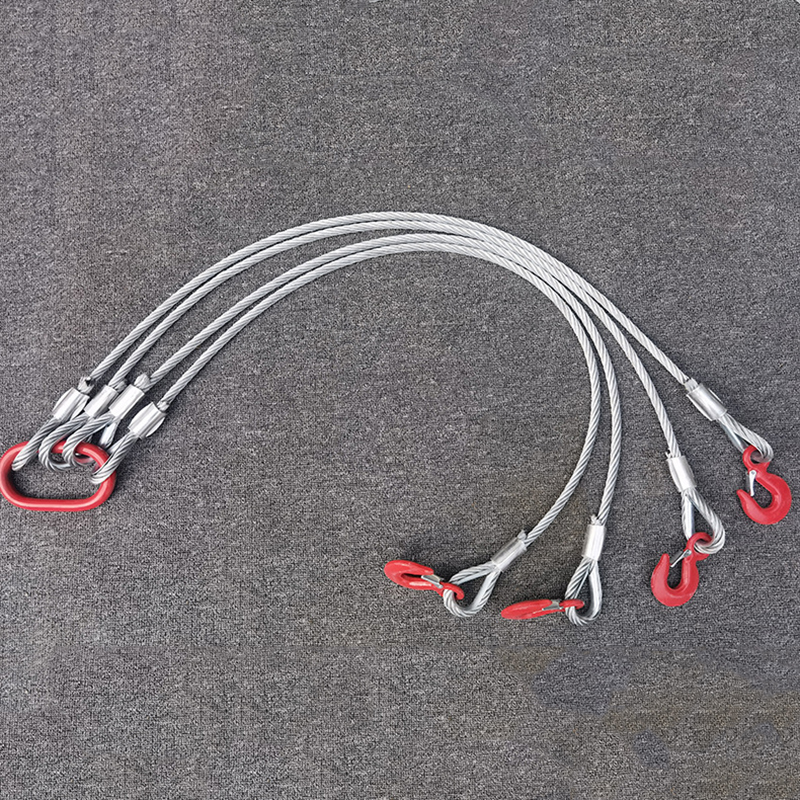
Before any lift begins, a 4 Leg Wire Rope Sling Carbon Steel must pass a careful inspection to reduce safety risks, prevent load failure, and meet site compliance requirements. For quality control and safety managers, understanding the most common inspection points helps identify wear, deformation, corrosion, and connection issues early, ensuring reliable lifting performance in demanding industrial environments.
What Search Intent Is Behind This Topic?
Users searching for common inspection points for a 4 Leg Wire Rope Sling Carbon Steel are usually not looking for a generic product overview. They want a practical inspection reference.
In most cases, the search intent is operational and risk-driven. The reader needs to know what to check before lifting, what defects require removal from service, and how to avoid incidents.
For quality control personnel and safety managers, the real concern is not only sling condition. It is whether the sling can remain compliant, traceable, and safe under actual site conditions.
What QC and Safety Managers Care About Most
The first concern is whether visible damage could lead to sudden failure during lifting. Broken wires, crushed sections, distorted fittings, and corrosion are all high-priority warning signs.
The second concern is consistency in inspection judgment. Many lifting risks happen because one inspector accepts a sling that another would reject, creating uncertainty in field decisions.
They also care about documentation, identification, and load suitability. Even a physically intact sling should not be used if its tag is missing, its working load is unclear, or its configuration does not match the lift plan.
For this reason, the most useful article is one that explains inspection points in a sequence inspectors can actually use on site, not a broad theory of wire rope construction.
Start with Identification and Rating Before Physical Checks
The first inspection point is basic but critical: confirm the sling is the correct assembly for the planned lift. A 4 Leg Wire Rope Sling Carbon Steel must match the load type, weight, angle, and connection method.
Inspect the identification tag or marking. It should clearly show size, working load limit, construction details, and manufacturer information. If the tag is missing or unreadable, many sites treat the sling as unfit for use.
This step matters because physical condition alone is not enough. A sling in good visual condition can still be unsafe if it is misapplied, overloaded, or selected without verified capacity data.
QC teams should also confirm whether the sling is part of a controlled asset register. Traceability supports inspection history, maintenance decisions, and audit readiness during internal or external compliance reviews.
Check the Wire Rope Body for Wear, Breaks, and Distortion
The rope body is the main load-bearing element, so it deserves the closest attention. Begin with a full visual and hand inspection along each leg, looking for broken wires, abrasion, flattening, and localized damage.
Broken wires are one of the most important rejection indicators. Even when damage appears limited to a small area, it can signal fatigue, bending stress, or hidden internal deterioration.
Pay close attention to areas near end terminations, hook connection points, and sections that regularly contact load edges. These locations often experience the highest stress concentration and wear during repeated use.
Distortion is another serious issue. Kinks, birdcaging, waviness, crushing, or pulled strands change the rope structure and reduce its ability to distribute load evenly across the sling legs.
If one leg shows more severe deformation than the others, the issue may not be isolated damage. It may also indicate previous uneven loading, poor rigging practice, or shock loading during past lifts.
Inspect for Corrosion and Surface Degradation
Carbon steel wire rope slings are widely used because they provide strong lifting performance, but they are still vulnerable to corrosion, especially in humid, marine, port, mining, or outdoor construction environments.
Inspect for red rust, pitting, discoloration, scale buildup, and loss of metallic surface integrity. Surface corrosion may seem minor, but it often accelerates wear between wires and reduces rope flexibility.
Corrosion is especially concerning when it appears under dirt, hardened grease, or trapped moisture around fittings. These hidden areas can deteriorate without obvious damage until the sling is already weakened.
Where exposure conditions are severe, inspectors should pay closer attention to material selection and protective finishes. In some applications, galvanized or stainless options may improve service life and inspection reliability.
Examine End Fittings, Thimbles, Sleeves, and Connections
A 4-leg sling is only as reliable as its termination points. Each eye, ferrule, thimble, socket, master link, and connector must be checked for deformation, cracks, wear, and secure assembly.
Inspect whether the pressed sleeve is intact and properly seated. Any slippage, cracking, severe wear, or unusual gap can indicate termination weakness that could compromise the entire sling during loading.
Thimbles deserve special attention because they protect the rope eye at the bending point. A well-designed thimble helps reduce wear and preserves rope shape where contact pressure is highest.
In lifting applications where eye protection and connection strength are important, some users prefer assemblies such as Steel Wire Rope Sling Loops with thimble Wire Rope Cable Sling Rigging use for Lifting, which are designed to improve durability at the rope eye.
Hooks, shackles, and master links should also be checked for throat opening, twisting, gouging, and latch condition where applicable. A sound rope body cannot compensate for a compromised metal fitting.
Look for Signs of Uneven Load History Across All Four Legs
One common mistake in sling inspection is judging each leg separately without comparing them as a set. In a 4 Leg Wire Rope Sling Carbon Steel, unequal wear patterns can reveal past misuse.
If one or two legs are longer, more worn, more corroded, or visibly more stretched, that may mean the sling has not been sharing load evenly during previous lifting operations.
This matters because four-leg slings are often assumed to distribute weight equally, while actual load sharing can vary significantly depending on angle, hook position, center of gravity, and rigging setup.
Safety managers should treat uneven condition as a signal to review not only the sling but also lifting procedures, attachment points, and whether workers understand proper load balancing practices.
Confirm Diameter Loss, Flexibility, and Structural Integrity
Visual checks should be supported by basic dimensional and handling assessments. Measure rope diameter at worn or suspicious sections and compare with original specifications when records are available.
A noticeable reduction in diameter may indicate internal wear, core failure, or abrasion. Loss of flexibility can also point to corrosion, broken internal wires, or crushing that is not fully visible on the surface.
Inspectors should gently flex the rope where safe and practical. Stiff sections, sharp bends, or inconsistent movement between legs often reveal internal damage that deserves closer evaluation or immediate rejection.
For engineered assemblies, dimensional design matters. Some high-quality thimble configurations use an inner diameter based on roughly 1.5 times the wire rope diameter to reduce bending stress at the eye.
Review Compliance, Testing, and Supplier Quality Support
Inspection quality improves when the sling source is reliable and documentation is complete. That includes material consistency, process control, test capability, and certification support from the manufacturer.
Shandong Faster Technology Co., Ltd. manufactures steel wire rope, slings, and chains for lifting, marine, port, construction, mining, and other industrial applications, with full-process production control from raw materials to finished products.
Its production capacity exceeds 70,000 tons annually, covering multiple rope constructions such as 6x19, 6x24, 6x37, 19x7, and 7x19, with galvanized, bright, stainless steel, and plastic coated options.
For buyers and safety teams, this matters because product reliability starts before the sling arrives on site. Stable manufacturing and inspection systems make field inspection more meaningful and more consistent.
Where projects require documented quality standards, certifications such as SGS, CE, Rohs, and ISO can support procurement review and help align lifting equipment selection with internal compliance expectations.
When Should a Sling Be Removed from Service?
The safest approach is simple: remove the sling from service immediately if there is broken wire concentration, severe wear, kinking, crushing, corrosion damage, fitting deformation, or missing identification.
Do not keep a questionable sling in circulation because it “might still work.” For safety managers, uncertainty itself is a risk factor, especially in high-consequence lifting environments.
If inspection findings are borderline, isolate the sling and escalate for technical review. A controlled hold decision is far better than allowing a damaged assembly back into active lifting service.
This is also where supplier support helps. A manufacturer that understands lifting applications can provide technical guidance on product selection, replacement specifications, and customized assemblies for site-specific demands.
Build a Practical Pre-Lift Inspection Routine
The best inspection program is not the most complicated one. It is the one that teams can apply consistently before every lift, with clear rejection criteria and proper reporting discipline.
A practical routine should include identification check, full-leg visual inspection, fitting examination, corrosion review, comparison across all four legs, and confirmation that the sling matches the lift plan.
For operations that demand reinforced rope-eye protection and stable lifting performance, another relevant option may be Steel Wire Rope Sling Loops with thimble Wire Rope Cable Sling Rigging use for Lifting, especially in heavy-duty hoisting and traction scenarios.
Standardized checklists, regular inspector training, and clear quarantine procedures will reduce inconsistent judgment and help quality teams catch failure risks before they reach the crane hook.
Conclusion
The most common inspection points for a 4 Leg Wire Rope Sling Carbon Steel are straightforward but high impact: verify identification, inspect the rope body, check corrosion, examine fittings, compare all four legs, and remove damaged slings without hesitation.
For quality control and safety managers, the value of inspection is not only defect detection. It is creating a repeatable decision system that protects people, prevents load incidents, and supports compliance under real operating conditions.
When inspections are backed by sound product selection, reliable manufacturing, and disciplined site practices, lifting operations become safer, more predictable, and easier to manage across demanding industrial environments.
Navigation
Send Us A Message



Shandong Faster Technology Co., Ltd. is a professional manufacturer of steel wire ropes.
Get in Touch
*We respect your confidentiality and all information are protected.