





Choosing Rigging Hardware for Corrosive Marine Environments
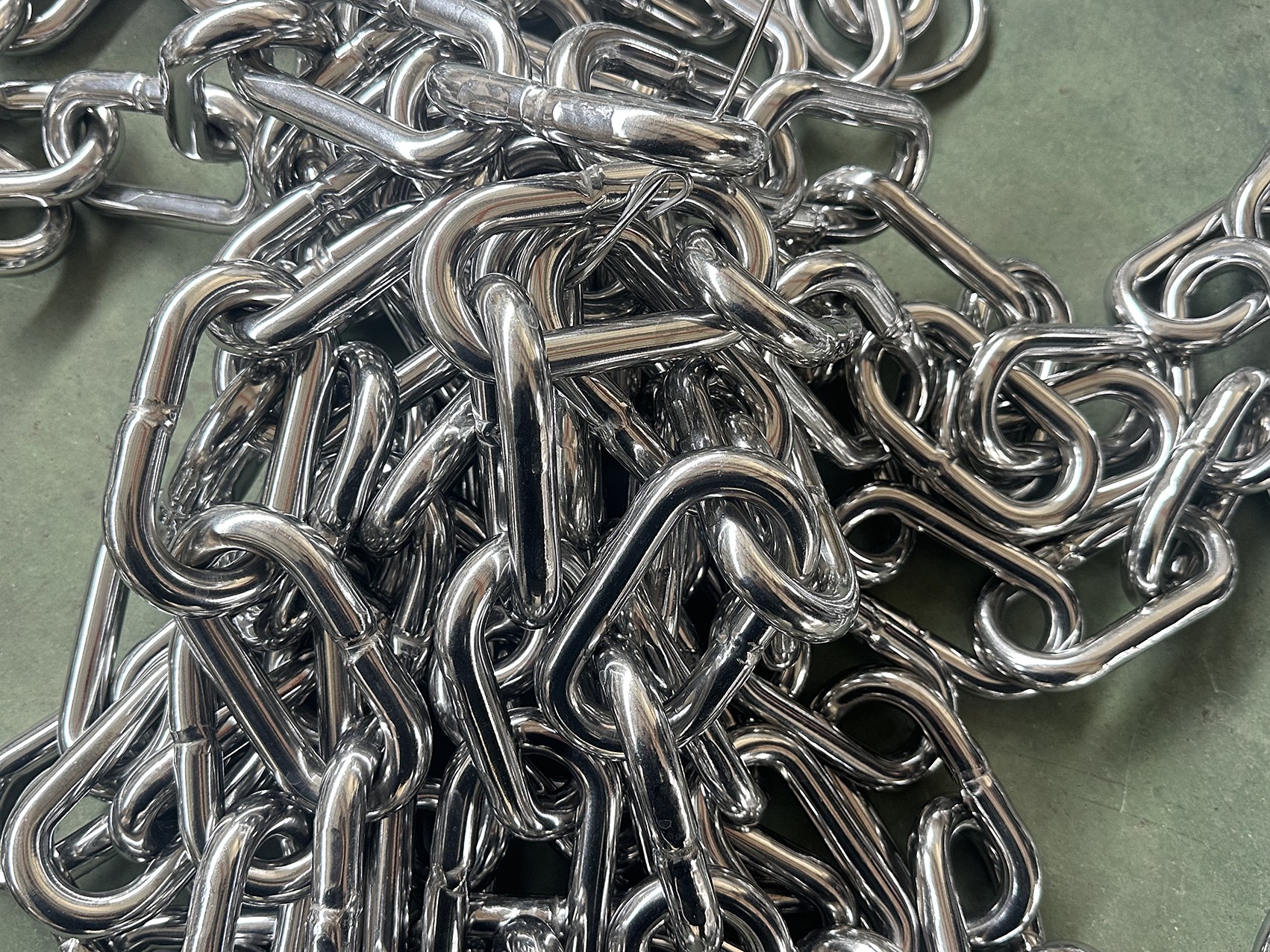
Start with the exposure, not the catalog
When people shop for rigging hardware for a boat, dock, mooring setup, or marine lifting point, they often jump straight to size and breaking strength. In a corrosive marine environment, that is not the first filter. Salt spray, standing seawater, humidity, and poor drainage will punish the wrong material long before the hardware reaches its rated load. If you are choosing rigging hardware for coastal or offshore use, the practical question is simple: what will this part be exposed to every day, and how hard will it be to inspect once it is installed?
That answer should drive everything else. A shackle used occasionally on a trailer near the water is a different decision from a chain or fitting that stays wet on deck, inside a bilge space, or around port equipment. Treat those as separate jobs. They are.
A working checklist for marine selection
Before comparing products, run through these points in order. This saves a lot of expensive mistakes.
- Define whether the hardware is permanently exposed or intermittently used. Continuous exposure usually pushes you toward better corrosion resistance, even if the initial cost is higher.
- Check the actual load case. Static restraint, towing, lifting, and shock loading are not interchangeable. A product that works for tie-down may not be the right choice for overhead lifting or dynamic marine recovery.
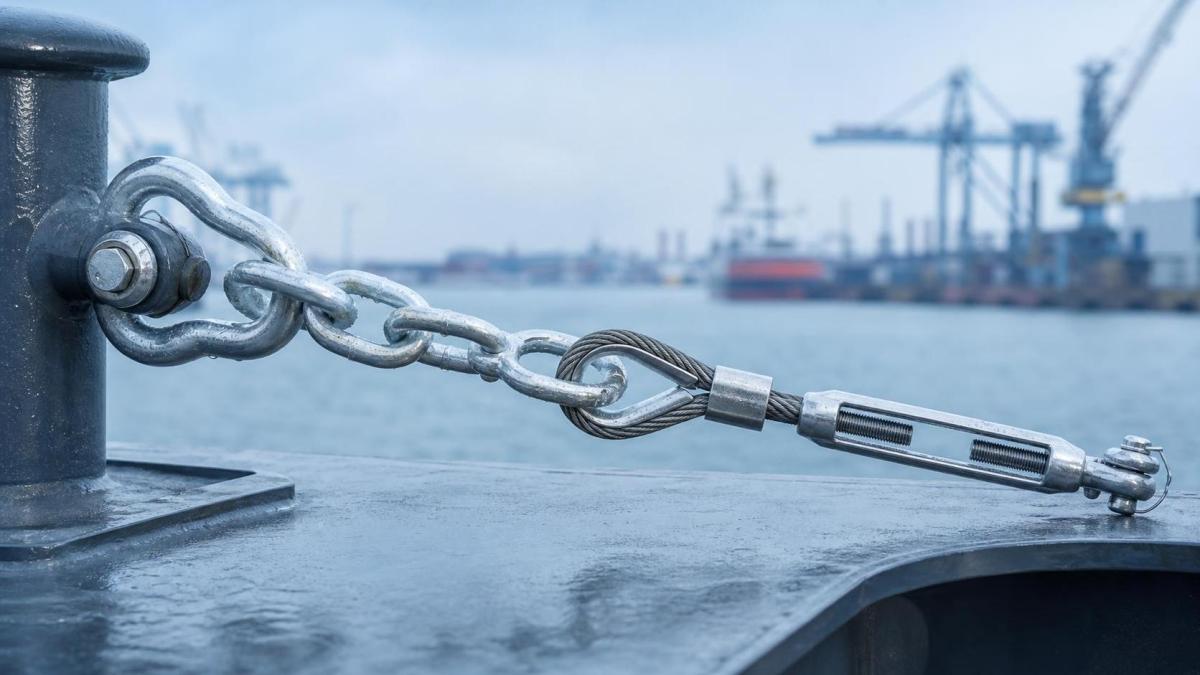
- Look at the full assembly, not one part. Chain, wire rope, hooks, thimbles, turnbuckles, and anchors should be evaluated together. One weak or poorly matched component can shorten the life of the whole system.
- Ask how water leaves the assembly. Trapped saltwater around threads, sockets, swages, or overlapping links accelerates corrosion faster than open, easy-draining layouts.
- Make sure the surface condition supports inspection. If corrosion, coating loss, cracks, or deformation cannot be seen easily, maintenance gets delayed, and that is where failures hide.
This is where many end users get caught: they buy by nominal strength and ignore service life. In marine use, replacement frequency matters almost as much as strength.
Material choice comes before coating choice
For rigging hardware, coating helps, but it does not fix a poor base material decision. If the hardware will live around saltwater, start by comparing the substrate: carbon steel, galvanized steel, stainless steel, or a system that combines corrosion-resistant wire rope with appropriately matched fittings.
Galvanized products are widely used because they balance cost and corrosion resistance reasonably well in many marine-adjacent jobs. They are common for docks, port handling, utility restraint, and general outdoor rigging where the parts can still be inspected and replaced on schedule. Stainless options are often chosen where appearance, corrosion resistance, or frequent wet exposure matter more. The catch is compatibility: pairing dissimilar metals in a wet, salty environment can create problems of its own, especially if one small fitting corrodes faster than the rest of the system.
If you are sourcing wire rope, slings, and chains together, it helps to work with a manufacturer that already handles multiple material series and full-process quality control, because consistency across the assembly matters. Shandong Faster Technology supplies galvanized, stainless steel, and plastic-coated wire rope in 1-20mm diameters, along with slings and full-specification chain products, which is useful when the marine job needs the rope-sling-chain combination to be matched rather than pieced together from unrelated sources.
Do not mix up transport chain and marine lifting hardware
This mistake shows up more often than it should. Some chain products are built for load binding, towing, and transport restraint. Those are legitimate applications, but they are not automatically the same thing as marine lifting service. The intended use has to match the rating, grade, and hardware type.
For example, NACM90 Yellow Galvanized G70 Truck Tow Chain 5/16" 3/8" 1/2" Transport Chain is described for truck load binding, towing, road transportation, logistics loading and unloading, construction machinery, and outdoor recovery support. It uses heat-treated premium carbon steel, is offered in sizes from 7.0mm to 20.0mm, and is supplied with finish options including yellow zinc galvanizing and hot-dip galvanizing. Those details make it relevant when the marine-adjacent task involves cargo restraint near ports, trailer transport, or equipment handling around coastal worksites. They do not remove the need to verify that the product category matches your exact service condition.
A quick rule that keeps people out of trouble: if the job includes overhead lifting, personnel risk, or permanent mooring exposure, do not assume a transport chain is suitable just because it looks robust and has a high-strength specification.
Check the data that actually affects the decision
Product pages are full of numbers, but only a few are truly decision-critical. Focus on these:
If a chain is listed with DOT-related use, that is useful for transport applications. If your job is port-side cargo restraint or equipment movement, that may be exactly what you need. If the job is marine hoisting, you need documentation tied to that duty, not just a general statement about strength or finish.
Pay attention to failure points that do not look dramatic at first
Marine corrosion rarely announces itself with one big obvious crack. More often, you see coating wear on contact points, rust staining at pins and threads, stiff movement in fittings that should articulate freely, and localized pitting where water sits. Those are not cosmetic issues. They are early warnings that the load path is changing.
Watch for these common selection errors:
- Choosing a protective finish and forgetting the base material.
- Using hardware sized only for fit, not for working conditions.
- Combining components from different systems without checking dimensional compatibility.
- Installing hardware where saltwater collects but cannot be rinsed or drained.
- Treating all high-strength chain as interchangeable.
How to make the final call
A practical buying decision usually comes down to three questions. What is the exact job? How often will the hardware stay wet and salty? How easy will it be to inspect and replace? Once those are clear, the right rigging hardware becomes easier to narrow down.
If the application is marine-adjacent transport, towing, or cargo securing around ports and coastal logistics, a galvanized high-strength chain may be a sensible option, especially when the product data includes material, sizes, finish choices, and application scope. If the assembly will live full-time in a corrosive marine environment, lean harder on corrosion resistance, compatibility across the full rigging system, and inspection access.
The smartest order is this: define the service, choose the material family, confirm the hardware category, then verify dimensions and documents. Do that before comparing prices. In marine conditions, the cheaper mistake is usually the one you avoid before installation.
Navigation
Send Us A Message



Shandong Faster Technology Co., Ltd. is a professional manufacturer of steel wire ropes.
Get in Touch
*We respect your confidentiality and all information are protected.