





Why Stainless Rope Rusts: Diagnosing Contamination and Crevice Corrosion
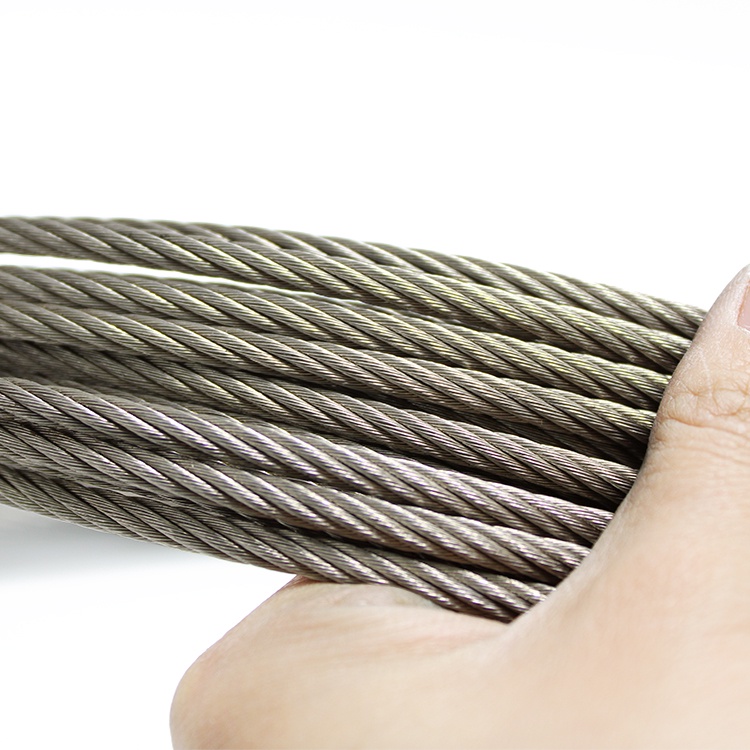
Stainless rope can show orange or brown rust stains without extensive corrosion of the wires themselves. Iron transferred from tools, nearby grinding, or handling equipment can rust on an otherwise sound surface. But similar staining can also come from localized attack between wires or inside a termination, where moisture and chlorides remain trapped. Appearance alone cannot distinguish the two.
For maintenance teams, the first decision is whether the staining can be investigated during routine service or whether the assembly needs to be taken out of service for assessment. Discoloration on an accessible surface, with no visible damage after cleaning, supports a contamination diagnosis. Rust emerging from a fitting, recurring at wire contacts, or accompanied by pits, broken wires, or section loss requires closer investigation—especially where the rope supports a suspended load or provides fall protection.
Why corrosion-resistant wire rope still develops rust
Stainless steel relies on a thin, chromium-rich passive film for corrosion resistance. On a clean surface under suitable conditions, this film can reform after minor damage. Its protection depends on the alloy and the environment, however. The word “stainless” does not guarantee immunity to salt, aggressive cleaning chemicals, or persistent wet deposits.
Surface contamination introduces a separate source of rust. Carbon steel particles can become embedded during cutting, fabrication, installation, or maintenance. Shared wire brushes, steel wool, dirty workbenches, and grinding dust are plausible sources. Those particles oxidize when exposed to moisture, producing stains that may spread beyond the original contact point. A broad orange mark can therefore look more severe than the underlying damage.
Crevice corrosion develops differently. Water enters a narrow, poorly flushed space, such as a wire contact, an area beneath a deposit, or the interface between a rope and its fitting. Oxygen becomes depleted within that space, and the local chemistry can become more acidic and chloride-rich. These conditions can destabilize the passive film and allow localized metal loss.
A rope presents many potential moisture-retaining interfaces. Even a simple strand has contact lines between adjacent wires. Salt spray, washdown water, or condensation can enter these spaces, while repeated wetting and drying can concentrate salts. The exposed length may appear clean while a sheltered termination remains wet.
Pitting can also occur on exposed surfaces in chloride-containing environments. Finding a pit establishes that the wire has suffered localized attack, but does not by itself prove crevice corrosion. The location of the damage and the surrounding conditions help identify the mechanism.
Read the stain pattern before cleaning it away
Photograph the affected area before cleaning, including the surrounding installation. Record whether stains follow wire grooves, collect around a sleeve, appear beneath clamps, or occur as scattered specks along exposed wire. This evidence is useful if the stain disappears during cleaning and later returns.
Compare affected and unaffected sections. Staining concentrated beside recent carbon steel fabrication suggests transferred iron. Damage concentrated at sheltered, wet locations points toward an environmental or drainage problem. Neither pattern is conclusive: contamination and stainless steel corrosion can occur together.
Several inspection clues help direct the next step:
- Scattered orange specks on exposed wire: investigate grinding dust, shared tools, storage racks, and handling surfaces.
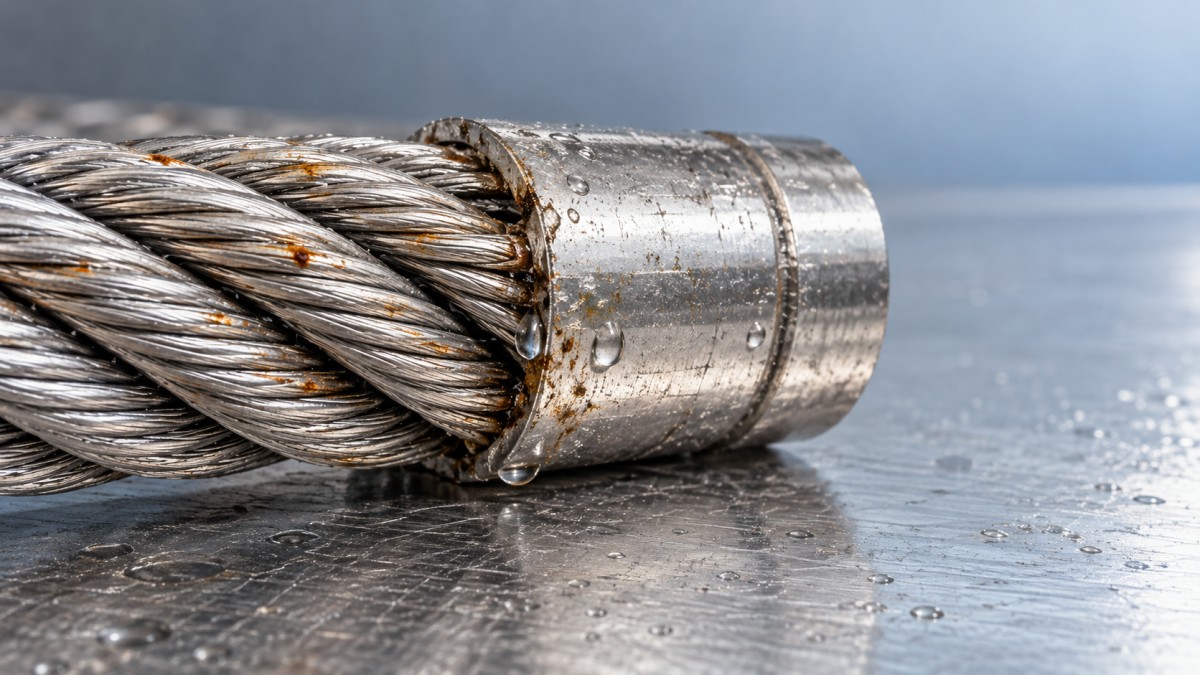
- Rust trails emerging from a termination: investigate trapped moisture, contamination inside the fitting, and possible concealed wire corrosion.
- Staining that follows wire contact lines: check for retained salts, deposits, and localized attack between wires.
- Pits, roughness, or visibly reduced wire sections after cleaning: treat these as material damage requiring assessment.
- Rapid recurrence at the same location: investigate a remaining contamination source or an inaccessible wet area; repeated wiping alone will not resolve it.
Review the service history alongside the visual inspection. Relevant details include salt exposure, stagnant immersion, cleaning chemicals, washdown practices, nearby grinding, and changes to fittings or protective covers. A recently installed cover may reduce direct spray while also slowing drying. A coating damaged near its end can allow water to enter an area that is difficult to inspect.
Confirm the rope grade from traceable documentation where available. A magnet or the color of a stain cannot reliably establish the alloy. If material identity remains central to the investigation, suitable material testing may be needed; identifying the grade still does not establish the condition of hidden wires.
Clean a test area, then assess the metal beneath it
For an assembly that can safely remain available for inspection, start with a small, accessible area. Follow the rope and fitting manufacturer’s cleaning instructions. Fresh water and a compatible mild detergent can remove loose salts and dirt; use clean tools reserved for stainless steel, rinse thoroughly, and allow the area to dry. Check compatibility with any lubricant, coating, and adjacent components.
Avoid carbon steel brushes, steel wool, chloride-containing cleaners, and aggressive abrasion. These can add contamination or damage the wire surface. Do not apply an acid treatment simply because a cleaner is marketed for stainless steel. Chemicals can remain trapped between wires or inside fittings, and a process suitable for an open stainless steel panel may be unsuitable for an assembled rope.
Examine the cleaned area under suitable lighting and magnification. A smooth surface with no visible pits supports surface contamination as the main explanation. Cavities, roughened contact lines, or loss of wire profile indicate corrosion damage. Cleaning removes deposits; it cannot restore lost metal or demonstrate that concealed sections are sound.
If persistent contamination requires chemical removal or passivation, use a procedure approved for the assembly, with controlled rinsing and drying. Passivation may help restore surface condition after appropriate cleaning, but it does not repair pits or make a damaged load-bearing assembly fit for service.
Escalate when corrosion appears to originate inside a swaged sleeve, socket, or another inaccessible termination. Rust bleeding from a fitting warrants investigation, but its source may be the rope, the fitting, or trapped foreign material. A qualified inspection may require access to concealed areas or replacement of the assembly. Do not pry wires apart or dismantle a loaded termination to investigate.
Visible broken wires, meaningful section loss, significant pitting, or unexplained corrosion in an inaccessible load-bearing area should trigger removal from service pending competent assessment. Apply the relevant equipment instructions and inspection criteria. There is no universal acceptable amount of rust or pit depth for every rope construction and duty.
Stop recurrence by correcting the exposure and the assembly
If the diagnosis points to transferred iron, remove the source as well as the stain. Separate stainless steel handling tools, clean contact surfaces, and protect installed rope from nearby cutting and grinding. Otherwise, a successful cleaning can be followed by another service call after the next wetting cycle.
Where trapped moisture is responsible, review drainage, deposits, fitting geometry, and access for cleaning. Freshwater rinsing can reduce surface salt accumulation where the assembly permits it, but it will have limited benefit if contaminated water remains inside a sealed or poorly drained space. Lubrication and protective treatments should follow the assembly manufacturer’s guidance; an unsuitable treatment may retain contaminants or obscure inspection.
Replacement selection should address both alloy and construction. Grade 316 generally offers better resistance to chloride-related localized corrosion than 304, but it can still suffer crevice corrosion under persistent salt exposure. The “L” in 316L denotes lower carbon content and is principally relevant to sensitization associated with welding; it does not guarantee resistance to trapped seawater.
For a small hanging, traction, or guardrail assembly, a product such as 1x7 Stainless Steel Wire Rope 0.3-6.0mm use For Hanging Traction and guardrail illustrates the choices to examine: diameter, grade, coating, and termination compatibility. Its one central wire and six outer wires form a relatively stiff strand, but contact spaces remain between the wires. A 1x7 construction does not eliminate crevice corrosion, and its suitability for repeated bending must be checked against the application.
Close the maintenance investigation with a recorded disposition: cleaned and monitored, referred for further inspection, or replaced with an identified corrective change. Keep photographs of the cleaned surface and document the locations inspected. If staining returns, the useful question is whether it has appeared on a sound exposed surface or emerged again from a moisture-retaining interface. That distinction determines whether the next intervention should address housekeeping, assembly design, or damaged material.
Navigation
Send Us A Message



Shandong Faster Technology Co., Ltd. is a professional manufacturer of steel wire ropes.
Get in Touch
*We respect your confidentiality and all information are protected.