





Where Wire Rope Demand Is Shifting in 2026
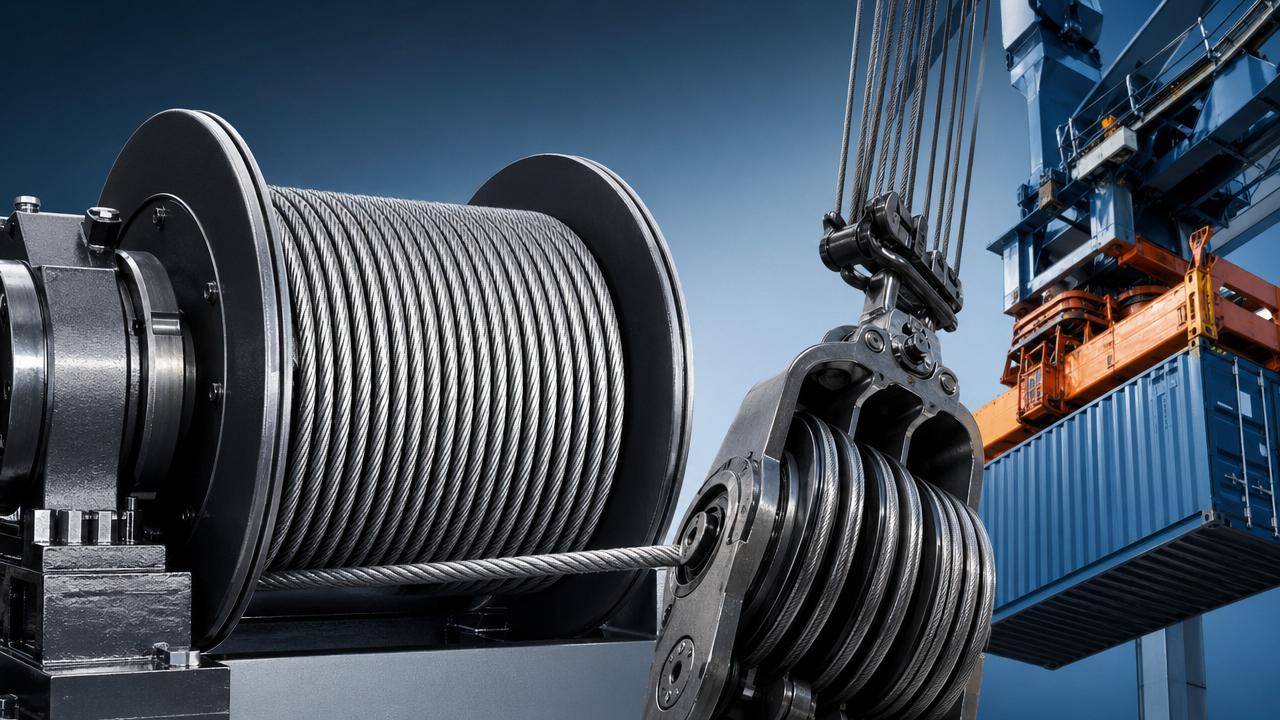
In 2026, Wire Rope demand is no longer growing evenly across industries or regions. For business decision-makers, understanding where procurement is accelerating—and where specifications are changing—can directly affect cost control, supply resilience, and project performance. This article explores the market shifts shaping industrial equipment and components demand, helping buyers identify emerging opportunities, risks, and strategic sourcing priorities.
For procurement leaders, plant managers, OEM buyers, and project teams, Wire Rope is no longer a routine commodity purchase. It has become a component that sits at the intersection of safety, uptime, compliance, and logistics. In sectors where lifting cycles are increasing, corrosion exposure is worsening, or maintenance windows are tightening, even a small mismatch in construction, tensile grade, or coating can create measurable cost consequences within 6 to 18 months.
The practical question is not whether demand is rising overall, but where it is shifting, why specifications are changing, and how sourcing strategies should adapt. Buyers that still evaluate Wire Rope mainly by diameter and unit price risk missing larger changes in application mix, inventory planning, and regional lead times.
Which End-Use Sectors Are Pulling Wire Rope Demand Higher
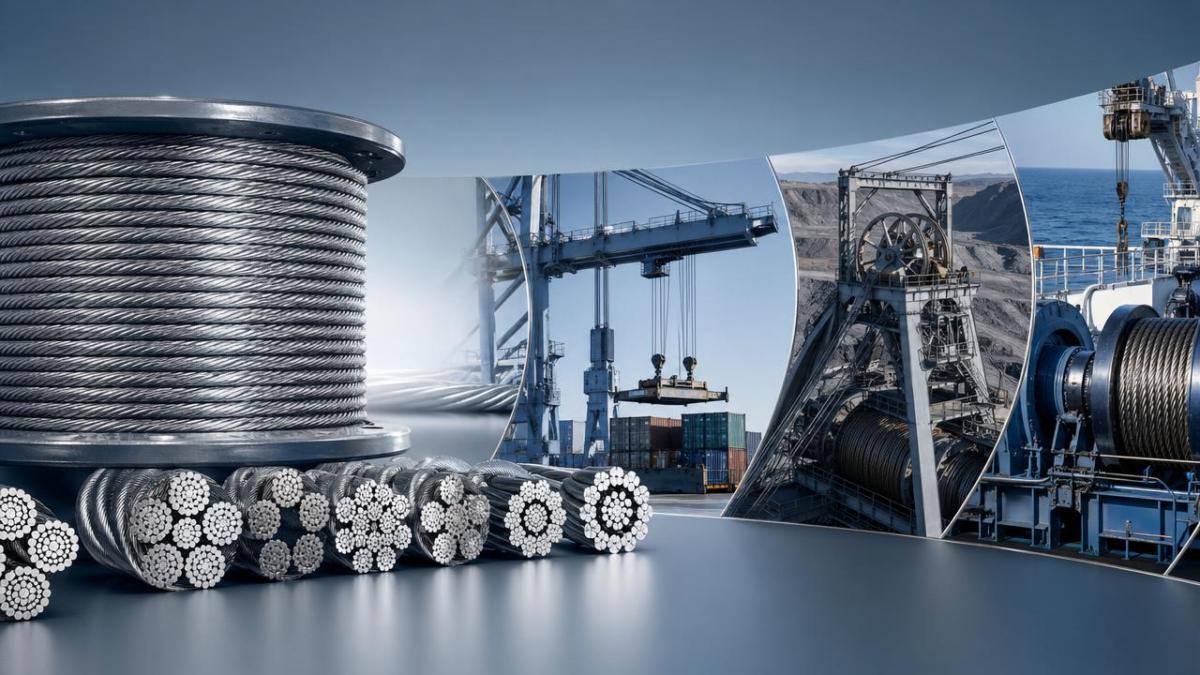
Demand in 2026 is strongest where mechanical handling intensity, replacement frequency, and safety requirements are all moving up at the same time. This is especially visible in port handling, mining support equipment, crane systems, offshore support operations, vertical lifting, and infrastructure maintenance. In these sectors, Wire Rope is not simply ordered by historical specification; it is increasingly selected based on fatigue life, drum compatibility, lubrication retention, and corrosion resistance.
Ports and logistics hubs are one of the clearest growth pockets. As terminal operators aim for higher throughput per hour, rope systems on cranes and container handling equipment face more duty cycles per shift. A terminal that increases handling volume by 10% to 15% often reviews rope replacement intervals, reeving performance, and drum wear patterns within the same budget cycle. That creates demand not only for more Wire Rope, but for upgraded constructions with better bending performance.
Mining and aggregates also continue to absorb significant Wire Rope volumes, but the demand pattern is more specification-sensitive. Operators are focusing on ropes that can tolerate abrasive environments, shock loading, and irregular maintenance access. In open-pit and underground use, replacement decisions are often tied to visible broken wires, diameter reduction thresholds, and lubrication loss rather than calendar-based schedules alone.
Why traditional demand assumptions are breaking down
In previous procurement cycles, buyers could often assume relatively stable demand from construction, marine, and general industrial lifting. In 2026, that assumption is less reliable. Some general-purpose applications remain price-driven, but growth is increasingly concentrated in equipment categories where downtime costs can exceed the rope price by a factor of 5 to 20. As a result, the market is shifting from broad-based volume growth to application-led premiumization.
Another factor is replacement acceleration. In high-cycle applications, some operators are reducing acceptable service intervals from 12 months to 9 months, or from 2,000 hours to 1,600 hours, when inspection data shows elevated wear. This does not mean all Wire Rope is wearing out faster; it means users are becoming less tolerant of failure risk in critical handling systems.
The following table highlights where demand is shifting most visibly across industrial equipment and components applications.
The key takeaway is that Wire Rope demand is concentrating in applications where performance variability has direct operational impact. Buyers in these sectors should expect more technical review during sourcing, not less, especially when replacement intervals, safety audits, and maintenance KPIs are under scrutiny.
How Regional Procurement Patterns Are Changing
Geographically, the 2026 market is being shaped by uneven industrial investment, logistics costs, and regional compliance expectations. Instead of a single global demand trend, buyers are dealing with three simultaneous realities: accelerated project procurement in infrastructure-heavy regions, replacement-driven demand in mature industrial markets, and selective high-spec adoption in marine and energy corridors.
In Southeast Asia, parts of the Middle East, and selected African logistics and mining corridors, procurement is often linked to project expansion and equipment commissioning. In these regions, demand may rise in batches rather than smoothly, with orders clustered around 8-week to 16-week construction schedules. Buyers that rely on just-in-time imports can face exposure when port congestion or customs delays add 2 to 4 weeks to replenishment plans.
In North America and Europe, the pattern is often different. Demand is more closely tied to maintenance replacement, audit compliance, and lifecycle optimization. Here, Wire Rope selection tends to involve more documentation, traceability checks, and fit-for-purpose verification. Buyers may accept a higher unit price if the rope extends replacement intervals or reduces unscheduled maintenance events over a 12-month operating window.
What this means for sourcing resilience
Regional divergence affects not only price but also stock policy. A buyer serving two or three plants in different countries may no longer be able to standardize all purchases under one generic specification. Local humidity, salinity, lifting frequency, and inspection rules can justify different rope constructions even at the same nominal diameter, such as 12 mm, 16 mm, or 24 mm categories.
Lead-time risk is also becoming more visible. Standard industrial Wire Rope may remain available in 7 to 15 days through established channels, but specialized constructions, longer cut lengths, or non-standard end terminations can extend fulfillment to 3 to 6 weeks. For buyers managing shutdown windows, that difference can directly affect maintenance scheduling and contractor costs.
Regional sourcing priorities in 2026
- Build separate sourcing plans for standard stock items and engineered replacement ropes.
- Review whether the current safety stock covers at least one full replacement cycle for critical lifting assets.
- Confirm local testing, documentation, and packaging expectations before issuing blanket purchase orders.
- Track transport variability by lane, especially where sea freight adds 10 to 20 days versus domestic distribution.
For enterprise buyers, the strategic shift is clear: regional procurement is no longer just a logistics function. It is now a risk management function, especially for Wire Rope used in cranes, hoists, winches, and mission-critical handling systems.
Why Wire Rope Specifications Are Moving Upmarket
One of the most important 2026 changes is that demand growth is not limited to tonnage. A significant share of procurement is moving toward more performance-specific Wire Rope. Buyers are asking more frequently about rotation resistance, compaction, preforming, internal lubrication, corrosion protection, and compatibility with sheave and drum geometry. This is a practical response to operating conditions, not just a preference for premium products.
In many applications, the wrong specification does not fail immediately. Instead, it creates a pattern of reduced service life, uneven wear, birdcaging risk, or poor spooling. These issues can emerge over 3 to 9 months and are often mistaken for operator error. Decision-makers are increasingly recognizing that a lower purchase price can lead to higher total ownership cost when inspection frequency, replacement labor, and equipment downtime are included.
This shift is especially visible in lifting systems that run multiple shifts, operate in corrosive environments, or use small sheave-to-rope diameter ratios. In these cases, Wire Rope performance depends heavily on the balance between flexibility and abrasion resistance. Selecting by breaking strength alone is no longer enough.
Common specification changes buyers are requesting
The table below summarizes several common changes in Wire Rope procurement criteria and the operational reason behind them.
The procurement implication is straightforward: specification discipline now has a direct effect on budget predictability. A better-matched Wire Rope may cost more upfront, but if it extends service life by even 15% to 25% in a high-cycle application, the lifecycle benefit can outweigh the unit-price increase quickly.
Three technical checks before approving a purchase
- Verify the actual application duty, including average load, peak load, bend frequency, and environmental exposure.
- Confirm compatibility with drum and sheave dimensions, because rope construction that performs well in one system may wear prematurely in another.
- Review inspection and maintenance practice, including relubrication intervals and retirement criteria such as broken wire count or diameter reduction.
For industrial equipment buyers, the smartest move in 2026 is to connect Wire Rope selection to equipment reliability data rather than procurement history alone.
How Decision-Makers Should Reframe Supplier Evaluation
As demand becomes more uneven, supplier evaluation needs to go beyond availability and quoted price. Decision-makers should ask whether a supplier can support changing rope constructions, provide consistent cut lengths, manage documentation requirements, and maintain delivery reliability across both standard and urgent orders. A low-cost source that misses shutdown schedules can create far higher indirect costs than a slightly higher-priced but dependable supplier.
In 2026, strong Wire Rope sourcing programs usually assess suppliers on at least four dimensions: technical alignment, supply continuity, quality consistency, and service responsiveness. For critical equipment, some buyers also add a fifth metric: replacement support, including installation guidance, packing method, and traceability information for incoming inspection.
This matters because Wire Rope often enters the operation as a relatively small line item but influences much larger assets. If the rope supports a crane, hoist, winch, or hauling system worth six or seven figures, procurement should treat the buying process as an asset protection decision, not a generic consumables purchase.
A practical supplier scorecard
The scorecard below can help procurement teams compare suppliers using operational criteria instead of relying only on price per meter or per reel.
For many enterprises, the best sourcing model in 2026 is a dual-track approach: one supplier setup for fast-moving standard Wire Rope sizes, and one for technically demanding or project-based requirements. This can reduce exposure to both stock shortages and specification mistakes.
Common buying mistakes to avoid
- Using the same Wire Rope construction across all lifting assets without checking bend ratio and operating cycles.
- Approving substitute products without reviewing lubrication, lay direction, or end-term compatibility.
- Comparing quotes only by price per meter while ignoring delivery certainty, cut accuracy, and documentation quality.
- Holding too little spare stock for ropes with 3 to 6 week replenishment exposure.
A disciplined evaluation process helps buyers convert Wire Rope procurement from reactive replacement into structured lifecycle management.
Planning for 2026: Inventory, Maintenance, and FAQ for Buyers
The final shift in 2026 is organizational. More companies are linking Wire Rope purchasing to maintenance planning, inspection records, and asset criticality. This is a positive change because it improves forecasting. Instead of buying after visible wear reaches a critical point, maintenance and procurement teams can schedule replacement based on actual application risk and supply lead time.
For critical equipment, many industrial buyers now separate ropes into three groups: standard stock items, scheduled replacement items, and emergency-use items. This simple 3-tier model makes it easier to decide where to hold inventory, where to negotiate framework agreements, and where to request more technical support before ordering.
A practical maintenance-linked sourcing plan often includes inspection intervals, reorder thresholds, and replacement windows. For example, a plant may inspect key lifting ropes every 30 days, trigger supplier review at 60% of expected service life, and hold one full spare set for assets that cannot tolerate more than 48 hours of downtime.
FAQ: What buyers are asking in 2026
How should we choose Wire Rope for mixed industrial applications?
Start with the actual duty profile rather than a general catalog match. Review load pattern, bend cycles, environment, and sheave geometry. If one site includes both indoor hoists and outdoor lifting systems, a single Wire Rope choice may not be appropriate. Even within the same diameter range, corrosion protection and fatigue behavior can differ significantly.
What lead time should we expect for replacement Wire Rope?
For standard industrial sizes, buyers often target 7 to 15 days. For engineered constructions, unusual lengths, or application-specific fittings, 3 to 6 weeks is a more realistic planning range. If a shutdown schedule is fixed, confirming availability before final maintenance planning is essential.
When does higher-spec Wire Rope make financial sense?
It makes sense when rope failure or early wear creates larger downstream costs. Examples include crane downtime, contractor standby time, safety incident exposure, or difficult access replacement work. If a higher-spec rope can extend service life by 15% or reduce maintenance interventions by one cycle per year, the cost case can be strong.
What are the most overlooked procurement checks?
Commonly missed items include lay direction, compatibility with existing sheaves and drums, packing condition during transport, and documentation for incoming inspection. Buyers also sometimes overlook whether the planned Wire Rope can be relubricated under site conditions, which directly affects service life in high-cycle use.
Wire Rope demand in 2026 is shifting toward sectors, regions, and applications where uptime, safety, and specification accuracy matter more than simple volume purchasing. The strongest buyers will be those that align procurement with duty conditions, regional supply risk, and lifecycle planning instead of relying on past buying habits.
If your team is reviewing replacement strategy, comparing supplier options, or refining Wire Rope specifications for industrial equipment and components, now is the right time to build a more resilient sourcing plan. Contact us today to discuss your application, request a tailored recommendation, or learn more about practical Wire Rope solutions for your operation.
Navigation
Send Us A Message



Shandong Faster Technology Co., Ltd. is a professional manufacturer of steel wire ropes.
Get in Touch
*We respect your confidentiality and all information are protected.