





When should you choose a steel wire rope core over fiber?
When should you choose a steel wire rope core over fiber?
Choosing the right steel wire rope core can affect equipment performance, service life and purchasing costs. A steel core is often the better starting point when a rope must resist crushing on a drum, carry substantial loads or operate near elevated temperatures. But it is not automatically the best choice for every crane, winch or sling. The complete rope construction, bending conditions and equipment manufacturer’s requirements matter just as much.
For a purchasing team, the practical question is not simply “Which core is stronger?” It is “Will this rope remain compatible with the machine and its actual duty cycle?” A lower unit price means little if the rope deforms early, while paying for a steel core may add no useful benefit in an application where a specified fiber-core rope already performs reliably.
Start with the forces acting on the rope
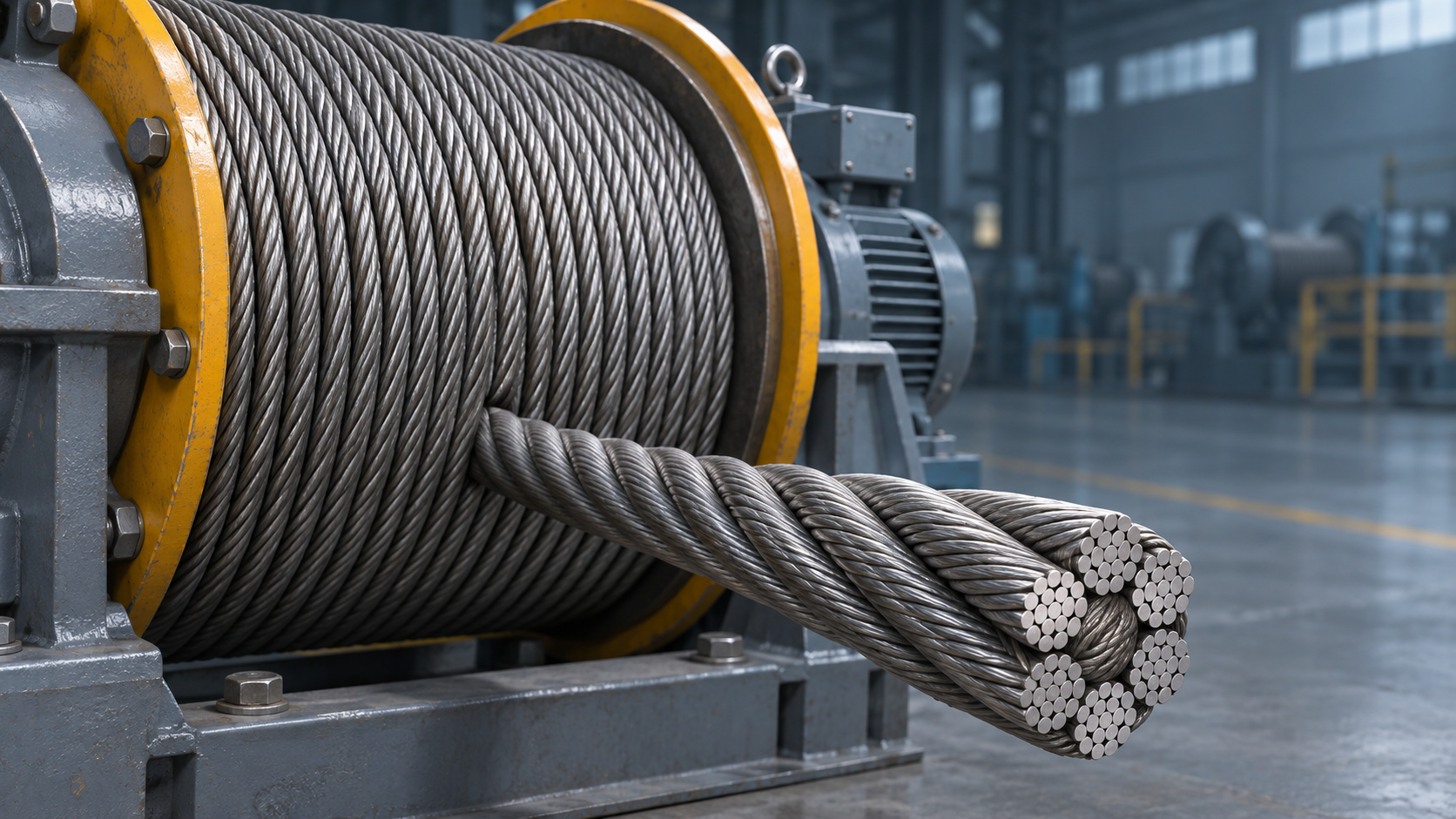
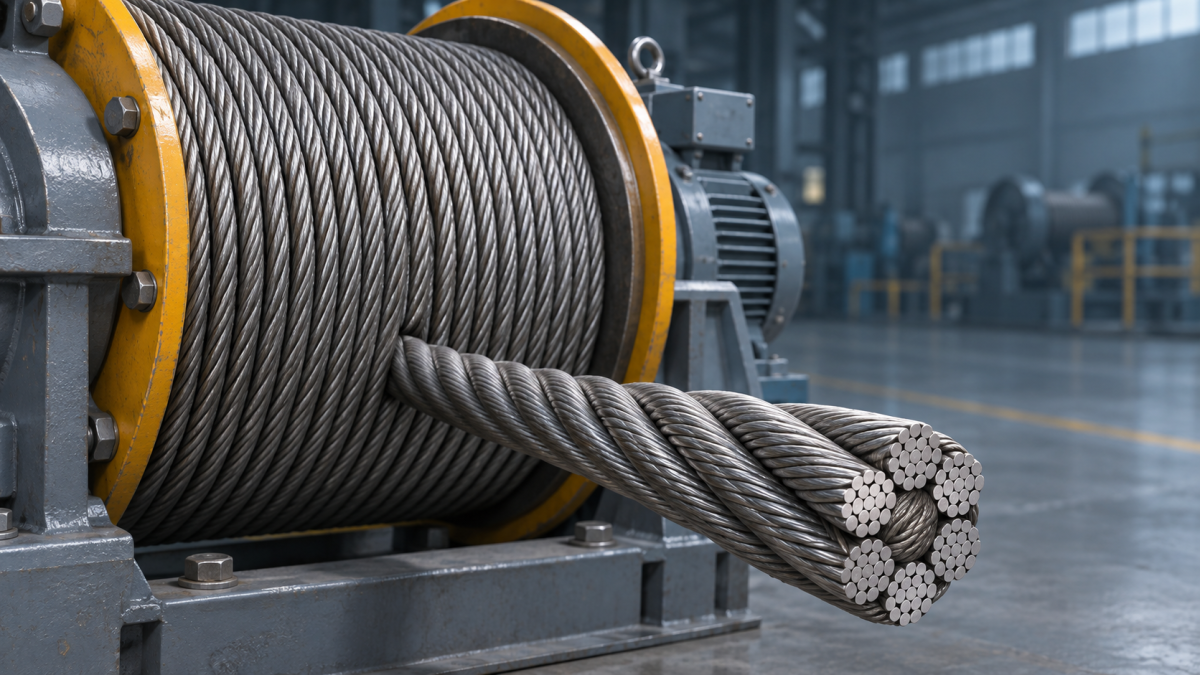
The core supports the outer strands and helps the rope maintain its shape. A steel core may be an independent wire rope core, commonly called an IWRC, or a wire strand core. Fiber cores can be made from natural or synthetic materials. These are broad categories: ropes with the same core type can still behave differently because of their strand construction, wire size, lubrication and manufacturing details.
Choose a steel core for closer consideration when the rope is exposed to significant radial pressure. Multilayer winding on a crane or winch drum is a typical example. As upper layers wind under tension, they press against the layers beneath them. A steel core generally provides firmer internal support and better resistance to crushing than a comparable fiber core.
That does not mean the core can compensate for poor spooling. Incorrect fleet angle, loose lower layers, damaged drum grooves or a mismatched rope diameter can still cause crossovers and deformation. If a rope is being replaced repeatedly because of drum damage, investigate the winding arrangement before treating a core change as the cure.
Heavy loads and heat: where steel often earns its place
For otherwise comparable rope constructions and diameters, steel-core rope generally has a higher minimum breaking force and lower structural stretch than fiber-core rope. That can be useful on lifting or traction equipment where available diameter is constrained and the specified rope must meet a demanding strength requirement.
Compare the supplier’s actual rated values rather than assuming every steel-core rope is stronger than every fiber-core alternative. Construction, wire grade and diameter all affect the result. Breaking force is also not the same as a permitted working load; the equipment or sling rating must account for the relevant design factor and service conditions.
Heat is another reason to ask for steel-core options. Fiber cores and rope lubricants can be affected by elevated temperatures, while steel provides more robust support in many hot-service applications. Even so, a steel core does not make a rope heatproof. High temperatures can affect the wires, lubrication, terminations and any protective coating. Give the supplier the expected temperature at the rope, exposure duration and proximity to radiant heat, then obtain a suitability recommendation for the complete assembly.
In a foundry or near hot fabricated steel, for example, the visible rope surface may cool between lifts while the assembly still experiences repeated heat exposure. A PVC-coated sling should not be selected for that duty merely because the rope inside has a steel core. The coating and end fittings have their own operating limits.
When fiber may be the more sensible purchase
Fiber-core rope can be a practical choice where the equipment specifies it, crushing is limited and flexibility or handling is a priority. It is often less expensive than a comparable steel-core construction. Some fiber cores can also retain lubricant, although lubrication performance depends on the core material and the rope manufacturer’s design.
Do not assume that changing from fiber to steel will improve bending fatigue. Rope life over sheaves depends on the complete construction, sheave diameter, groove condition, loading and frequency of bends. A stiffer rope that resists crushing better may not be the best answer for a machine with tight bending requirements. Ask the equipment manufacturer before substituting core type, particularly on elevators and other installations where approved rope characteristics are integral to the system.
For marine and port work, corrosion adds another complication. A steel core is still steel inside the rope; it is not a corrosion-protection system. Galvanizing, stainless steel where appropriate, compatible lubrication, drainage and inspection access all deserve attention. Saltwater trapped in damaged or poorly terminated assemblies can attack wires that are difficult to see.
Check the assembly, not just the rope
A sling introduces decisions that do not appear on a bare-rope purchase order: eye size, ferrules, effective length, hitch configuration and identification. A coating can help reduce surface marking and provide a barrier against some environmental exposure, but it may also conceal broken wires or corrosion. Damage to the sheath can allow moisture in, and the rope still needs an inspection method appropriate to the assembly and applicable requirements.
For instance, the 12mm PVC coated wire rope Sling 5tons Heavy Duty Eye to Eye is relevant to handling equipment or components where a coated eye-to-eye assembly is being considered. Before ordering, confirm whether the stated 12 mm is the overall coated diameter or the bare rope diameter, which core and construction are supplied, and the rated capacity for the intended hitch and sling angle. The product title alone is not enough to establish a safe lifting configuration.
A protective layer should not be treated as permission to lift across sharp edges without suitable edge protection. Nor should color alone serve as proof of capacity: the sling identification and supplier documentation need to match the actual assembly.
What to put on the enquiry
A useful request for quotation includes the equipment model and existing rope specification, nominal rope diameter, construction, core type, lay direction, finish and required length. Add the operating load, drum and sheave details, number of winding layers, environment, temperature exposure and any recurring failure pattern. For slings, specify the hitch, effective length, eye and termination requirements, along with the capacity required in use.
Ask for a quotation against the specified rope first, then request any proposed alternative as a separate line with its technical data. This makes it easier to compare price without accidentally accepting a different construction or core. Confirm inspection and documentation requirements before production rather than after delivery.
Shandong Faster Technology supplies wire rope, customized pressed slings and chains, with galvanized, stainless steel and plastic-coated rope options in its stated product range. That breadth can be useful when a project involves both replacement rope and lifting assemblies, but each item still needs its own specification and approval.
Choose steel over fiber when its added core support or rated performance addresses a documented demand and the equipment accepts the construction. If the main concern is corrosion, repeated bending or sling handling, resolve those conditions directly rather than expecting the core material to solve them on its own.
Navigation
Send Us A Message



Shandong Faster Technology Co., Ltd. is a professional manufacturer of steel wire ropes.
Get in Touch
*We respect your confidentiality and all information are protected.