





Steel Wire Rope vs Fiber Rope: How to Compare Strength, Flexibility, and Service Life
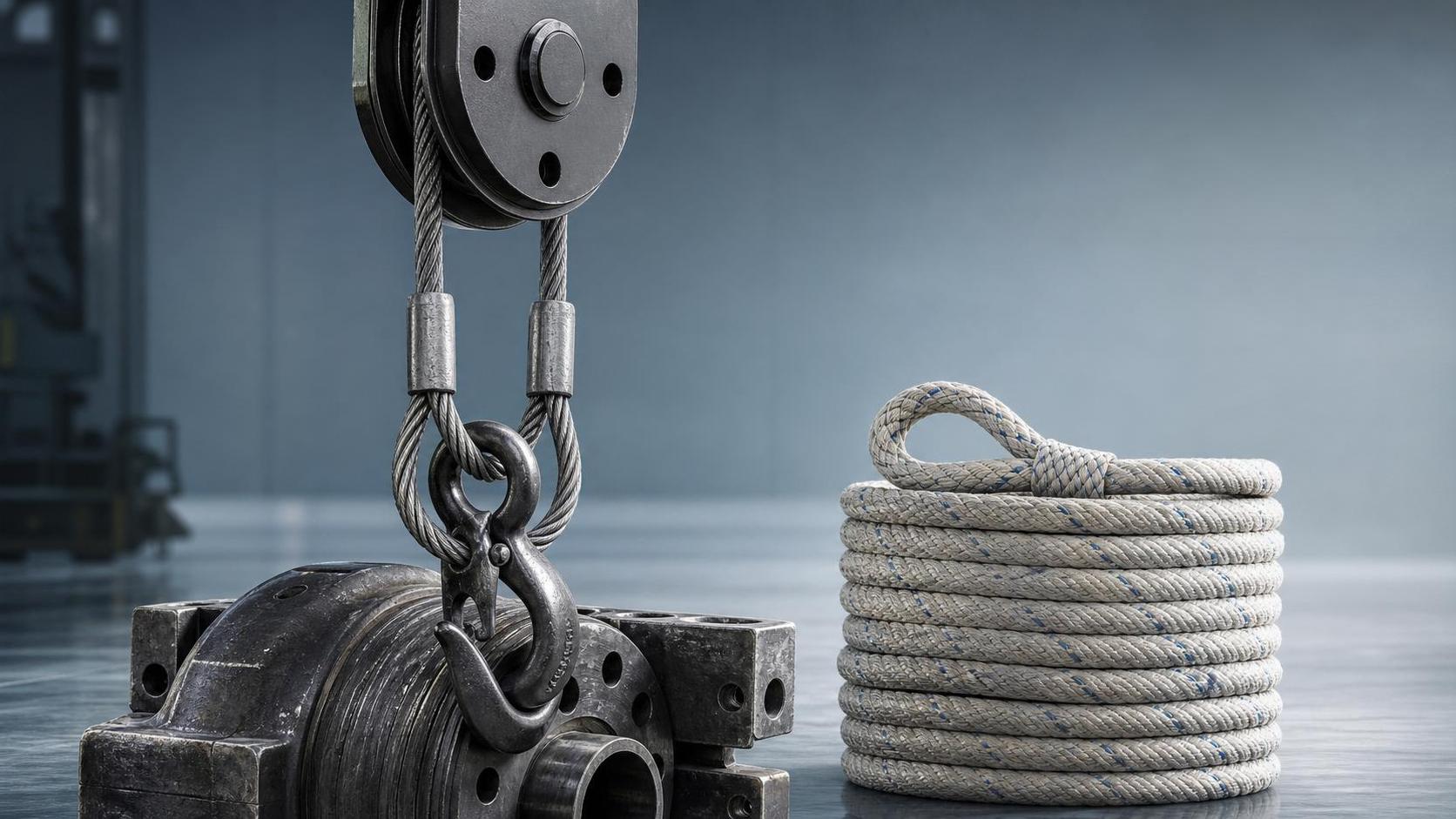
Steel Wire Rope vs Fiber Rope: How to Compare Strength, Flexibility, and Service Life
Choosing between steel wire rope and fiber rope affects safety, maintenance costs, and long-term performance in industrial operations.
In this guide on Steel wire rope vs fiber rope, the focus is practical evaluation.
The right choice depends on load demands, handling needs, wear conditions, and replacement cycles.
A rope that looks cheaper upfront may cost more through downtime, inspection failures, or shorter service life.
That is why Steel wire rope vs fiber rope should be reviewed as a total operating decision, not only a material comparison.
Start with Load Strength
Strength is usually the first filter in Steel wire rope vs fiber rope selection.
Steel wire rope generally delivers much higher tensile capacity and better resistance to shock loading.
It also maintains shape more consistently under repeated heavy lifting.
Fiber rope can be strong for its weight, especially modern synthetic types.
Still, in demanding hoisting, mining, ports, or machinery handling, steel remains the safer baseline.
- Choose steel when loads are heavy, frequent, or dynamic.
- Choose fiber when lower weight and easier manual handling matter more.
- Check working load limit, not only breaking strength.
- Review safety factors based on lifting conditions.
Flexibility Matters More Than Many Buyers Expect
Flexibility shapes how the rope performs in real handling.
In Steel wire rope vs fiber rope comparisons, fiber rope is usually lighter, softer, and easier to coil.
That reduces operator fatigue and speeds up routine movement.
Steel wire rope is stiffer, but construction design changes the result.
For example, 6x37 or 7x19 structures usually provide better bending performance than more rigid options.
If ropes pass through sheaves, drums, or tight bending paths, flexibility deserves close review.
A Simple Evaluation Question
Ask whether the rope must carry the load, or also improve handling efficiency.
That question quickly clarifies several Steel wire rope vs fiber rope decisions.
Wear Resistance and Environmental Exposure
Wear conditions often decide the winner over time.
Steel wire rope performs well against abrasion, crushing, and cutting in harsh industrial settings.
Fiber rope may degrade faster when dragged over rough edges or exposed to sharp surfaces.
However, corrosion is the weak point for untreated steel in wet, salty, or chemical environments.
This is where coated or stainless options become valuable.
A useful example is 12mm PVC coated wire rope Sling 5tons Heavy Duty Eye to Eye.
Its PVC protective layer helps isolate the steel rope from moisture, air, acid, and alkali exposure.
That can extend service life well beyond bare rope in ports, docks, fishery, construction, and mining use.
The sheath also reduces surface damage during lifting, which matters when protecting equipment finish.
Service Life Is About More Than Material
Service life in Steel wire rope vs fiber rope analysis should never be estimated from material alone.
Actual lifespan depends on load cycles, bend radius, storage, lubrication, exposure, and inspection discipline.
Steel wire rope usually lasts longer in high-load industrial duty when maintained correctly.
Fiber rope can perform well in lighter applications, but it often loses value faster under abrasive stress.
In coated steel products, extra protection can change the replacement cycle significantly.
Some PVC coated designs also add UV resistance and low-temperature stability from -40 degrees Celsius to 60 degrees Celsius.
How to Compare Total Cost
Price alone can distort Steel wire rope vs fiber rope sourcing decisions.
A better method is to compare total cost across the expected service period.
This comparison becomes even more important when downtime has a direct production cost.
A Practical Selection Checklist
For faster Steel wire rope vs fiber rope evaluation, use a simple decision checklist.
- Define the actual load, peak load, and lift frequency.
- Review whether the rope contacts sharp edges or abrasive surfaces.
- Check moisture, salt, chemicals, UV, and temperature exposure.
- Assess whether manual handling speed is operationally important.
- Estimate inspection effort and replacement interval.
- Request certified specifications such as SGS, CE, Rohs, or ISO where relevant.
In many industrial lifting cases, steel wire rope remains the better long-term investment.
A coated sling with tensile strength from 1570 to 2160 N/MM2 can be a strong fit for repeated heavy use.
Custom diameter, structure, core type, and length options also make sourcing more application-specific.
Final Decision Guidance
The best answer to Steel wire rope vs fiber rope depends on what failure would cost your operation.
If maximum strength, abrasion resistance, and long service life drive the decision, steel usually leads.
If lightweight handling and easier flexibility matter most, fiber rope may be more suitable.
For harsher environments, protected steel solutions deserve serious attention.
A product like 12mm PVC coated wire rope Sling 5tons Heavy Duty Eye to Eye shows how coating, strength, and application fit can work together.
Before buying, match rope type to load profile, environment, and inspection capacity.
That approach leads to a smarter Steel wire rope vs fiber rope decision and a more reliable operating result.
Navigation
Send Us A Message



Shandong Faster Technology Co., Ltd. is a professional manufacturer of steel wire ropes.
Get in Touch
*We respect your confidentiality and all information are protected.