





Oil Drilling Line Wear: Planning Inspections and Slip-and-Cut Maintenance
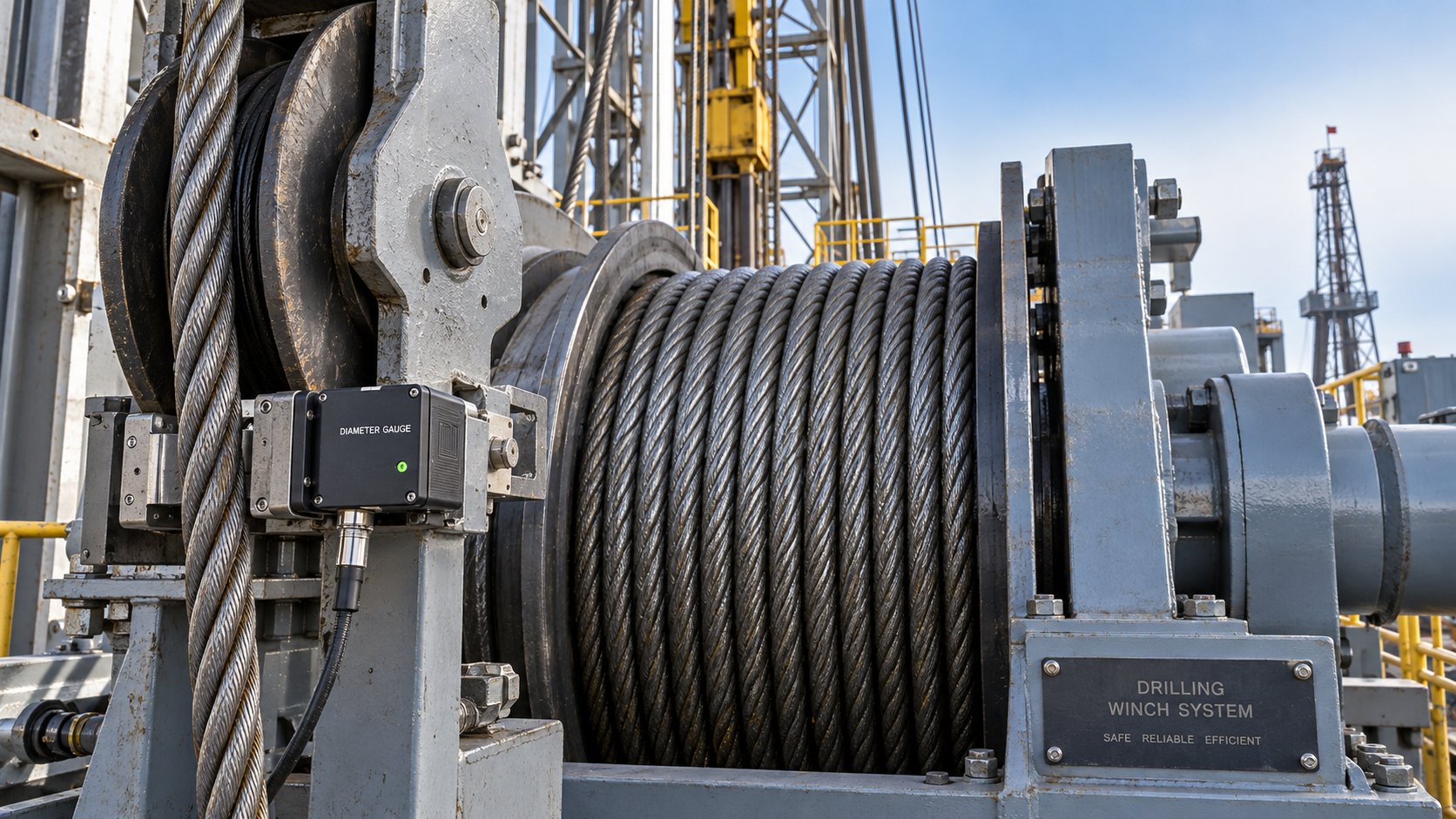
An oil drilling line can look serviceable along an accessible section while accumulating fatigue at sheaves, drum crossover points, or repeatedly loaded positions. During routine maintenance, this uneven deterioration creates a practical problem: a visual check may miss damage that could force an unplanned shutdown or compromise lifting safety.
The maintenance plan should combine location-based inspections, operating-duty records, and the rig manufacturer’s slip-and-cut requirements. Slip-and-cut maintenance redistributes service exposure and removes a planned length of used rope; it does not restore damaged wire rope or override discard criteria. A line showing rejectable deterioration must be removed from service, even when its next scheduled cut is not yet due.
Start with a wear map, not just a calendar
Repeated bending and contact pressure do not affect every section equally. The line passing through the traveling and crown blocks experiences cyclic bending, while sections contacting the drum encounter different pressures, abrasion, and winding conditions. Repeated operating patterns can concentrate deterioration at particular working positions.
Before setting inspection intervals, gather the rope identification, installation date, construction, diameter, grade, approved reeving arrangement, and previous slip-and-cut records. Confirm that the installed line matches the rig specification. Missing identification or an uncertain maintenance history leaves the team without a reliable basis for estimating accumulated service.
Mark inspection locations on a reeving diagram and relate observations to a consistent rope reference point. Recording “broken wires near the block” is too vague to support a later comparison. Record the affected length, strand position, measurement method, and operating configuration so the same area can be found again.
- Sheave contact zones: Look for broken wires, abrasion, flattening, and evidence of poor tracking. Inspect groove condition and sheave rotation as well as the rope.
- Drum crossover and layer transition areas: Check for crushing, distorted strands, and irregular winding. Damage here may indicate spooling or drum problems rather than ordinary fatigue alone.
- Dead-line anchorage and terminations: Inspect accessible rope and hardware for movement, corrosion, deformation, and incorrect seating, following the approved assembly requirements.
- Less-visible sections: Include portions normally hidden by operating position. An accessible-length check is not equivalent to inspecting the complete working line.
Separate routine observations from a detailed condition assessment
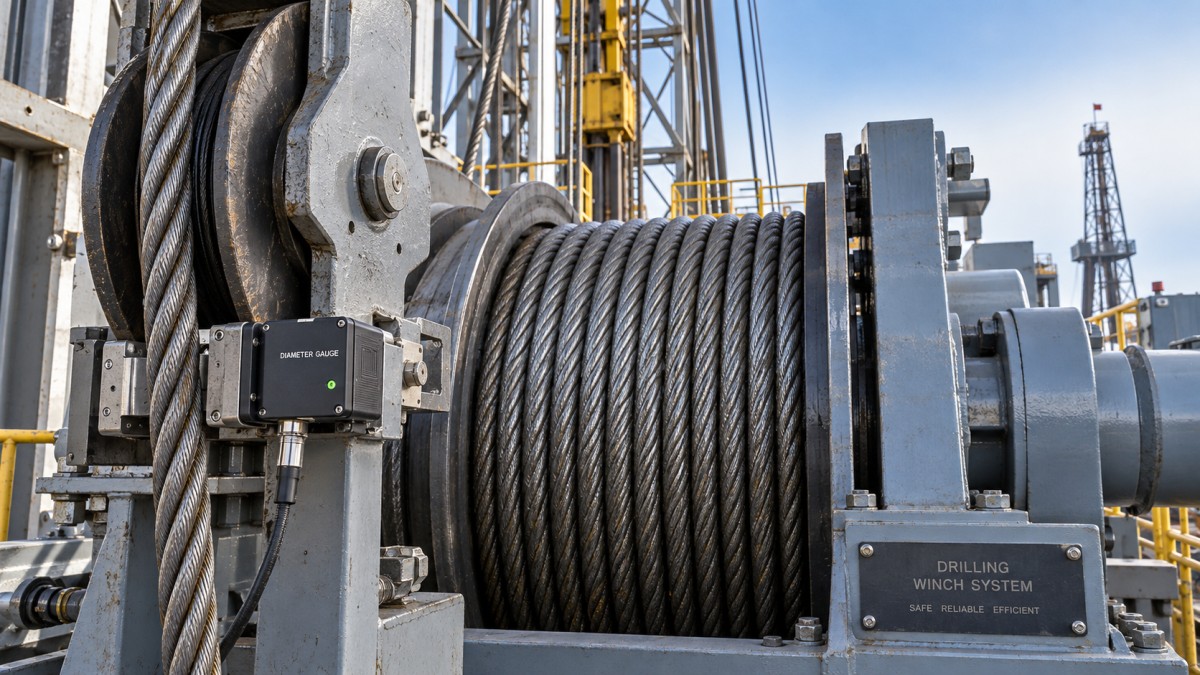
Routine checks are useful for detecting changes between planned inspections. They should focus on new damage, lubrication condition, abnormal spooling, and visible problems with sheaves or anchorage. Detailed inspections require controlled access and enough coverage to evaluate the rope against the applicable discard criteria.
Secure the equipment under the rig’s approved isolation and load-support procedure before close inspection. Do not touch a moving line or expose personnel to suspended equipment. Where controlled movement is necessary to present additional rope sections, use a documented method that separates movement from hands-on examination.
Measure diameter using the prescribed method across the rope’s outer crowns, with a suitable instrument and consistent conditions. Keep measurements tied to specific locations. A single diameter reading cannot establish the condition of the whole line, and external appearance alone cannot reliably exclude internal damage.
Where visual findings, service history, or suspected internal deterioration justify it, arrange additional assessment by qualified personnel. Magnetic rope testing may support the evaluation when suitable for the rope and application, but it does not replace visual examination or the governing acceptance criteria.
Use operating duty to adjust inspection timing
A calendar interval alone does not capture changes in load, travel, or operating intensity. Where the rig maintenance program uses ton-mile accounting, calculate and record duty using its approved method. Keep inspection dates alongside accumulated duty so maintenance decisions reflect both elapsed time and actual use.
Do not transfer a slip-and-cut interval from another rig simply because the rope diameter is the same. Reeving, block arrangement, drum geometry, rope construction, operating loads, and service conditions can change where damage accumulates and how quickly it develops.
Shorten the assessment interval after a significant loading event, abnormal vibration, spooling problem, unexpected wire breakage, or a change to the operating arrangement. Document the event and the resulting findings. Repeated deterioration at the same equipment location should trigger investigation of that component, not merely more frequent rope cuts.
Decide whether slip-and-cut is appropriate
Slip-and-cut is planned exposure management, not a damage repair. Slipping advances rope through the reeving system so different sections occupy heavily worked positions. Cutting removes a specified used length. The approved program determines slip lengths, cut lengths, timing, and how successive movements avoid repeatedly placing the same sections at critical contact points.
Before authorizing the work, answer three questions:
- Is the line still acceptable under the applicable inspection and discard requirements?
- Does the current duty record or condition trend call for the planned maintenance action?
- Can the rig-specific procedure be completed with adequate rope reserve, correct anchorage, and the required drum arrangement?
A satisfactory duty record cannot overrule physical damage. Conversely, an acceptable-looking line does not justify extending a prescribed maintenance interval without an approved engineering basis. When records are incomplete, do not invent a remaining-life estimate from appearance alone.
Prepare the job around the rig procedure
The work package should specify the authorized slip-and-cut quantities, equipment state, load-support arrangements, isolation requirements, personnel responsibilities, and acceptance checks. Confirm the available reserve and required retained rope length before work begins. Rope cutting and end preparation must follow the manufacturer’s instructions to control strand movement and preserve the required termination condition.
Any auxiliary lifting gear used during maintenance needs its own selection and inspection. For suitable support tasks, Steel Wire Rope Sling Loops with thimble Wire Rope Cable Sling Rigging use for Lifting provides a thimble-protected eye intended to reduce wear at the connection bend. This is separate rigging, not a replacement drilling line. Its suitability must be confirmed from the finished assembly’s documented working load limit, hitch configuration, connection geometry, and inspection status—not rope tensile strength or an advertised breaking-force percentage.
After the slip-and-cut operation, inspect affected anchorage and termination points, confirm reeving and spooling, and verify the required drum wraps and retained lengths. Complete the prescribed controlled functional checks before returning the rig to normal operation. Unexpected rope movement, poor winding, or abnormal tracking requires correction before service resumes.
Close the record with evidence for the next decision
Record the actual lengths slipped and cut, accumulated duty, inspection findings, equipment defects corrected, and the person authorizing return to service. Retain photographs and measurements referenced to the wear map. Update the rope position record so the next inspection accounts for where previously worked sections have moved.
Inspect the removed section where practical. Concentrated wear can help identify unresolved sheave, drum, lubrication, or handling problems. If the next inspection finds similar damage recurring sooner, review the equipment condition and maintenance program rather than repeatedly shortening the cut interval without establishing the cause.
Navigation
Send Us A Message



Shandong Faster Technology Co., Ltd. is a professional manufacturer of steel wire ropes.
Get in Touch
*We respect your confidentiality and all information are protected.