





OEM Wire Rope Buying Guide: Custom Specs, Testing Requirements, and Lead Times
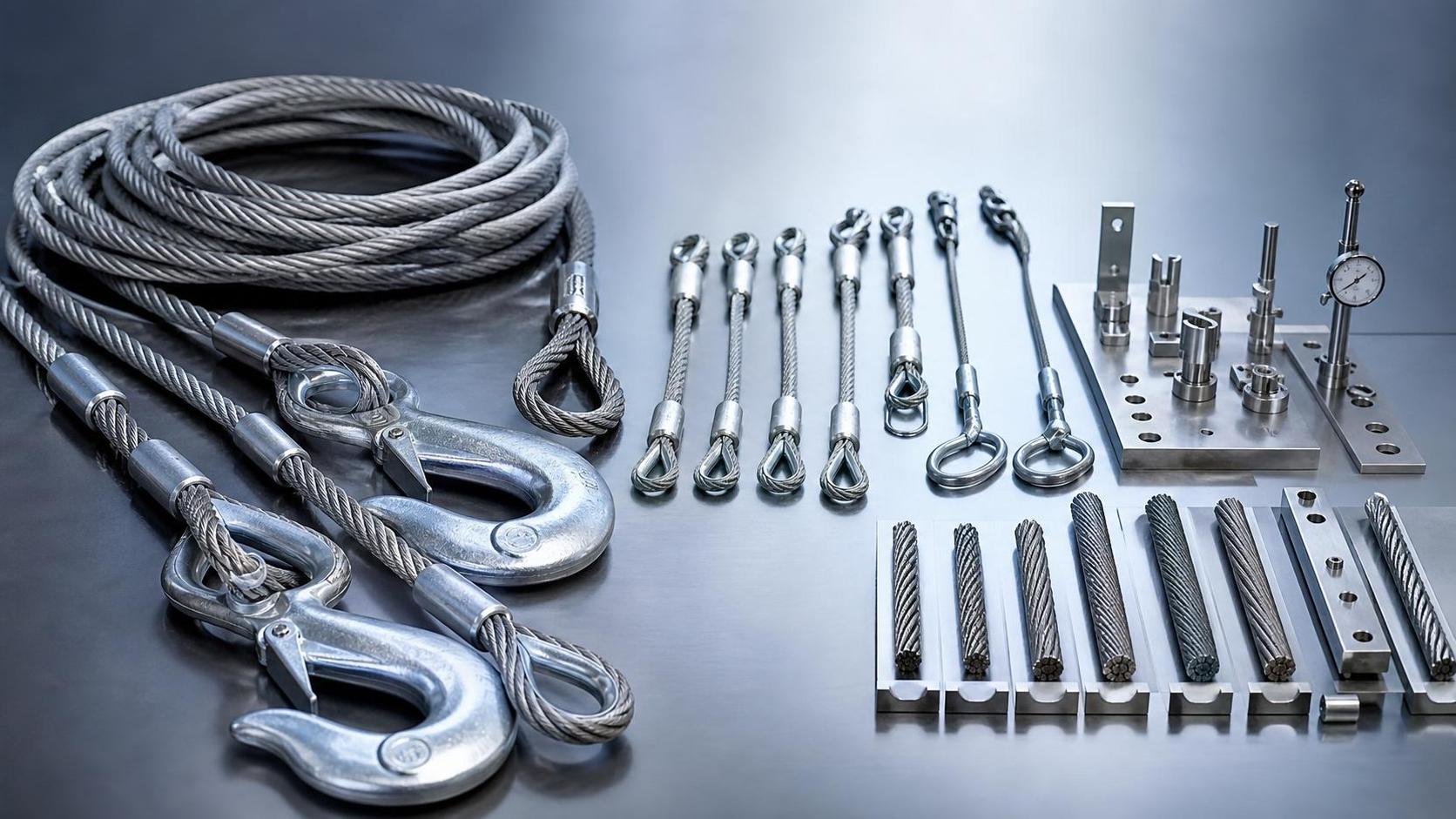
What usually matters most when buying OEM wire rope?
Choosing OEM wire rope is rarely just a load-capacity exercise. The real decision usually combines construction, finish, compliance, testing, and delivery timing.
In practice, the lowest quoted price can become the highest total cost. That happens when specifications are incomplete, tests are unclear, or lead times are assumed rather than confirmed.
A better buying framework starts with application conditions. Lifting, port handling, mining, fishery, and marine service often need different rope structures, coatings, and documentation.
For OEM wire rope, the safest approach is to define performance first, then match the manufacturing route. That reduces rework, short shipments, and approval delays later.
Which custom specs should be confirmed before asking for a quote?
This is where many sourcing issues start. A quote based only on diameter and breaking load is usually too thin for reliable comparison.
For OEM wire rope, confirm these points early:
- Rope construction, such as 6x19, 6x24, 6x37, 7x19, or 19x7
- Core type, usually steel core or fiber core
- Material and finish, including galvanized, bright, stainless steel, or plastic coated
- Diameter tolerance and required length
- Tensile grade, such as 1570-2160 N/mm2
- End fittings, swaging, hooks, rings, sleeves, or custom assemblies
If the rope is part of an assembly, not just bulk material, drawing control becomes even more important. Length, branch angle, hook type, and ferrule detail affect usability and safety.
A common example is a two-leg lifting setup for balanced loads. In that case, a configured assembly like Double Leg Swaged Wire Rope Sling with Safety Hook Galvanized High-Strength may be evaluated by branch design, hook style, finish, and working environment rather than rope diameter alone.
How do you judge whether one OEM wire rope option fits the application better than another?
The better comparison is functional, not cosmetic. Different constructions behave differently under bending, abrasion, rotation, and corrosion exposure.
A short decision table helps keep discussions concrete:
When comparing OEM wire rope suppliers, ask for the basis behind the recommendation. A good answer should connect rope design to service conditions, not just inventory availability.
What testing and compliance documents should be requested?
This question often decides whether a purchase moves smoothly through inspection. Testing requirements should be matched to risk, application, and destination market.
For OEM wire rope, common document requests include material certificates, dimensional inspection records, breaking load results, and proof load testing for finished lifting assemblies.
If export or regulated lifting is involved, confirm whether SGS, CE, RoHS, or ISO-related documentation is expected. The exact package should be written into the purchase order.
It is also useful to ask whether serial traceability is available for assemblies. That becomes important during incoming inspection, maintenance, and incident review.
For example, if the requirement includes swaged slings, safety hooks, and galvanized high-strength wire rope, the inspection plan should cover the rope, ferrule compression, fittings, and load test method together.
Where do lead times usually slip on OEM wire rope orders?
Quoted lead time and actual lead time are often different because buyers and suppliers count from different starting points.
A production promise only works if four things are already frozen:
- Approved drawing or sample
- Confirmed test scope
- Final packaging and marking rules
- Deposit or release timing, if required
In many factories, standard rope may move quickly, but customized assemblies take longer because hooks, sleeves, coatings, and test scheduling add extra steps.
Some suppliers can produce certain configurations in 5-10 days, especially when diameter ranges, fittings, and finish are already standardized. That does not automatically include approval cycles or freight booking.
So when buying OEM wire rope, ask two separate questions: production lead time and shipped lead time. Treat them as different risks.
What are the most common cost mistakes before placing the order?
The first mistake is comparing unlike offers. One quote may include testing, labels, and export packing, while another excludes all three.
The second mistake is underestimating lifecycle cost. A cheaper OEM wire rope with poor corrosion resistance may need replacement much sooner in marine or port service.
Another frequent issue is buying too much customization too early. If the application is still changing, lock the critical dimensions first and postpone minor appearance choices.
It also helps to review whether a proven assembly format is available. In lifting work, a standard two-leg swaged sling design with suitable hooks and steel wire rope structure can reduce engineering uncertainty while still allowing custom length and diameter.
That is where products such as Double Leg Swaged Wire Rope Sling with Safety Hook Galvanized High-Strength become relevant as a reference point for comparing structure options, accessories, and compliance scope.
What should be confirmed right before the PO is released?
A final pre-PO check prevents most avoidable disputes. Keep it simple and specific.
- Approved specification sheet with rope construction, diameter, finish, and length
- Defined acceptance criteria for testing and inspection
- Required certificates and marking format
- Packaging method and shipping terms
- Confirmed production and dispatch timeline
For OEM wire rope, clear documentation usually saves more money than aggressive price negotiation. It shortens review time and reduces the chance of receiving material that is technically usable but commercially wrong.
The practical next step is to build one internal checklist covering specs, tests, compliance, and lead time assumptions. Once that checklist is stable, supplier comparison becomes faster, fairer, and easier to defend.
Navigation
Send Us A Message



Shandong Faster Technology Co., Ltd. is a professional manufacturer of steel wire ropes.
Get in Touch
*We respect your confidentiality and all information are protected.