





Is FC wire rope suitable for high-temperature operation?
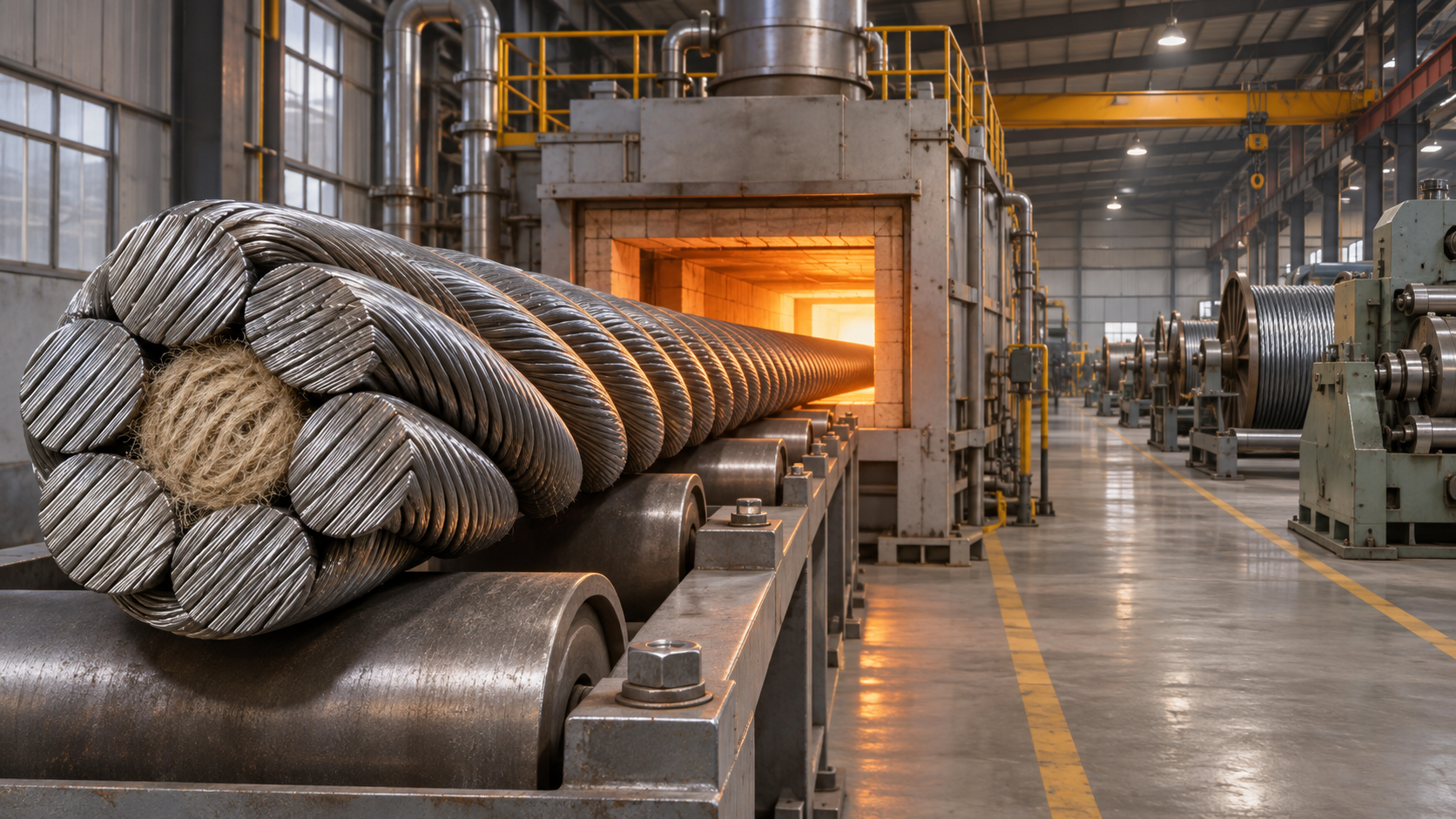
FC wire rope is generally a poor choice for sustained high-temperature operation. Its fiber core and internal lubricant can deteriorate under heat, reducing the support available to the surrounding strands and shortening rope life. A steel-core rope is often a more appropriate starting point, but it still requires a temperature rating for the complete assembly and the intended duty.
The decision cannot be made from ambient air temperature alone. A rope passing near a furnace, touching a hot load, or resting on a heated drum can reach a much higher local temperature than the surrounding air. Exposure duration, repeated heating, bending, loading, and the temperature limits of the core and lubricant all affect suitability.
What heat changes inside a fiber-core rope
The fiber core supports the outer strands and helps maintain the rope’s geometry under load. It also holds lubricant that reduces internal friction as the wires move against one another. Natural and synthetic fiber cores do not respond identically to heat, so the core material must be identified before applying a temperature limit.
Excessive heat can dry, degrade, shrink, or otherwise damage the core. If its support is lost, strands can settle inward and the rope can lose its intended shape. This is especially consequential where the rope bends repeatedly over sheaves or is compressed on a drum. Damage to the core is difficult to assess from the surface alone.
Lubricant condition is a separate concern. Elevated temperature can cause lubricant to drain, evaporate, harden, or degrade. A rope that still looks intact externally can experience increased internal wire-to-wire friction. Applying fresh lubricant to the surface does not reliably restore a damaged core or replace lubricant throughout the interior.
Which temperature matters?
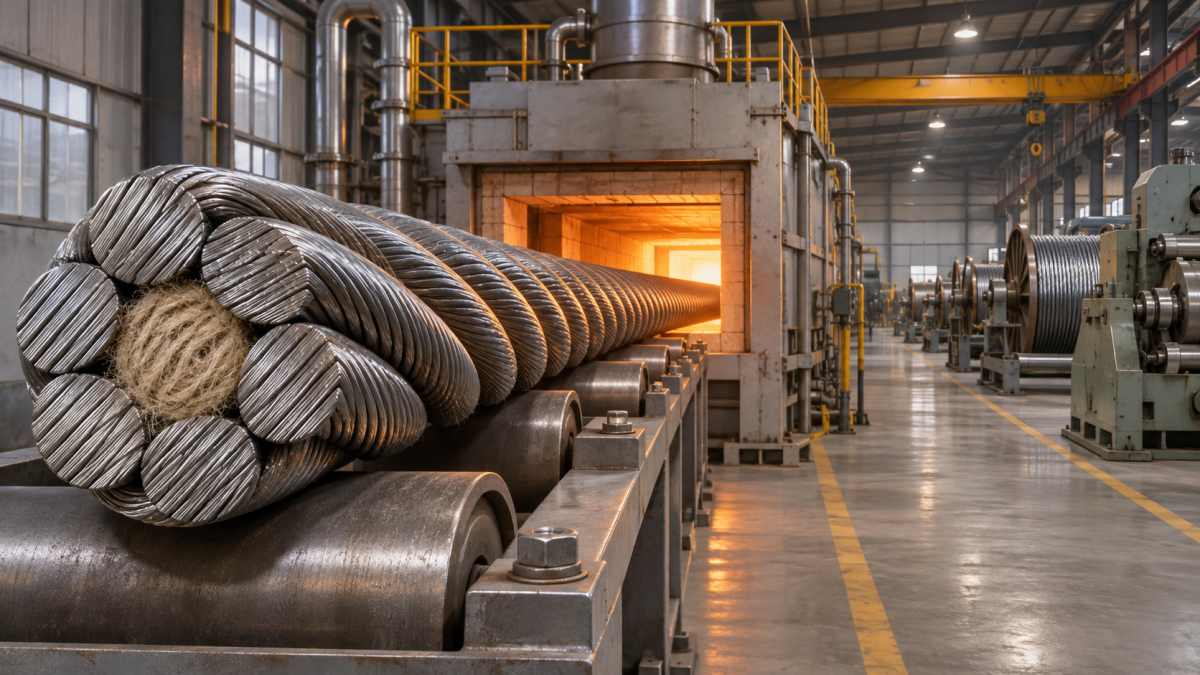
Use the highest credible temperature reached by the rope and its components during the duty cycle, including periods when the equipment is stationary. A rope may spend only seconds in a hot zone on each pass, yet repeated cycles can expose the same section many times. Conversely, a rope held close to a hot surface during a shutdown can remain hot long after motion stops.
Consider these distinct exposure paths when defining the operating condition:
- Radiant heat: A rope near a furnace opening or hot metal can heat up even when it does not touch the source.
- Direct contact: Contact with a hot load, drum, sheave, or adjacent equipment can produce a localized hot spot that an ambient sensor will not capture.
- Hot air or process gases: Continuous exposure can heat a longer length of rope, including sections inside guards or enclosed machinery.
- Residual heat: Heat retained in drums and nearby structures can extend exposure after the process stops.
Surface measurements at accessible points are useful, but they do not automatically establish the maximum temperature inside a rope or at a concealed contact point. Measure representative operating and dwell conditions, and account for the hottest credible operating state. Where measurement is uncertain, resolve the uncertainty before approving the rope.
Temperature ratings need a complete specification
There is no single reliable upper temperature for every FC wire rope. The core may be natural fiber or a particular synthetic material; the lubricant and any coating have their own limits. Ask for the permitted temperature range for the exact rope construction, including the core, lubricant, finish, and any covering. Confirm whether the stated limit applies to continuous exposure, short excursions, or a defined test condition.
A temperature limit alone does not establish lifting capacity. Heat exposure can require a reduction in rated strength or operating load, and the applicable limits must come from the rope and equipment specifications for the actual service. Do not assume that a nominal breaking force measured for a new rope at normal temperature remains available after heating.
End fittings require the same attention. A steel rope attached with a resin socket, for example, is constrained by the socketing material as well as the rope. Sleeves, coatings, lubricants, and other termination components can impose lower limits than the steel wires. Evaluate the complete rope assembly and the equipment manufacturer’s requirements together.
When a steel core is the better starting point
A wire strand core or independent wire rope core avoids reliance on a fiber core for strand support. That makes a steel-core construction a candidate when elevated temperatures rule out fiber. It does not make the rope automatically heat-resistant: steel strength, lubrication, corrosion protection, terminations, and operating load still require review at the specified temperature and exposure duration.
Construction also has to match the mechanical duty. Replacing an FC rope with a steel-core rope of the same diameter does not guarantee equivalent flexibility, bending fatigue behavior, drum winding, or compatibility with existing sheaves and terminations. Confirm the required construction and minimum breaking force against the equipment specification before substitution.
Rotation behavior is a separate selection issue. For example, the 19x7 galvanized steel wire rope 4.0-18.0mm Anti rotation steel cable is a multilayer construction offered in diameters from 4.0 to 18.0 mm. Its rotation-resistant design addresses a different requirement from heat resistance; the construction, lubricant, finish, termination, and permitted thermal exposure still need confirmation for the intended assembly. Do not infer a temperature rating from the galvanized finish or strand pattern.
Assessing a rope after unexpected heat exposure
Discoloration, scorched lubricant, smoke, unusual odor, a change in diameter, or distorted strands are reasons to remove the rope from service pending evaluation. Localized contact can damage a short section while the rest of the rope appears normal. Conversely, discoloration alone does not establish the temperature reached or the remaining strength.
Record the affected location, estimated temperature, exposure time, load, and whether the rope was moving or stationary. Isolate the equipment and follow its inspection and discard procedures; consult the rope manufacturer or a competent rope specialist about the specific exposure. Because internal core and lubricant damage may not be visible, a satisfactory surface appearance is not sufficient evidence that a heat-exposed FC rope remains fit for lifting.
For a new installation, define the thermal envelope before selecting the rope: normal and maximum temperatures at the rope, duration and frequency of exposure, possible contact with hot surfaces, and the complete termination arrangement. Where those conditions exceed or cannot be reconciled with the documented limits of an FC construction, change the rope specification or reduce the heat reaching it before operation.
Navigation
Send Us A Message



Shandong Faster Technology Co., Ltd. is a professional manufacturer of steel wire ropes.
Get in Touch
*We respect your confidentiality and all information are protected.