





How fishing rope resists corrosion in saltwater winch systems
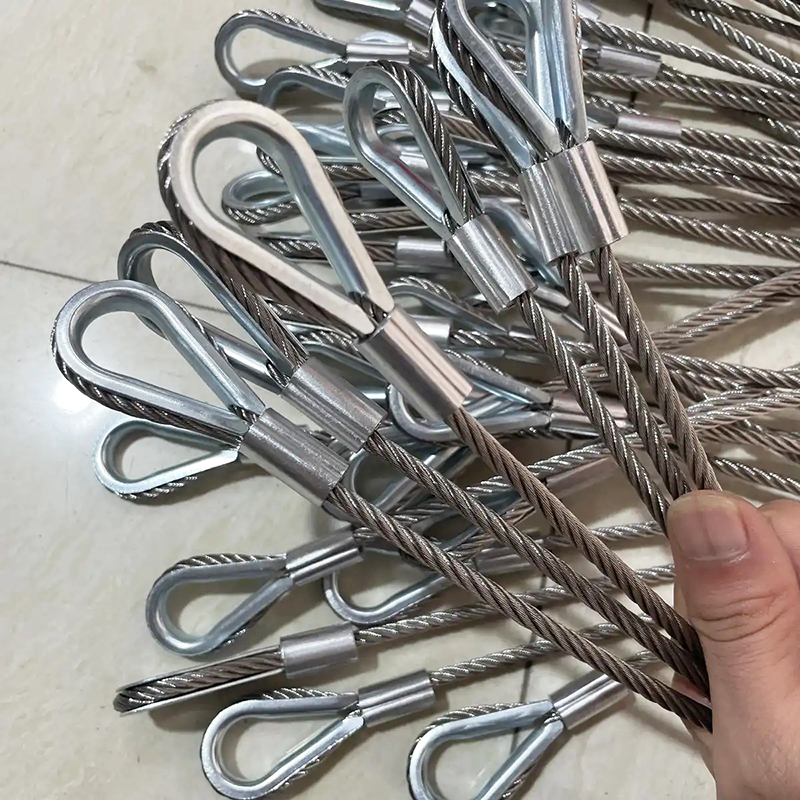
A fishing rope used on a saltwater winch does not resist corrosion simply because it is called “marine grade.” Its service life depends on a system of choices: the wire material, the rope construction, the condition of the sheaves and drum, the way moisture is retained in the rope, and the inspection routine after exposure.
For quality and safety control, the practical question is not whether a rope will eventually corrode. In a wet, chloride-rich environment, every steel rope needs attention. The decision is whether corrosion will remain superficial and manageable, or whether it will develop inside the rope, reduce metallic area, interfere with strand movement, and create an unacceptable risk of failure during hauling.
Saltwater attacks the places that are hardest to inspect
Saltwater leaves chloride deposits after the rope dries. Those deposits attract moisture from the air, so corrosion can continue even when the vessel is not actively fishing. A winch rope also cycles repeatedly over drums, fairleads, and sheaves. This action can remove surface protection, press saltwater into contact points, and trap contaminants between wires.
The visible outer surface is therefore not the whole condition of the rope. In stranded wire rope, corrosion may begin in valleys between wires or beneath the outer layer, where it is difficult to see. Lubricant loss, broken wires, roughness, and reddish staining are useful warning signs, but they should trigger a closer examination rather than be treated as cosmetic defects.
Corrosion becomes more severe when a rope stays wound tightly on a damp drum, passes over damaged grooves, or contacts incompatible metals while wet. Winch systems used near the stern, below deck, or in splash zones usually face a higher exposure burden than equipment stored dry between operations.
Material selection sets the corrosion margin
Galvanized wire rope is widely used where cost and general outdoor exposure must be balanced. Its zinc layer provides sacrificial protection, which is useful while the coating remains intact. However, repeated abrasion at sheaves, drums, clamps, and fairleads gradually consumes that protection. It is often a reasonable choice for controlled exposure and regular maintenance, but it has a narrower margin in continuously salt-sprayed or immersed service.
Stainless steel changes the corrosion mechanism because the alloy forms a protective passive surface film. In saltwater applications, the stainless grade matters. Type 304 can perform well in ordinary damp outdoor conditions, but chloride exposure can challenge it when salt remains on the surface. Type 316 or 316L is generally the more suitable option where seawater contact, persistent spray, or long wet periods are expected, because it offers better resistance to chloride-related corrosion.
Material alone does not qualify a rope for a fishing winch. The rope still has to meet the working load, safety factor, fatigue, bending, termination, and drum-compatibility requirements of the specific system. A corrosion-resistant rope that is too stiff for the sheave arrangement, undersized for the duty cycle, or damaged by incorrect reeving is not a sound safety solution.
Rope construction affects both drainage and winch behavior
A flexible multi-strand wire rope is often appropriate where the rope bends frequently over relatively small sheaves. Its construction distributes bending through many wires, but the internal spaces can retain water and contaminants if cleaning and lubrication are neglected. That makes cleaning access, rope dressing, and inspection discipline part of the corrosion-control plan.
A 1x7 construction, made from one central wire and six outer wires, is much more rigid. Its smoother exterior and limited internal voids can be useful for straight traction, guide applications, or small marine control functions where bending is limited. It should not automatically replace a flexible running rope on a high-cycle winch; stiffness must match the reeving geometry and operational movement.
For smaller-diameter outdoor marine traction or fixed guide duties, an option such as 1x7 Stainless Steel Wire Rope 0.3-6.0mm use For Hanging Traction and guardrail can be assessed in a 316 or 316L material selection. Its smooth single-strand surface may reduce rubbing in an appropriate guide groove, but the final decision must still be based on the winch’s bending path and load conditions.
Coatings and lubrication are protection layers, not substitutes for the right rope
Plastic coating can reduce direct exposure of the metal surface and provide a cleaner external finish. It can be useful where the rope contacts equipment or needs added surface protection. Yet a coating can hide developing corrosion if it is cut, worn, or poorly bonded. A coated rope must be checked at terminations, bends, contact points, and any area where the coating has opened.
For uncoated steel wire rope, a compatible marine rope lubricant helps displace moisture and reduce internal friction. It must penetrate rather than merely sit on the outside. Excessive or unsuitable lubricant can hold abrasive debris, while insufficient lubrication allows wires to rub, wear, and lose their protective film. The correct approach is a controlled maintenance schedule based on exposure and use, not occasional treatment after corrosion is already obvious.
Build corrosion control into the winch inspection routine
A usable inspection routine links rope condition to the actual service environment. After heavy saltwater exposure, rinse the rope and its contact surfaces with fresh water where operationally practical. Allow the rope to drain and dry rather than leaving it tightly wound and wet. Cleaning the drum, sheaves, fairleads, and level-wind components matters because salt and rust debris in those locations can damage a new rope quickly.
During planned inspections, examine the rope through its full working length, paying extra attention to sections that sit on the drum, pass through fairleads, remain near terminations, or are repeatedly bent over sheaves. Look for:
- broken or protruding wires;
- pitting, localized discoloration, roughness, or loss of surface finish;
- flattened areas, strand distortion, kinks, birdcaging, or diameter changes;
- damaged plastic coating, especially where metal is exposed;
- dry rope, lubricant loss, embedded grit, or stiff sections;
- sheave groove wear, sharp edges, poor alignment, and drum damage.
Inspection findings should be recorded by rope location, not only as a general pass or fail. A recurring damaged zone often points to a system problem such as a misaligned fairlead, undersized sheave, poor spooling, or a section that remains wet on the drum. Replacing the rope without correcting that cause only resets the failure cycle.
Common selection mistakes in fishing winch service
The most common mistake is selecting solely by nominal diameter and breaking strength. Those values are essential, but they do not show whether the rope will tolerate chloride exposure, cyclic bending, abrasion, or the actual termination method. The second mistake is specifying “stainless” without identifying the grade. In saltwater duty, the difference between general-purpose stainless and a grade intended for stronger chloride resistance has practical consequences.
Another frequent error is treating surface rust as the only rejection criterion. A rope can appear reasonably clean while internal corrosion, fatigue, or wire breaks are progressing. Conversely, light staining does not by itself define the remaining safe condition. The inspection decision should consider the complete rope condition, its service history, and the manufacturer’s discard criteria for that rope and application.
Before approving a fishing rope for a saltwater winch, confirm the exposure pattern, rope path, sheave and drum dimensions, load and shock-load conditions, required flexibility, termination design, material grade, coating or lubrication plan, and inspection responsibility. This sequence produces a more reliable result than choosing the most corrosion-resistant-looking rope on the shelf.
Navigation
Send Us A Message



Shandong Faster Technology Co., Ltd. is a professional manufacturer of steel wire ropes.
Get in Touch
*We respect your confidentiality and all information are protected.