





High Carbon Steel Wire Rope: How Wire Grade Influences Strength and Ductility
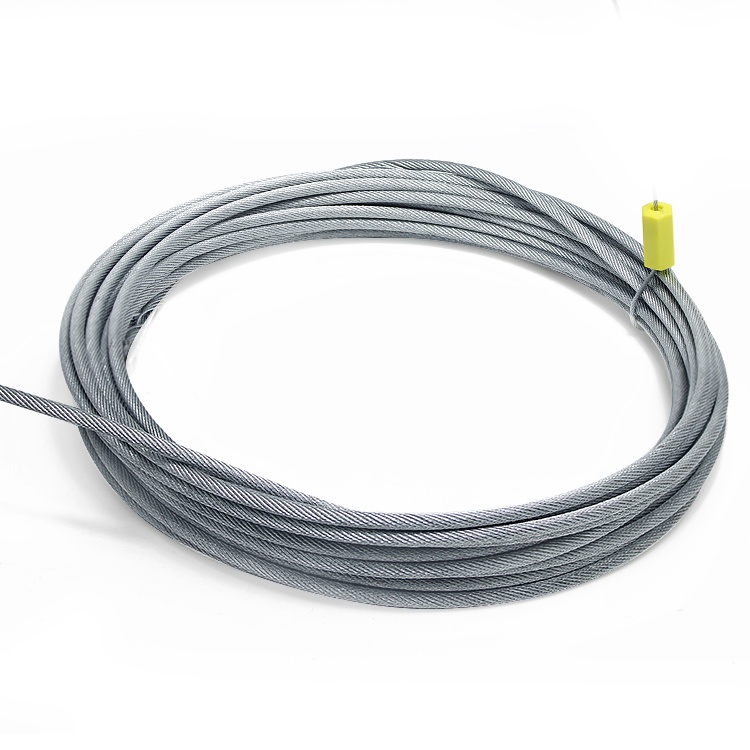
High carbon steel wire rope can provide substantial breaking strength within a limited diameter, but selecting a higher wire grade does not automatically improve service life. A higher tensile grade can increase the load a rope withstands before breaking, while its ability to tolerate bending, local deformation, and damage depends on how the wire is processed and how the rope is constructed.
For technical evaluation, three questions deserve separate answers: what the grade designation represents, how much deformation the finished wire can tolerate, and whether the assembled rope suits the operating duty. A grade increase may be valuable for a strength-limited application. In equipment where repeated bending, corrosion, or crushing controls replacement intervals, the benefit requires closer examination.
What a wire grade tells you—and what it leaves out
Carbon content, wire tensile strength, and rope grade describe different aspects of the product. Carbon content concerns the steel’s chemistry. Wire tensile strength is a measured mechanical property after processing. Rope grade is a designation used under the applicable rope specification to support requirements such as minimum breaking force. These terms should not be treated as interchangeable.
Values such as 1570–2160 N/mm² describe a tensile-strength range, with N/mm² equivalent to MPa. A quotation showing this range does not identify the grade of a particular delivered rope. The evaluator still needs the ordered grade, construction, diameter, core, finish, and applicable standard. It should also be clear whether the quoted value refers to individual wire tensile strength or the rope grade.
The tensile strength of a straight wire cannot be converted directly into the breaking force of a finished rope simply by multiplying it by the rope’s external cross-sectional area. That area includes spaces between wires and may include a fiber core. Helical wire geometry, metallic area, and construction also affect the assembled rope’s strength. Use the specified minimum breaking force for the actual rope configuration.
Likewise, minimum breaking force does not establish a lifting assembly’s working load limit. The assembly rating must account for the applicable design requirements, termination performance, fittings, and loading geometry. A stronger wire grade provides one input to that assessment.
How carbon content and processing shape the strength–ductility balance
High-carbon steel provides a metallurgical basis for strong drawn wire. Carbon supports the formation of a pearlitic structure containing ferrite and cementite. With suitable processing, this structure can develop high tensile strength while retaining enough deformation capacity for drawing, stranding, and service.
Wire manufacture therefore matters as much as the material label. Patenting, where used, involves controlled heat treatment to prepare a suitable pearlitic structure for subsequent drawing. Cold drawing reduces wire diameter and strengthens the material through work hardening and changes in its microstructure. The final properties depend on the starting steel, thermal history, drawing reductions, and control of defects.
Increasing strength through greater drawing generally reduces the remaining capacity for plastic deformation. However, there is no reliable universal rule that every higher-grade wire has proportionally lower ductility. Different production routes, wire diameters, and microstructural quality can produce different combinations of strength and deformation capacity.
This is why tensile strength alone is insufficient for comparing suppliers or grades. Wire elongation, torsion, and reverse-bend testing can provide evidence of deformation capacity and processing quality where required by the applicable specification. Results should be assessed using the specified test methods and acceptance criteria; values from different wire sizes or test arrangements may not be directly comparable.
Surface condition also deserves attention. Drawing damage, seams, and corrosion pits can concentrate stress and initiate fatigue cracks. A wire that meets its tensile-strength requirement may still perform poorly under repeated bending if damaging defects remain. Coating quality and lubrication influence this risk, but neither substitutes for sound wire manufacture.
Why stronger wire does not guarantee a longer-lasting rope
Ductility, rope flexibility, and bending-fatigue resistance are related but distinct. Ductility describes a material’s ability to deform plastically before fracture. Rope flexibility depends heavily on construction and the movement of wires and strands. Bending-fatigue resistance concerns the accumulation of damage under repeated bending cycles.
A rope can feel flexible because it contains many relatively fine wires, even though those wires have limited plastic deformation capacity. Conversely, a rope with fewer, larger outer wires may be less flexible while offering useful resistance to surface wear in a suitable application. Describing either rope simply as “more ductile” obscures the engineering difference.
When a rope passes over a sheave, individual wires bend as the rope also experiences axial tension, contact pressure, and internal movement. The relationship between sheave diameter and rope diameter—the D/d ratio—affects bending severity. Groove condition, alignment, operating load, lubrication, and the number of bending cycles further influence fatigue performance.
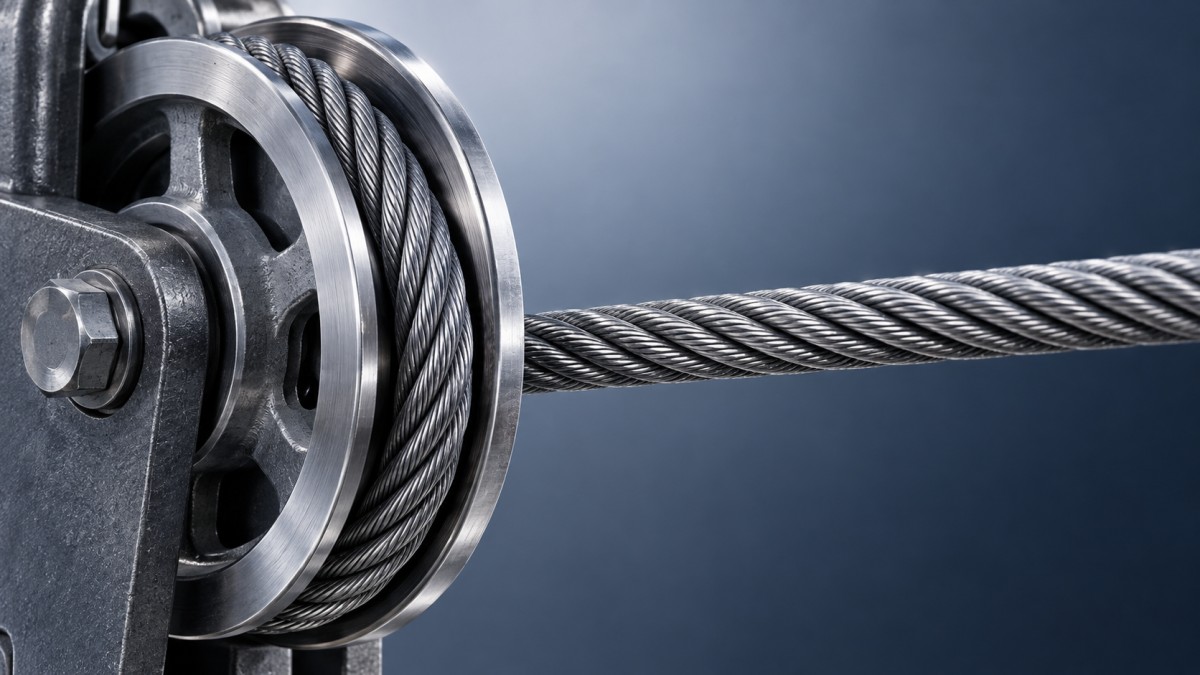
A higher grade may permit a smaller rope to satisfy a breaking-force requirement. That diameter reduction changes the evaluation: wire sizes, contact conditions, groove compatibility, and resistance to crushing may all change. Any proposed reduction should be checked against the equipment manufacturer’s requirements and the selected rope specification.
Construction designations also require careful reading. Labels such as 6×19 and 6×37 can identify construction classes rather than fully define the arrangement of every wire. The exact construction determines outer-wire size and contact geometry. More fine wires can improve bending flexibility, while larger outer wires can provide a different balance of wear resistance and bending performance.
Core selection adds another variable. A steel core can provide greater structural support against crushing, while a fiber core changes support, flexibility, and lubrication behavior. Neither core type establishes fatigue life on its own. The comparison should use the complete rope design under the expected duty.
For a crane running rope, frequent passage over sheaves may make bending-fatigue performance decisive. For a lifting sling, bending around attachment points, local damage, termination integrity, and load distribution may deserve greater attention. Port or marine exposure adds corrosion as another source of strength loss and crack initiation. Galvanizing helps protect the steel, but it does not remove the need for inspection and appropriate maintenance.
Turn the grade comparison into an acceptance specification
A useful evaluation begins with the failure mechanism the application is most likely to encounter. If the existing rope has adequate service life but insufficient breaking-force margin, a higher grade may address the constraint. If replacement is driven by broken wires near sheaves, crushing on drums, or corrosion, increasing grade alone leaves the main cause unresolved.
Before approving a grade change, establish a consistent comparison basis:
- Complete rope identification: nominal diameter, exact construction, core, lay, surface finish, lubrication, grade, and applicable product standard.
- Strength evidence: specified minimum breaking force and the inspection or test documentation required for the supplied rope.
- Wire quality evidence: relevant tensile, torsion, reverse-bend, and coating results, assessed against the appropriate specification.
- Service compatibility: sheaves, grooves, drums, load spectrum, bending frequency, corrosion exposure, and equipment restrictions.
- Assembly requirements: termination type, fitting ratings, working load limit, loading angles, and traceability where the rope forms part of a sling.
The standards should match the item being evaluated. ISO 2408 and the relevant parts of EN 12385 address steel wire rope requirements; EN 13414 addresses steel wire rope slings. The applicable part and edition belong in the specification. Compliance with a rope standard does not, by itself, establish conformity of a finished sling assembly.
A two-leg assembly such as the Double Leg Swaged Wire Rope Sling with Safety Hook Galvanized High-Strength illustrates the distinction. Its rope grade must be considered alongside the swaged terminations, hooks, master connection, and permitted sling angles. As the legs move farther from vertical, their tension increases for the same supported load. Unequal loading can further limit the assembly, so its rating cannot be inferred from wire tensile strength.
Broad certification labels also need context. A third-party inspection reference, a management-system certificate, and a declaration relating to a finished lifting assembly serve different purposes. Request documentation that identifies the supplied item and the requirements it demonstrates.
The grade decision is strongest when the acceptance specification connects material properties to the actual duty. Approve the higher grade when its documented breaking-force benefit addresses the application’s constraint and the complete rope or assembly remains suitable. Where bending damage or corrosion controls retirement, require evidence addressing those mechanisms before expecting the grade change to extend service life.
Navigation
Send Us A Message



Shandong Faster Technology Co., Ltd. is a professional manufacturer of steel wire ropes.
Get in Touch
*We respect your confidentiality and all information are protected.