





Does 7x7 stainless steel cable provide enough flexibility?
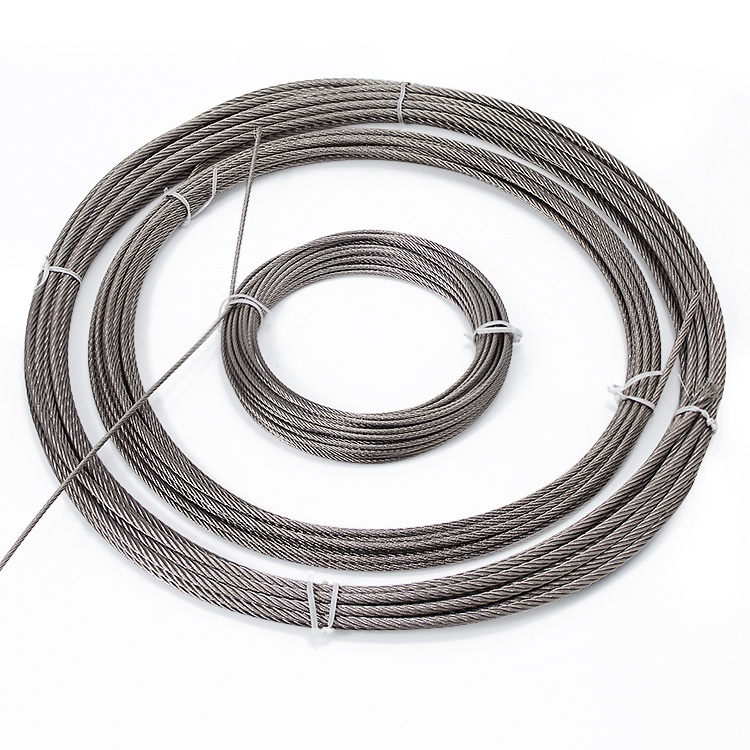
Does 7x7 Stainless Steel Cable Provide Enough Flexibility?
Does 7x7 stainless steel cable provide enough flexibility for your application? For procurement professionals, the answer depends on bending demands, corrosion exposure, load requirements, and expected service life.
This construction is widely selected for flexible handling and dependable performance in marine, architectural, lifting, and industrial work. Knowing its limits helps buyers avoid an expensive specification mismatch.
The Short Answer for Buyers
In most light-to-medium-duty routing, control, restraint, and general-purpose applications, 7x7 stainless steel cable provides good flexibility. It bends substantially more easily than rigid 1x19 cable.
A 7x7 construction contains seven strands, each made from seven wires. Its 49 individual wires create more bending points than a single-strand construction.
That structure makes the cable suitable for applications involving moderate pulley movement, hand-operated mechanisms, cable railings, marine fittings, safety restraints, and general tensioning systems.
However, “enough flexibility” should never be assessed in isolation. Cable diameter, sheave diameter, bend frequency, tension level, termination type, and corrosion conditions all affect performance.
For repeated cycling over small pulleys, a more flexible construction such as 7x19 may be the stronger purchasing choice. For straight, high-rigidity tensioning, 1x19 may be preferable.
How 7x7 Construction Balances Flexibility and Strength
Compared with 1x19 stainless steel wire rope, 7x7 cable gives up some stiffness in exchange for improved bendability. This is often a useful tradeoff for installed systems.
Compared with 7x19 cable, 7x7 stainless steel cable is generally less flexible but retains a firmer feel. It is less prone to appearing loose in static runs.
The construction is often described as medium-flexibility wire rope. That classification is practical for buyers because it identifies applications where occasional or controlled bending is expected.
Its relatively compact strand design also supports good abrasion resistance and dimensional stability. These qualities matter where the rope contacts hardware, guides, or exposed structural components.
Buyers should treat flexibility as a system property, not simply a rope feature. A properly selected cable can fail early if routed around undersized sheaves or sharp edges.
Comparison of Common Stainless Steel Cable Constructions
1x19 cable is highly rigid and offers excellent axial stability. It works well for architectural stays, straight tension lines, bracing, and traction applications with minimal bending.
7x7 cable occupies the middle position. It is appropriate where a cable needs to bend during installation or service, while still maintaining reasonable firmness and handling control.
7x19 cable contains many more individual wires and is notably more flexible. It is commonly selected for pulleys, winches, control cables, and applications with frequent movement.
Using a more flexible rope than necessary may increase cost and reduce the crisp appearance required for some tensioned installations. Selecting a stiffer rope can cause fatigue at bends.
When Is 7x7 Stainless Steel Cable Flexible Enough?
7x7 stainless steel cable is usually flexible enough when the cable experiences occasional bending, uses adequately sized pulleys, and is not subjected to intensive back-and-forth cycling.
Marine guardrails, deck hardware, canopy restraints, signage supports, security cables, and outdoor tension systems are common examples. These systems benefit from corrosion resistance and manageable installation flexibility.
It is also frequently suitable for medium-duty mechanical linkages. The cable can follow practical routing paths without requiring the very high flexibility associated with 7x19 constructions.
For cable railing and balustrade work, 7x7 may be used when the route includes modest bends. Straight horizontal runs often use 1x19 for cleaner tensioning behavior.
In shipbuilding and port environments, material grade remains equally important. Type 316 or 316L stainless steel is normally favored where chloride exposure is persistent or severe.
Applications That Need a More Flexible Construction
Choose 7x19 rather than 7x7 when the cable repeatedly passes over pulleys, bends around small-radius components, or operates in continuously moving control systems.
Examples include fitness equipment, garage-door mechanisms, repeated lifting paths, winch systems, moving-stage equipment, and machinery where bending fatigue is a central service-life concern.
Frequent flexing causes individual wires to work against each other. More wires and smaller wire diameters generally allow a cable to withstand repeated bending more effectively.
Do not assume that a higher breaking load resolves a fatigue problem. An oversized but insufficiently flexible cable can still develop broken wires or distortion at repeated bends.
What Procurement Teams Should Specify Before Ordering
A purchase order should define more than cable diameter and material. Clear technical requirements reduce substitution risk and make supplier quotations easier to compare accurately.
Start by documenting the required working load limit and the applicable safety factor. Minimum breaking force alone does not establish whether a cable is appropriate for the intended service.
Next, identify whether the cable is static, occasionally flexed, or continuously cycled. This operating condition is often the deciding factor between 1x19, 7x7, and 7x19.
Specify the smallest pulley, drum, or bend radius in the system. Suppliers can use this information to recommend a suitable construction and flag potential bending-fatigue concerns.
Material selection should be tied to the actual environment. Type 304 is widely used in general outdoor settings, while 316 and 316L offer stronger resistance in marine conditions.
Also confirm surface finish, lay direction where relevant, reel length, packaging, tolerances, inspection documentation, and whether the cable requires factory-fitted end terminals or custom assemblies.
Check Standards and Test Data
For industrial procurement, request conformity information against applicable product standards, such as EN 12385-4 or GB/T9944-2002, rather than relying on generic strength claims.
Certificates should identify material grade, nominal diameter, construction, tensile grade, minimum breaking load, and batch traceability. These details support quality control and project documentation.
Where cable failure could affect personnel, lifting operations, or critical equipment, involve the project engineer. Selection should account for regulations, inspection plans, and termination efficiency.
Why Diameter Alone Does Not Determine Flexibility
A smaller 7x7 cable is naturally easier to bend than a larger one, but construction remains important. A small rigid cable may still perform poorly in dynamic routing.
For this reason, comparing only diameter and breaking strength can lead buyers toward the wrong product. Construction, wire grade, and cable path must be evaluated together.
Termination choice also influences usable flexibility. Swaged fittings, thimbles, clamps, and sockets create local stiffness, which may matter when installation space is restricted.
Consider installation practices as well. Kinks, crushed strands, poor reel handling, and twisting during assembly can permanently damage a stainless steel cable before it enters service.
A reliable supplier should provide practical selection support, not merely quote a stock item. The best recommendation is based on application data, not on a construction name alone.
Where a Rigid 1x19 Alternative Makes More Sense
Some projects need strength, low elongation, compact diameter, and stable straight-line behavior more than flexibility. In these cases, a 1x19 construction can be more suitable.
For example, elevator-related traction components, curtain-wall support, precision equipment, outdoor tensioning, and straight architectural cables may benefit from the rigidity of 1x19 rope.
Shandong Faster supplies a 1x19 Stainless Steel Wire Rope 0.4-5.0mm use For Traction Drive for compact traction and support applications requiring high rigidity and corrosion resistance.
Available stainless material options include 201, 304, 316, and 316L, allowing buyers to align corrosion performance and budget with the actual operating environment.
The key decision is straightforward: select 1x19 for predominantly straight tension and traction, 7x7 for moderate flexibility, and 7x19 for intensive bending or cycling.
Final Buying Decision
Yes, 7x7 stainless steel cable provides enough flexibility for many industrial and commercial applications. It is a practical middle-ground construction for moderate bending and dependable tension service.
It should not be selected automatically for high-cycle pulley systems, nor dismissed because it is less flexible than 7x19. Its value lies in balancing flexibility, stability, and durability.
Before purchasing, confirm load, bend radius, movement frequency, environmental exposure, material grade, and termination requirements. Those factors determine whether 7x7 is sufficient for the actual application.
For procurement teams, a complete application specification is the most effective way to secure consistent quality, control lifecycle cost, and select stainless steel cable with confidence.
Navigation
Send Us A Message



Shandong Faster Technology Co., Ltd. is a professional manufacturer of steel wire ropes.
Get in Touch
*We respect your confidentiality and all information are protected.