





Cutting Stainless Steel Cable Wire Without Fraying: Tools and End Preparation
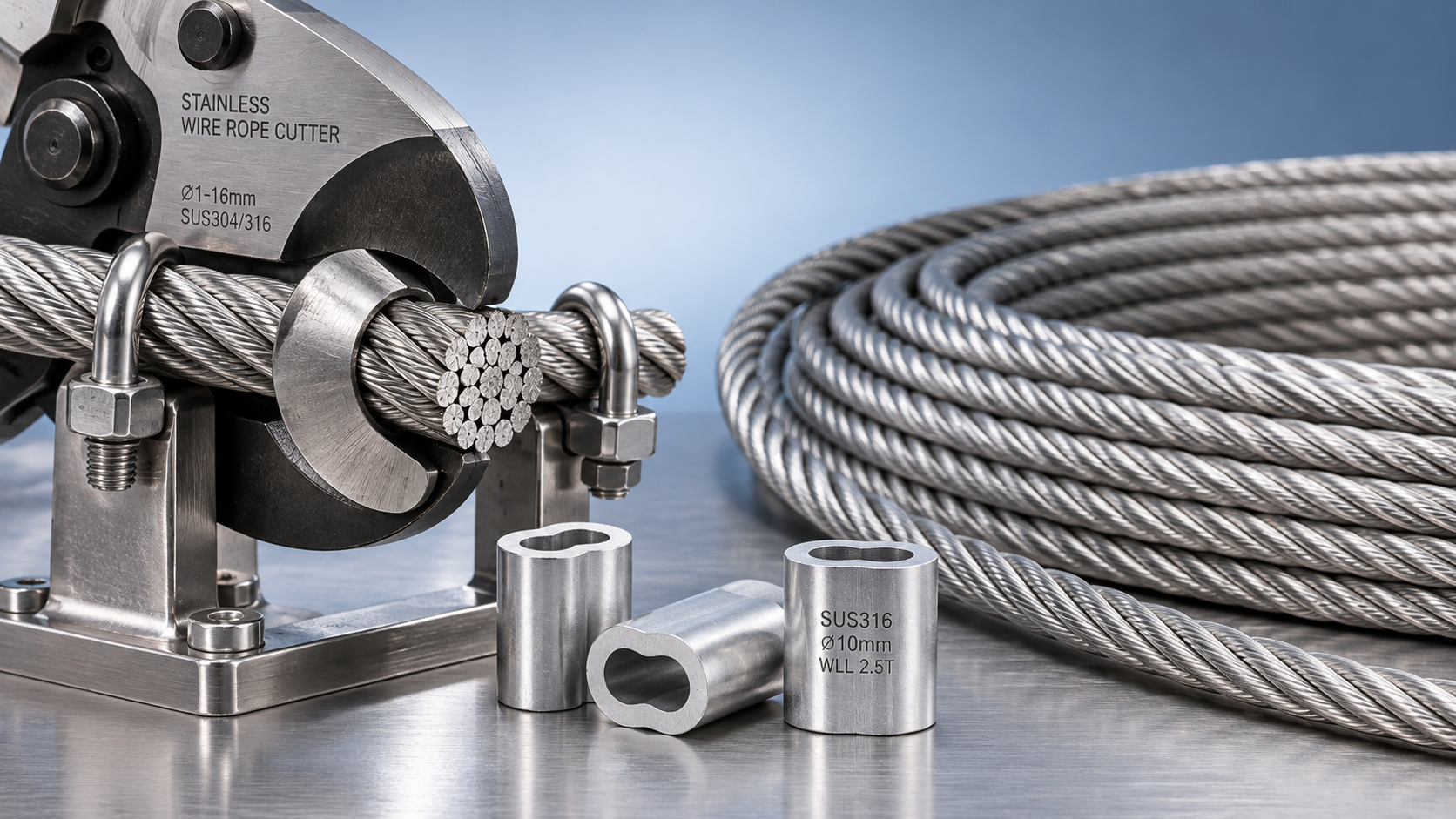
To cut stainless steel cable wire without fraying, use a cutter rated for stainless wire rope, restrain the strands before cutting, and support both sides of the cut. A clean end should remain compact enough to enter its intended fitting without forcing, twisting, or trimming away individual wires.
If the cable flattens or opens into a brush, stop before installing the terminal. The problem may be an unsuitable cutter, worn blades, inadequate strand restraint, or movement during cutting. Tape can help hold a small cable together, but it cannot compensate for a tool that crushes the rope.
Choose a cutter that supports the cable as it cuts
Dedicated wire rope cutters usually have shaped jaws that surround the cable and shear its wires while limiting sideways spread. General-purpose pliers and ordinary bolt cutters can squeeze the bundle flat before separating it, leaving an oval end that will not fit a round terminal bore.
Check the tool’s capacity specifically for stainless steel wire rope. A capacity listed for copper cable, aluminum conductors, or softer wire does not establish suitability for stainless cable of the same diameter. Rope construction also matters: a flexible 7x19 cable and a stiffer 1x19 strand can behave differently under the jaws.
For abrasive cutting, use a wheel suitable for stainless steel and avoid equipment contaminated by carbon steel grinding debris. Embedded iron particles can later produce rust staining. Keep heat input controlled; discoloration, melted coating, or damage near the cut requires attention before termination.
Prepare the cut around the fitting you will install
Establish the finished assembly length before marking the cable. Terminals may require an insertion allowance, while an eye around a thimble needs enough rope for the return section. Cutting directly to the distance between attachment points can leave the assembly too short.
For coated cable, distinguish the outside coating diameter from the steel rope diameter. The cutter must accommodate the full section, while the fitting must match the rope and coating arrangement it was designed to grip. Remove coating only where the termination instructions require it, without nicking the underlying wires.
Check whether nuts, sleeves, boots, or other components must slide onto the cable before the end is terminated. Discovering a missing component after swaging usually means replacing the termination.
Release service tension and secure the cable before cutting. Coiled rope can spring back, and a suspended offcut can pull strands out of position as the final wires separate. Wear eye protection and suitable gloves when handling stationary cable; keep hands and loose clothing clear of powered cutting equipment.
Hold the strands together, then make a controlled cut
- Mark the cut clearly. Leave enough spare length for a fresh cut if the first attempt produces a damaged end.
- Restrain the strands on both sides. On small, stable cable, tightly wrapped tape may provide sufficient temporary restraint. Larger rope or constructions prone to unlaying may require proper seizing: tight bindings that hold the strands in their original position. Use the rope supplier’s seizing method for the construction involved.
- Support the retained length and offcut. Hold the cable straight near the cutting point. Use suitable clamping without flattening the rope, and support the offcut so it cannot drop or twist.
- Keep the tool square to the cable. Seat the rope fully in the cutter jaws. With a manual cutter, complete the cut smoothly rather than making repeated shallow bites around the circumference.
- Inspect before releasing the restraint. Look for uncut wires, a flattened section, opened strands, or heat damage. Keep the end restrained until the next preparation step is ready.
For small cable, cutting through the middle of a tight tape wrap can help keep both ends together. For properly seized rope, cut in the prepared gap between the bindings. Tape and seizing serve different levels of restraint; neither becomes part of a load-bearing termination unless the specified assembly procedure explicitly allows it.
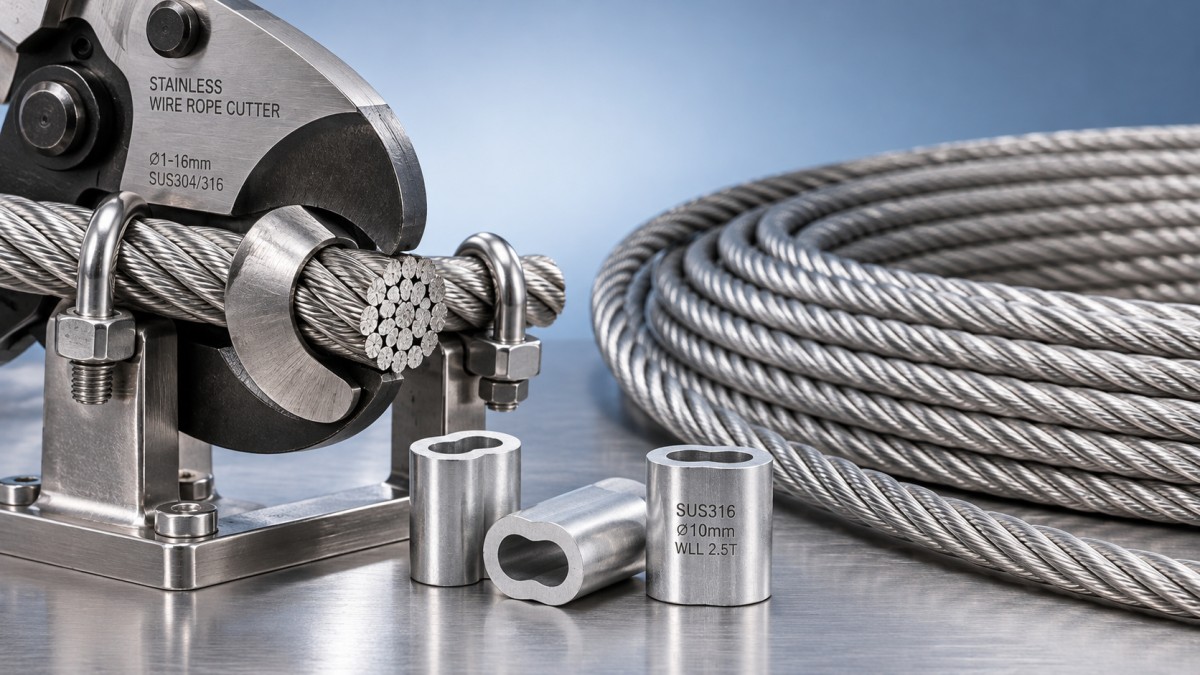
A successful cut has a reasonably square face and preserves the cable’s original profile. Slight surface roughness is different from structural damage: a small burr may be removable, but a crushed bundle or separated strand needs a fresh cut behind the affected area.
Prepare the end for its specific termination
A clean cut is only the starting point. The next step depends on how the fitting transfers force into the cable.
For a swaged terminal or compression sleeve, keep the insertion section clean and free of tape residue, loose wires, and coating where bare rope is required. Match the fitting to the cable diameter, construction, and material. Stainless rope does not automatically make every sleeve material suitable, particularly in wet or marine exposure.
Insert the cable to the specified depth and use the designated die and compression procedure. Do not force a mushroomed end into a sleeve or remove individual wires to make it fit. Those shortcuts change the rope section that the termination is designed to hold.
Mechanical terminals may use wedges, cones, or other components that require deliberate strand arrangement. Follow that terminal’s assembly sequence rather than treating it like a simple push-in fitting. An end that looks tidy externally can still be assembled incorrectly inside.
For a free, non-load-bearing tail, a compatible end cap or heat-shrink covering can reduce snagging and contact with sharp wires. It provides protection only; it does not secure a structural connection. Avoid torch melting or improvised welding to hold an end together, since uncontrolled heat can damage the rope and interfere with subsequent fitting installation.
When the end still frays, fix the cause
If strands spread immediately after cutting, improve restraint and prevent the offcut from rotating. Some rope constructions need more substantial seizing than tape can provide. If the end stays compact but becomes oval, check jaw condition, tool capacity, and cable positioning.
A few wires left connected usually indicate incomplete jaw travel, worn cutting edges, or cable beyond the cutter’s capacity. Pulling the sections apart creates projecting wires and may disturb the adjacent rope. Reposition the work and recut with a suitable tool.
If a square, undamaged end still will not enter the terminal, check fitting compatibility and residue before applying more force. Do not grind the cable smaller. Make a trial cut on spare material when preparing several assemblies, so tool problems are caught before finished lengths are lost.
Lifting assemblies require more than tidy cable ends
For lifting, the completed sling needs compatible rope, terminations, thimbles, hooks, and connecting hardware, together with an assigned working load limit. Branch angle and load distribution affect a two-leg sling’s capacity. Wire tensile strength alone cannot establish the allowable load of the finished assembly.
Where the task is a complete two-point lifting assembly, Shandong Faster Technology Co., Ltd. offers manufactured sling options such as the Double Leg Swaged Wire Rope Sling with Safety Hook Galvanized High-Strength. This galvanized assembly represents a different material choice from stainless cable; select the rope material and finished configuration for the lifting duty and exposure conditions.
Do not shorten or reterminate an existing rated sling as a routine field adjustment. Arrange the required finished length and terminations through a qualified sling manufacturer. Before putting any prepared cable assembly into service, check fitting engagement, termination inspection requirements, and the adjacent rope for damage. An end that slides neatly into its fitting is useful evidence of cutting quality; a correctly assembled and inspected termination establishes whether it is ready for its intended duty.
Navigation
Send Us A Message



Shandong Faster Technology Co., Ltd. is a professional manufacturer of steel wire ropes.
Get in Touch
*We respect your confidentiality and all information are protected.