





Best Uses for 7x7 Nylon Coated Stainless Steel 304 316 Wire Rope in Cable Systems
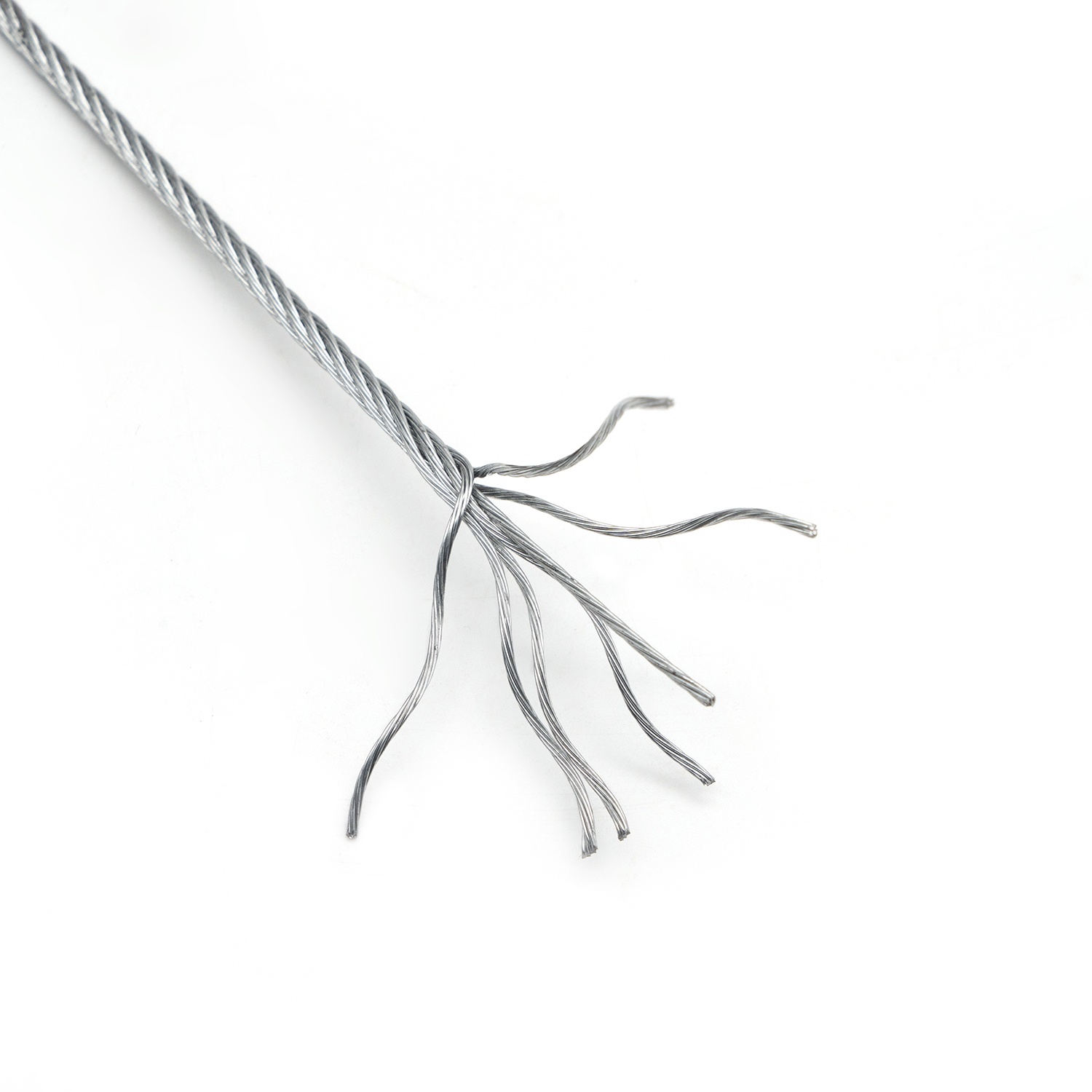
For project managers and engineering leaders, choosing the right cable component directly affects safety, durability, and maintenance costs. 7x7 Nylon coated stainless steel 304 316 wire rope is widely valued in cable systems for its balance of flexibility, corrosion resistance, and surface protection, making it an ideal option for demanding industrial environments and customized applications.
What matters in practice is not whether this rope type is “good” in general, but whether it fits the cable system’s actual duty cycle, exposure conditions, installation method, and inspection regime. In many projects, the wrong decision is not choosing an obviously weak rope. It is choosing a rope with the right strength class but the wrong structure, coating behavior, or corrosion margin for the site.
Why 7x7 construction is often chosen in cable systems
The 7x7 construction means 7 strands made of 7 wires each. For project use, that translates into a practical middle ground. It is more flexible than stiffer constructions used mainly for static heavy-duty load paths, but it is not as soft and fatigue-oriented as finer constructions such as 7x19. That balance is exactly why 7x7 Nylon coated stainless steel 304 316 wire rope appears so often in guard cables, control cables, architectural support lines, marine fittings, light mechanical linkages, suspended guidance lines, and medium-duty industrial cable assemblies.
From a project execution perspective, 7x7 is usually selected when the cable must:
- hold shape better than very flexible rope,
- still pass through bends or fittings without excessive stiffness,
- resist outdoor or wet-environment corrosion,
- avoid surface marking on adjacent components,
- maintain a cleaner appearance in exposed installations.
This makes it especially relevant in projects where cable systems are visible, frequently handled, or routed through hardware that would accelerate wear on uncoated metal rope.
Where nylon-coated stainless rope performs best
The best uses are usually not the heaviest lifting points. They are the applications where environmental exposure and repeated contact create most of the lifecycle risk.
Architectural and public-facing cable systems. In balustrades, barrier lines, tensioned guide cables, and decorative support runs, the nylon coating reduces direct metal-to-metal scuffing and improves handling during installation. Stainless steel inside provides corrosion resistance, while the coating helps protect both the rope and surrounding finishes.
Marine and waterfront projects. Docks, marinas, port-side access systems, and fishery-related assemblies benefit from stainless wire rope because moisture and chlorides quickly expose weaknesses in lower-grade materials. In these environments, 316 is usually preferred over 304 when salt exposure is persistent or splash conditions are unavoidable.
Machinery support and routing systems. In machinery factories and industrial plants, project teams often use coated cable in guide, restraint, and auxiliary support systems where abrasion, vibration, and incidental contact matter more than peak lifting loads. The coating can reduce wear against brackets and help manage noise in moving or lightly dynamic systems.
Outdoor utility and protective cable runs. Where a cable is installed around equipment housings, access gates, safety partitions, or exposed routing paths, nylon-coated stainless rope offers a useful combination of weather resistance and safer manual handling.
Customized assemblies with finish requirements. Some projects are not only technical but also visual. Coated rope is frequently chosen when the cable must match color coding, reduce visible oxidation concerns, or avoid scratching finished metal, glass, painted structures, or composite panels.
304 or 316: the decision is about environment, not preference
One of the most common mistakes in project specification is treating 304 and 316 stainless as interchangeable. They are not interchangeable once chloride exposure becomes meaningful.
304 stainless steel is widely used for indoor systems, dry industrial spaces, covered architectural applications, and outdoor projects with moderate atmospheric exposure. It is often sufficient where washdown is limited and where there is no routine marine contact.
316 stainless steel becomes the more reliable choice for coastal projects, ports, docks, ship-related systems, fishery equipment, and chemical or saline environments. Its better resistance to chloride-related corrosion makes it the safer long-term option where replacement access is difficult or where unplanned maintenance would disrupt operations.
For project managers, the real question is not material price alone. It is whether the cost difference between 304 and 316 is smaller than the cost of early replacement, shutdown, labor access, or a visible corrosion issue in front of the client. In many waterfront and outdoor infrastructure projects, that answer is yes.
What the nylon coating actually solves—and what it does not
Nylon or similar polymer coatings are often misunderstood. The coating is useful, but it does not turn a wire rope into a maintenance-free component.
What coating generally helps with:
- reducing surface abrasion,
- protecting adjacent materials from scratching,
- improving handling comfort and appearance,
- providing an additional barrier against moisture and contaminants at the surface,
- supporting color identification in complex systems.
What coating does not solve by itself:
- poor end fitting selection,
- undersized bending radius,
- internal fatigue from repeated cycling,
- overloading or shock loading,
- hidden corrosion if the coating is cut or damaged and inspection is neglected.
This last point matters. In some cable systems, coating can delay visible warning signs because the outer layer hides broken wires or early surface attack. That means inspection planning must be adapted. If the rope is used in a safety-relevant system, the inspection method should not rely only on quick visual checks.
Best-fit scenarios for project deployment
7x7 Nylon coated stainless steel 304 316 wire rope is a strong candidate when the cable system combines moderate flexibility needs with environmental exposure and finish protection requirements. In real projects, that often includes:
- guard and barrier cable systems in buildings and transport facilities,
- marine access control lines and dock-side restraints,
- equipment tethering and protective retention systems,
- light suspended guidance lines in industrial spaces,
- decorative yet functional tensioned cable installations,
- custom cable assemblies in ports, construction, and machinery plants.
Where it is usually a weaker fit:
- high-cycle pulley systems needing greater fatigue flexibility,
- critical heavy lifting applications where specialized lifting rope constructions are required,
- applications with severe heat exposure beyond coating limits,
- systems where inspection access is poor and coating damage is likely to go unnoticed.
That distinction is important because many project problems come from using a versatile cable type outside its best operating envelope.
Selection factors that affect project outcome more than buyers expect
Diameter and nominal strength matter, but they are only part of the decision. In cable systems, the following factors often have a bigger effect on performance and maintenance cost:
Minimum bend radius. If the routing path includes tight turns, the rope structure and coating thickness must match the hardware geometry. Excessive bending accelerates internal wire stress and coating damage.
End termination compatibility. Swaged fittings, clips, eyelets, threaded terminals, and custom pressed ends all behave differently. The rope should be specified together with the termination method, not as an isolated item.
Coating thickness tolerance. Some assemblies depend on exact fit through guides, sleeves, or pulleys. A coated outside diameter that varies too much can create installation delays or friction problems.
Inspection access. If the cable will be routed through hidden channels or enclosed supports, teams should consider how wear, corrosion, and coating cuts will be monitored over time.
Supply consistency. For multi-phase projects, repeatability matters. Diameter stability, strand uniformity, and coating quality consistency can affect field installation speed as much as headline mechanical properties.
In customized industrial assemblies, some project teams also look beyond standard rope supply to ready-made components. For example, where lifting, hoisting, or protected handling is involved, coated sling solutions may be considered alongside cable systems. A typical example is 12mm PVC coated wire rope Sling 5tons Heavy Duty Eye to Eye, which reflects how coating is used in practice to improve surface protection and service life in ports, construction, mining, and equipment handling environments. The selection logic is similar even when the end use differs: environment, abrasion risk, and handling conditions often drive the choice more than raw tensile figures alone.
Common specification mistakes in industrial and infrastructure projects
Assuming stainless means corrosion-proof in every environment. Stainless improves corrosion resistance, but grade choice still matters. 304 in a chloride-rich site can underperform badly compared with 316.
Choosing coated rope only for appearance. Appearance is a benefit, not the core reason. The coating should be justified by abrasion control, contact protection, environmental buffering, or identification needs.
Using generic cable language in procurement documents. “Stainless coated wire rope” is not enough. Projects should define structure, core assumptions if relevant, diameter tolerance, material grade, coating type, and intended hardware interface.
Ignoring lifecycle cost. A lower initial purchase cost can be erased quickly by site rework, premature replacement, or difficult access maintenance.
Applying lifting assumptions to non-lifting cable systems, or vice versa. Cable systems used for restraint, guidance, architecture, or protection should not automatically inherit lifting specifications. At the same time, lifting or hoisting applications require stricter verification of structure, safety factor, and compliance basis. Relevant standards should be confirmed against the exact application and jurisdiction, and if a project involves formal certification requirements, those should be checked case by case as 【待核实】.
What project leaders should ask before final approval
Before approving 7x7 Nylon coated stainless steel 304 316 wire rope for a cable system, project leaders should press for clear answers to a few practical questions:
- Is the cable static, lightly dynamic, or repeatedly cycled?
- Will it be exposed to salt, washdown, chemicals, or UV?
- Is 304 sufficient, or is 316 the safer lifecycle choice?
- How will the coating affect fit, friction, and inspection?
- Are the end fittings and routing hardware designed around the coated diameter?
- What is the replacement difficulty if the chosen grade underperforms?
- Can the supplier maintain quality consistency across batches and project phases?
Those questions usually reveal whether the rope is being selected as an engineered system component or just purchased as a commodity. The projects that perform best over time are almost always in the first category.
For cable systems that need a balance of flexibility, corrosion resistance, and surface protection, 7x7 coated stainless rope remains a highly practical option. Its value is strongest when teams match the structure to the movement profile, the stainless grade to the environment, and the coating to real wear and interface risks. That is the decision path that reduces rework, supports predictable maintenance, and protects project delivery after installation is complete.
Navigation
Send Us A Message



Shandong Faster Technology Co., Ltd. is a professional manufacturer of steel wire ropes.
Get in Touch
*We respect your confidentiality and all information are protected.