





Does the core type affect the crush resistance of 6mm wire rope?
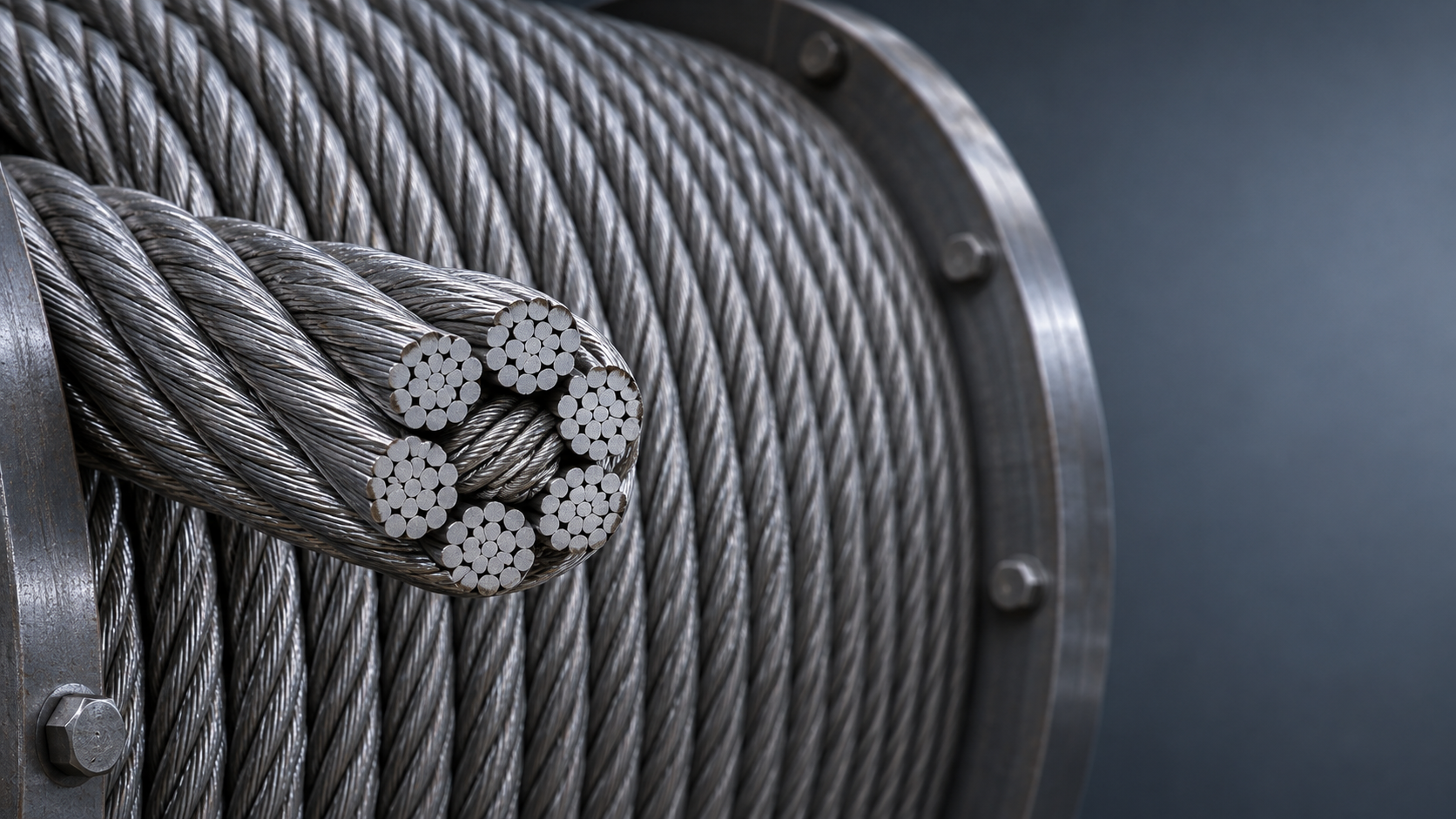
Yes. The core affects how well a 6mm wire rope resists being flattened or distorted under compression. When ropes of otherwise comparable construction are assessed, an independent wire rope core (IWRC) generally provides more support to the outer strands than a fiber core. That makes an IWRC a common starting point for applications where the rope is tightly wound on a drum or exposed to other significant crushing forces.
Core type alone, however, cannot establish whether a rope is suitable. Strand construction, drum arrangement, tension, sheave dimensions and operating conditions all affect how the rope behaves. For a technical evaluator comparing a wire rope core in 6mm sizes, the useful question is not simply “steel or fiber?” but “what is compressing the rope, and can the complete rope construction withstand it?”
How the core changes the rope’s response
A wire rope core provides a foundation around which the outer strands are laid. As the rope passes over a sheave or winds onto a drum, it experiences contact pressure as well as tension. The core helps the strands retain their position and supports the rope’s cross-sectional shape.
An IWRC is itself a small wire rope. Its steel structure generally offers firmer support than a fiber core, helping limit deformation when adjacent wraps press against each other or when an upper layer bears down on a lower layer. A fiber core is more compressible and may be suitable where flexibility is important and crushing loads are relatively low. Neither description is a substitute for checking the rope manufacturer’s recommendations for the actual duty.
Other core arrangements also exist, including wire strand cores and polymer-supported designs. They should not automatically be treated as equivalent to an IWRC. Ask for the full construction designation and core specification rather than relying on a broad “steel core” description.
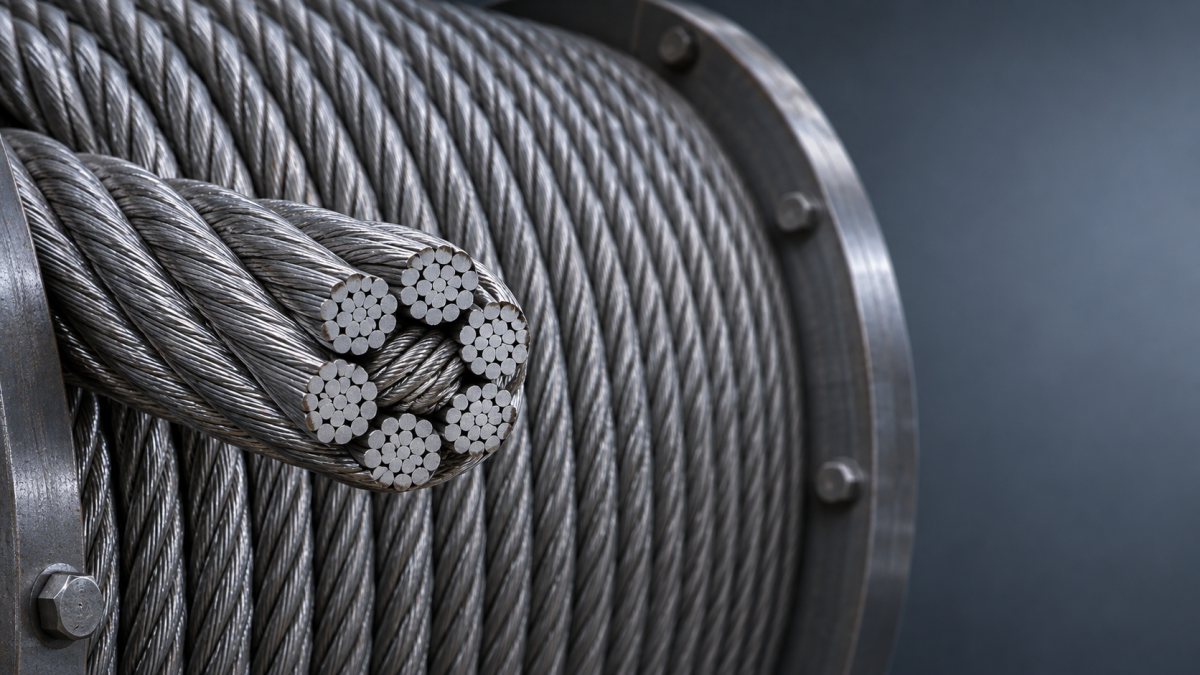
Crush resistance also differs from breaking strength. A rope can meet a required minimum breaking force and still suffer premature damage if its construction is poorly matched to drum pressure. Conversely, an IWRC does not make a rope immune to flattening or entitle it to operate above its specified load limits.
Where core selection matters most
Multilayer drum winding deserves particular attention. As tensioned rope is wound over earlier layers, the upper wraps press on the rope beneath them. Crossing points between layers can create localized loading, while loose or uneven winding can allow upper wraps to cut into lower ones. In this setting, the additional support of an IWRC can be valuable, but winding tension, drum geometry and rope construction still need to be considered together.
Single-layer winding can present a different balance of requirements. If the rope winds evenly under controlled tension and is not squeezed between overlapping layers, crushing may be less decisive than fatigue performance, flexibility or another operating requirement. A fiber-core rope may be a candidate where the equipment and rope manufacturers permit it; it should not be rejected solely because an IWRC is generally firmer.
Sheaves and contact surfaces also matter. A damaged or unsuitable groove can concentrate pressure on the rope. A small bending diameter can increase bending fatigue, which is a separate concern from crushing even though both may appear in the same system. Replacing a damaged rope with an IWRC version without correcting the groove, fleet angle or winding problem may simply shorten the replacement rope’s service life as well.
Crushing can also occur away from the drum, for example where rope is trapped against a hard surface or subjected to improper handling. A core change cannot compensate for contact that the equipment should prevent.
Compare complete constructions, not just core labels
Two 6mm ropes with IWRCs can behave differently under the same loading. The number and arrangement of strands and wires, the rope’s lay, manufacturing method and any compacted or polymer-supported construction can influence contact behavior and resistance to deformation. Surface finish and coating also require attention where they affect the rope’s fit or its compatibility with grooves and drums.
For a meaningful comparison, ask suppliers to identify the complete rope construction and provide the relevant technical data for the proposed application. At minimum, establish:
- The nominal diameter, construction, core type and lay direction.
- The minimum breaking force and the applicable rope specification.
- The intended drum and sheave dimensions, groove profile and number of winding layers.
- The expected line tension and whether winding tension can be maintained.
- Any requirements for fatigue performance, corrosion resistance, temperature and lubrication.
Keep these conditions consistent when comparing candidates. A larger quoted breaking force or a steel core is not, by itself, proof of better crush performance. Where crushing is a controlling failure risk, ask the rope manufacturer what evidence or application guidance supports the proposed construction under the stated drum and loading conditions.
Diameter deserves a practical check too. “6mm” is a nominal size, and the rope must fit the equipment within the tolerances specified for both. A rope that sits incorrectly in a groove can experience unfavorable contact pressure regardless of its core.
Inspect the cause as well as the rope
Flattened sections, distorted strands, uneven winding or localized damage near layer crossovers are reasons to investigate crushing. Inspection should also look for broken wires, corrosion and other deterioration, using the applicable equipment instructions and inspection criteria. A competent person should assess whether the rope remains fit for service; visible flattening should not be dismissed simply because the rope still carries a load.
Before installing a replacement, examine the drum, grooves and winding pattern. Check whether the rope has been spooled under appropriate tension, whether wraps are seating correctly and whether any contact point is pinching the rope. These observations help distinguish a construction mismatch from an equipment or operating problem.
Where a lift also requires a separate sling, the sling and the equipment’s running rope perform different jobs. A 6-22mm Lifting Chain Sling 1 2 3 4 Legs G80 Welded Chain Sling With Hook is an example of a separate load-attachment assembly; its selection depends on the lift configuration and rated capacity, not on the core of the 6mm running rope. It is not a replacement for a rope specified to run over a drum or sheave.
For a new selection, start with the equipment manufacturer’s permitted rope specifications and the expected winding conditions. An IWRC is often the stronger candidate when compression is substantial, especially with multilayer winding. Where compression is modest, assess whether another permitted core better suits the complete duty, including bending fatigue and the equipment’s specified rope construction.
Navigation
Send Us A Message



Shandong Faster Technology Co., Ltd. is a professional manufacturer of steel wire ropes.
Get in Touch
*We respect your confidentiality and all information are protected.